
The Strategic Blueprint for AI in Lending: From Implementation to ROI
You’ve seen the projections and read the headlines. AI is set to generate hundreds of billions in value for the banking industry, and the pressure to adopt it has never been higher. Yet, a nagging question remains: How do we move from ambitious AI strategies to tangible, measurable returns in our lending operations?
The reality is that while 83% of lenders plan to boost their AI budgets, a staggering 95% struggle to report any measurable return on their investments. The gap between investment and impact isn’t a technology problem; it’s a strategy problem.
This guide is not another high-level overview of AI’s potential. It is a practical, strategic blueprint designed for lending leaders who are past the “what” and focused on the “how.” We will walk you through a proven methodology for successfully implementing, integrating, and scaling AI to drive real business value—from enhancing underwriting to building a future-ready workforce.
The AI Imperative in Lending: Why the Time is Now
The lending landscape is at a critical inflection point. The cost of inaction is no longer just a missed opportunity—it’s a direct threat to market share and operational viability. With two-thirds of lenders planning to implement Generative AI by 2026, the pace of innovation is accelerating faster than any previous fintech wave.
This isn’t just about keeping up; it’s about leading. Institutions that successfully harness AI are projected to see a 20% increase in operational efficiency and capture 15% greater market share. The potential is massive, with Generative AI alone expected to add between $200 billion and $340 billion in value annually across the banking sector. The question isn’t if you should invest, but how you can invest intelligently to capture your share of that value.
Decoding Lending Intent: What AI Can Solve for Your Institution
Before diving into implementation, it’s crucial to anchor your AI strategy in solving specific, high-value business problems within your lending workflows. Moving beyond generic use cases allows you to focus resources where they will have the most significant impact.
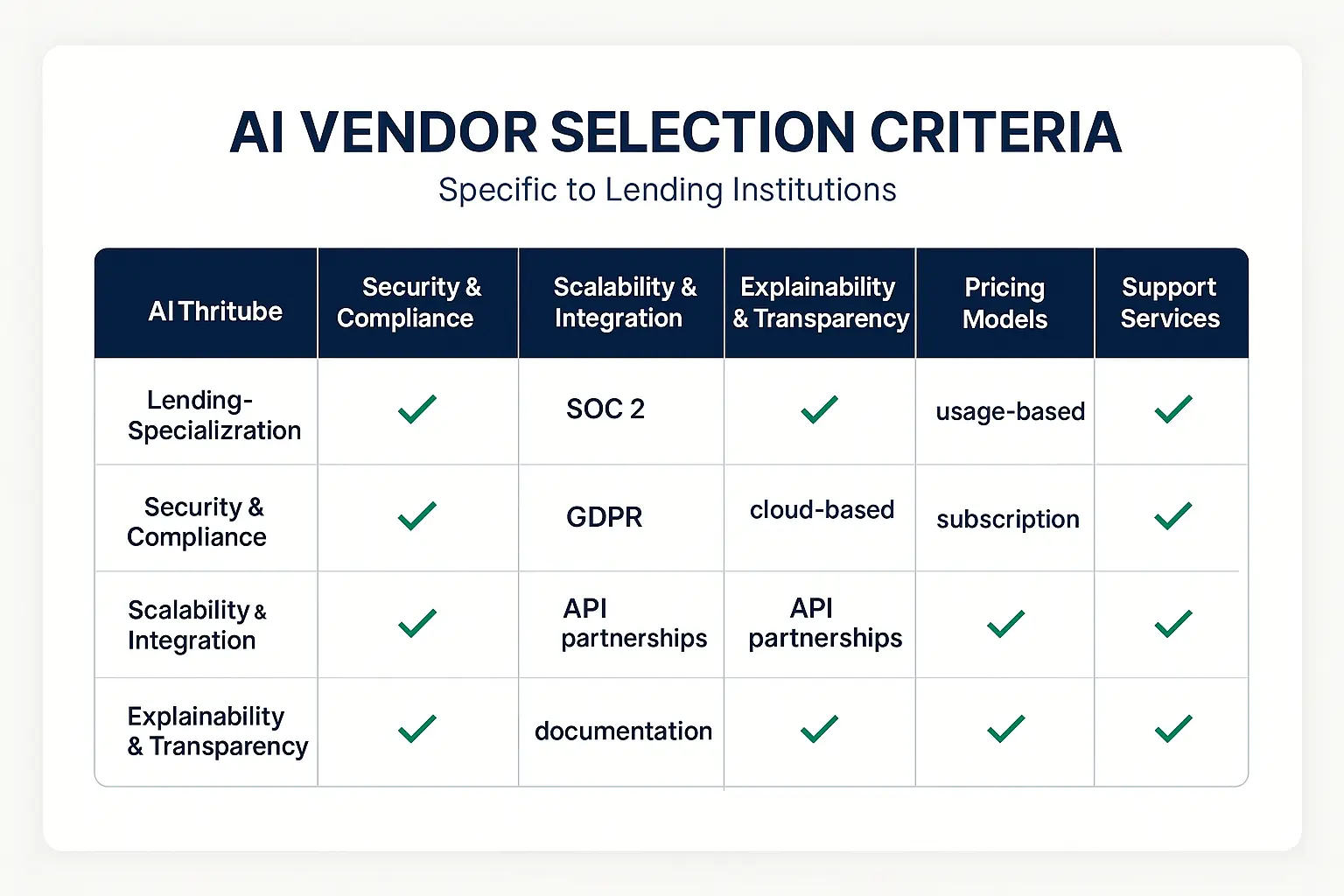
Primary AI Use Cases in Lending (Deep Dive)
- Automated Credit Underwriting & Risk Assessment: AI models can analyze thousands of data points—far beyond traditional credit scores—to produce more accurate and nuanced risk profiles. This not only reduces default rates but also allows you to responsibly approve more loans, expanding your market. Today, credit underwriting is already one of the top use cases, with 35% of institutions actively applying AI here.
- Enhanced Fraud Detection & AML: AI algorithms excel at identifying subtle patterns and anomalies in loan applications and transaction data that humans might miss. The results are striking: Mastercard doubled its fraud detection rates, and HSBC cut false positives by 60% using AI, dramatically reducing both losses and the operational drag of manual reviews.
- Hyper-Personalized Lending Products & Customer Journeys: AI enables you to move from one-size-fits-all products to dynamically tailored offers, interest rates, and communication. This deep personalization improves conversion rates and significantly boosts customer lifetime value.
- Operational Efficiency in Loan Origination & Servicing: The “melting middle office,” as PwC calls it, is a prime target for AI-driven automation. By automating data extraction, document verification, and routine servicing tasks, lenders can reduce operational costs by up to 30% and free up expert staff to handle complex, high-value work.
- Regulatory Compliance & Reporting: AI can continuously monitor lending decisions to ensure compliance with fair lending laws like the Equal Credit Opportunity Act (ECOA). By flagging potential biases in real-time, AI provides a powerful tool for mitigating regulatory risk and demonstrating a commitment to fairness.
The Lending AI Implementation Blueprint: A Phased Approach
A successful AI initiative is a journey, not a single project. Adopting a phased approach allows you to build momentum, demonstrate early wins, and scale intelligently. This is the same multi-stage process Deloitte recommends, moving from strategy and prototypes to full-scale, sustainable outcomes.
Phase 1: Strategy & Vision
Your AI journey begins with clear business objectives. Instead of asking “What can we do with AI?”, ask “What are our most pressing lending challenges, and how can AI solve them?” Whether it’s reducing loan processing times, lowering default rates, or increasing market share, a clear goal will guide every subsequent decision.
Phase 2: Data Infrastructure & Readiness
AI is only as good as the data it’s trained on. This is where many initiatives stall. The biggest barriers to AI adoption are often internal: 50% of institutions cite talent gaps and regulatory hurdles, but 47% point directly to data security and quality. Your focus should be on breaking down data silos, establishing robust data governance, and ensuring your core systems can support real-time data integration.
Phase 3: Vendor Selection & Technology Integration
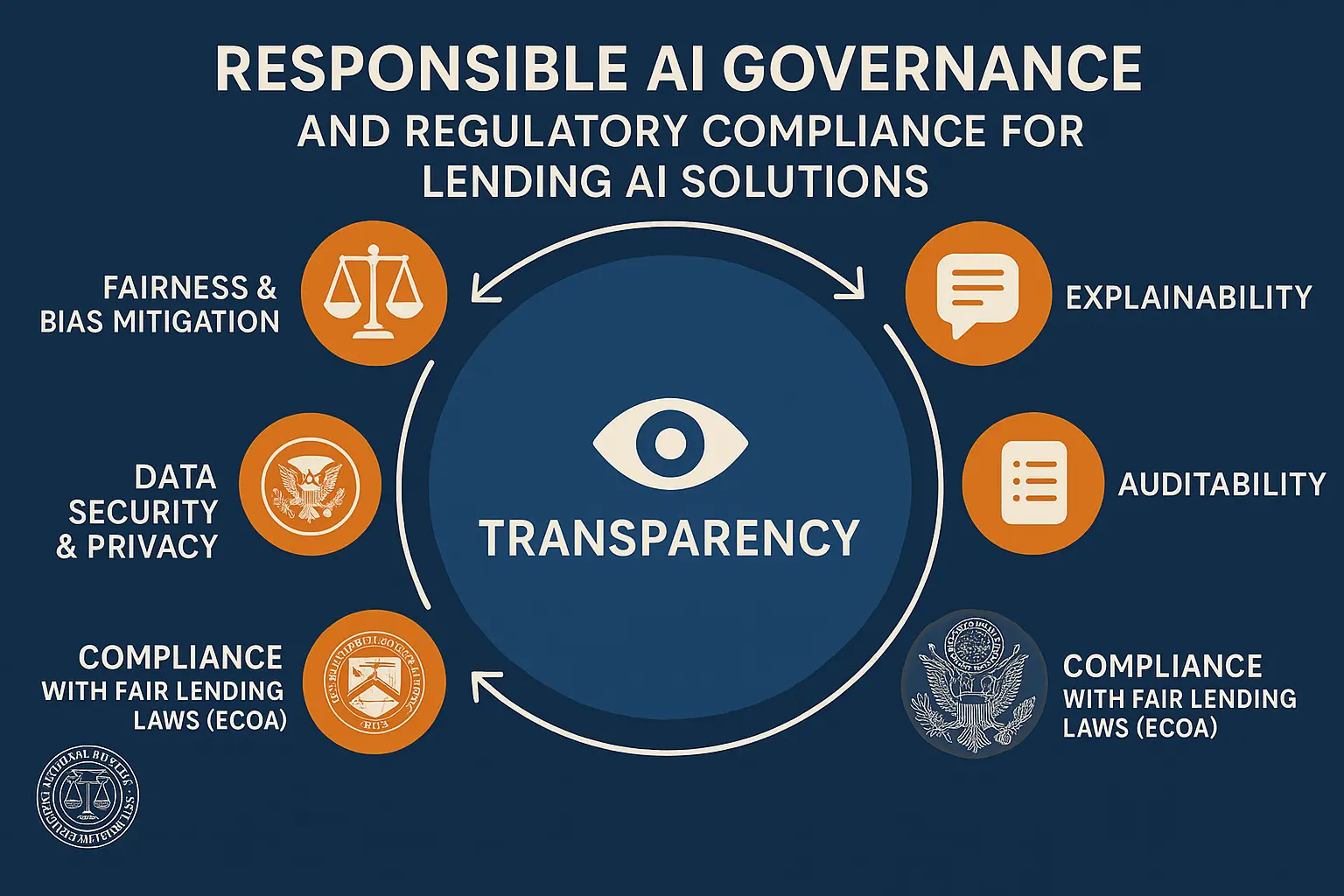
The “build vs. buy” decision is pivotal. For most lending institutions, partnering with a specialized AI vendor offers a faster, more reliable path to value than building from scratch. When evaluating partners, look beyond the technology. Your criteria should include deep expertise in lending, a proven track record of regulatory compliance, seamless integration capabilities via APIs, and a commitment to model explainability. A detailed AI vendor evaluation framework is essential for making the right choice.
Phase 4: Pilot & Prove Value
Start with a well-defined pilot project that targets a high-impact use case, such as automating income verification or flagging high-risk applications for fraud. The goal is to demonstrate a clear, quantifiable win. This success builds confidence across the organization and provides the business case needed to secure funding for broader scaling efforts.
Phase 5: Scaling & Deployment
Moving from a successful pilot to an enterprise-wide deployment requires a modular, interoperable system. This “AI-first” approach, championed by IBM, ensures that new AI capabilities can be integrated and scaled quickly without disrupting core operations. The key is to think of AI not as a standalone tool but as an intelligent layer woven into your entire lending ecosystem.
Navigating the Ethical & Regulatory Landscape of AI in Lending
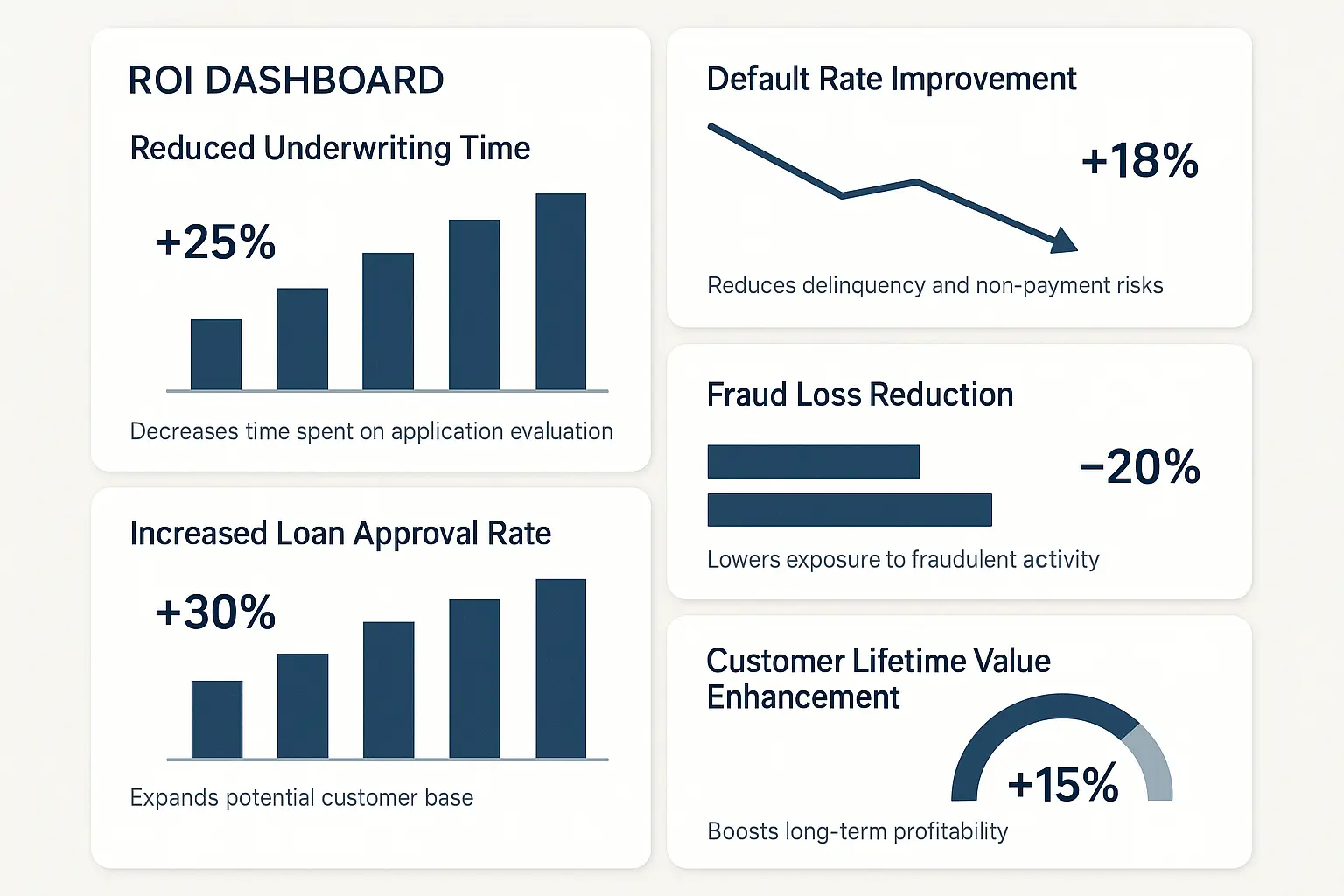
For lending institutions, trust is non-negotiable. As you implement AI, building a strong Responsible AI governance program is not just a compliance exercise—it’s a business imperative. Security and risk concerns are the top barrier to AI adoption for a reason.
Your framework must be built on four pillars:
- Fairness: Actively work to mitigate bias in AI models. This involves using diverse training datasets, continuous testing for discriminatory outcomes, and ensuring full compliance with fair lending laws.
- Explainability: You must be able to understand and explain how your AI models make decisions, especially adverse ones like a loan denial. The “black box” is not an option in a regulated industry.
- Transparency: Be transparent with both customers and regulators about how you use AI in your decision-making processes. This builds trust and reduces perceived risk.
- Security: Implement robust data security and privacy protocols to protect sensitive customer information used by your AI systems.
Measuring the ROI of AI in Lending: A Practical Framework
To avoid becoming part of the 95% of firms struggling with ROI, you need to define what success looks like from day one. Move beyond vanity metrics and focus on lending-specific Key Performance Indicators (KPIs) that directly map to business value.
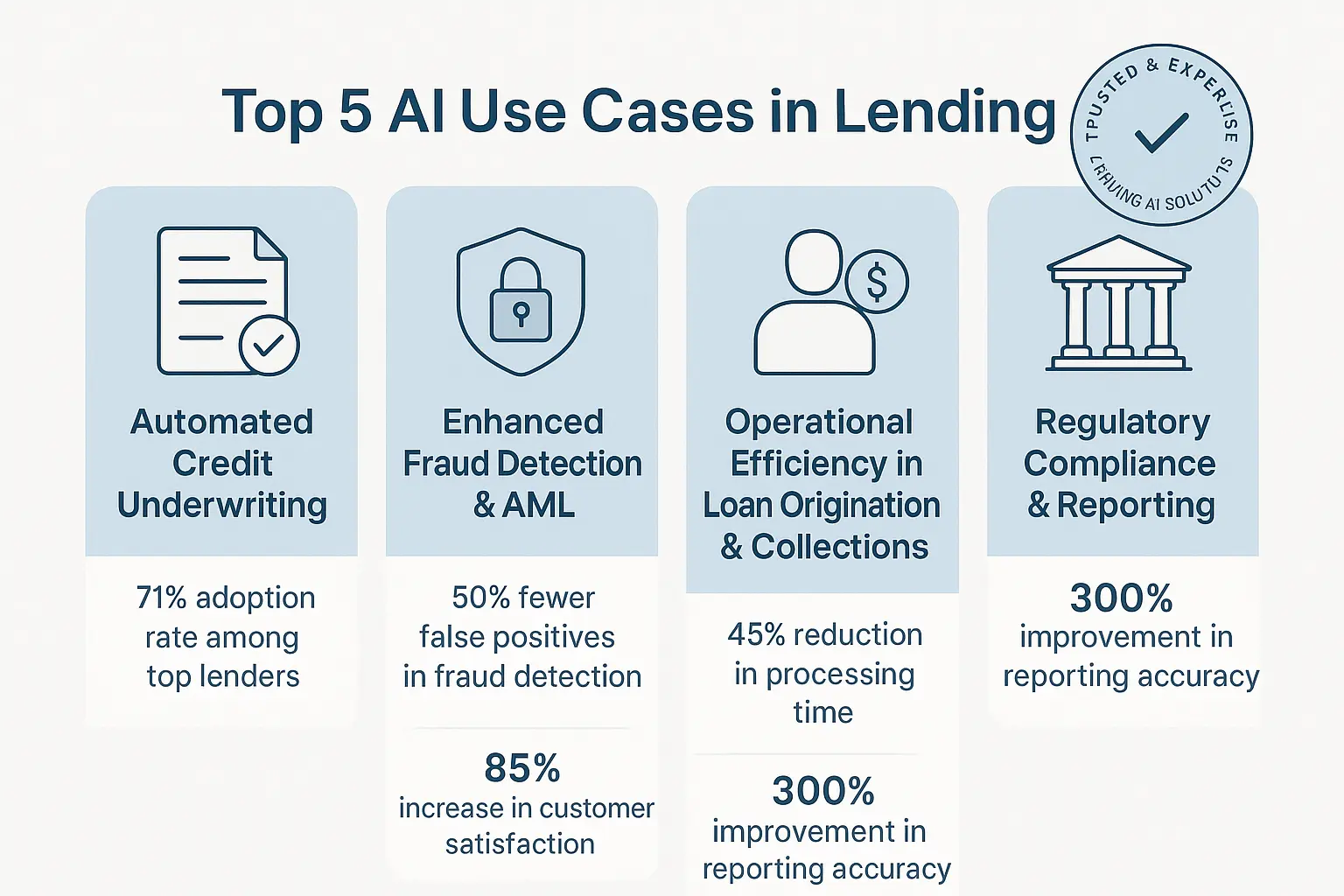
Your ROI dashboard should track metrics such as:
- Operational Efficiency:
- Reduction in loan application processing time (in hours).
- Decrease in cost-per-loan originated.
- Increase in loans processed per underwriter.
- Risk & Revenue:
- Decrease in loan default rates.
- Increase in loan approval rates (without increasing risk).
- Reduction in fraud-related losses.
- Customer Impact:
- Increase in loan application conversion rates.
- Improvement in customer satisfaction scores (CSAT/NPS).
- Growth in customer lifetime value (CLV).
By tracking these KPIs, you can create a clear, data-driven narrative that demonstrates the tangible financial impact of your AI initiatives, making it easier to justify continued investment and expansion.
Building an AI-Competent Lending Workforce
Technology alone cannot transform your institution. Long-term success depends on building a workforce that can effectively collaborate with AI. This isn’t about replacing people; it’s about augmenting their expertise.
Focus your efforts on:
- Upskilling and Reskilling: Invest in training programs that equip your bankers, analysts, and IT teams with the skills to understand, manage, and interpret AI-driven insights.
- Promoting Human-in-the-Loop Models: The most effective approach, particularly in areas like fraud and compliance, combines AI’s analytical power with human judgment. This shifts the role of your experts from routine task execution to strategic oversight, exception handling, and complex decision-making.
- Fostering an AI-First Culture: Encourage experimentation and learning. Leadership must champion a culture where data-driven insights are valued and AI is viewed as a tool that empowers employees to do their best work.
Frequently Asked Questions
1. Is implementing AI too expensive and complex for a mid-sized lending institution?Not anymore. The rise of specialized, cloud-based AI solutions has significantly lowered the cost and technical barriers to entry. By partnering with the right vendor, you can leverage powerful AI capabilities without the need for a massive in-house data science team or extensive infrastructure investment. The key is to start with a high-ROI pilot project that proves the value before scaling.
2. How do we address the “black box” problem and ensure our AI decisions are explainable to regulators?This is a critical concern, and one that reputable AI vendors address head-on. Look for solutions that offer model explainability (XAI) features. These tools provide clear, human-readable justifications for each AI-driven recommendation or decision, creating an auditable trail that satisfies regulatory requirements and builds internal trust.
3. Our data is spread across multiple legacy systems. Do we need to complete a full data overhaul before we can start with AI?A full overhaul isn’t always necessary to begin. A good AI implementation partner will help you develop a data strategy that starts by integrating the most critical data sources for your initial pilot project. Modern AI platforms use sophisticated APIs to connect with and pull data from various systems, allowing you to start generating value while you progressively modernize your underlying data infrastructure.
4. What is the single most important first step we should take?Conduct an AI readiness assessment. Before you evaluate vendors or technologies, take a candid look at your organization’s data maturity, technical infrastructure, internal skillsets, and business objectives. This internal audit will identify your biggest opportunities and potential roadblocks, providing a clear, realistic starting point for your AI journey.
Your Path to Intelligent Lending Starts Here
The transition to an AI-powered lending model is one of the most significant strategic opportunities of our time. It promises not just incremental efficiency gains, but a fundamental reimagining of how risk is assessed, how customers are served, and how value is created.
Success, however, isn’t guaranteed by investment alone. It requires a clear vision, a practical implementation blueprint, and a commitment to building a culture that embraces human-AI collaboration. By following this strategic framework, you can navigate the complexities of adoption and unlock the true potential of AI, turning a strategic imperative into your greatest competitive advantage.
Ready to build your institution’s AI implementation roadmap? Contact our specialists for a personalized readiness consultation to identify the highest-impact AI opportunities for your lending operations.
