
Beyond the Hype: A Lender’s Practical Guide to AI in Mortgage Automation
You’ve read the headlines and seen the demos. Everyone is talking about AI transforming the mortgage industry, promising faster closings and dramatic cost savings. But as a decision-maker, you’re past the initial “what if” stage. You’re now asking the critical questions: How does this technology actually work? Which components are essential for my workflow? And how do I choose the right solution without getting locked into a system that doesn’t deliver?
The reality is, the leap from manual processing to intelligent automation is significant. While AI adoption in mortgage lending has surged from 15% to 38% in just the last year, many institutions are struggling to move from theory to implementation. This guide is designed to bridge that gap. We’ll cut through the marketing jargon to provide a clear, actionable framework for evaluating and deploying AI and RPA in your lending workflows, empowering you to make a confident, strategic decision.
Deconstructing Automation: AI, RPA, and Intelligent Automation Defined
To build an effective strategy, you first need to understand the tools. The terms AI, RPA, and Intelligent Automation are often used interchangeably, but they represent distinct, synergistic capabilities. Getting this right is the first step toward a successful implementation.
-
Robotic Process Automation (RPA): The Digital Workforce. Think of RPA as a set of digital “hands.” It’s software designed to mimic human actions for repetitive, rules-based tasks. An RPA bot can log into systems, copy-paste data, fill out forms, and move files—all based on a pre-defined script. It’s exceptionally good at executing high-volume, predictable work but lacks any real intelligence. It does what it’s told, perfectly and quickly.
-
Artificial Intelligence (AI): The Digital Brain. AI is the decision-making engine. It encompasses technologies like Machine Learning (ML) and Natural Language Processing (NLP) that can analyze data, recognize patterns, understand context, and make predictions. In lending, AI can classify documents, extract specific data points from unstructured text, assess credit risk based on complex variables, and detect fraudulent patterns that a human might miss.
-
Intelligent Automation (IA): The Synergistic System. This is where the magic happens. Intelligent Automation is the fusion of RPA’s execution power with AI’s cognitive ability. An AI model might analyze an incoming loan application package, identify it as a W-2 salaried borrower, and extract the applicant’s name, income, and employer. It then passes these structured instructions to an RPA bot, which logs into the Loan Origination System (LOS), creates a new file, and populates the required fields. IA orchestrates this entire workflow, handling tasks intelligently and automating processes end-to-end.
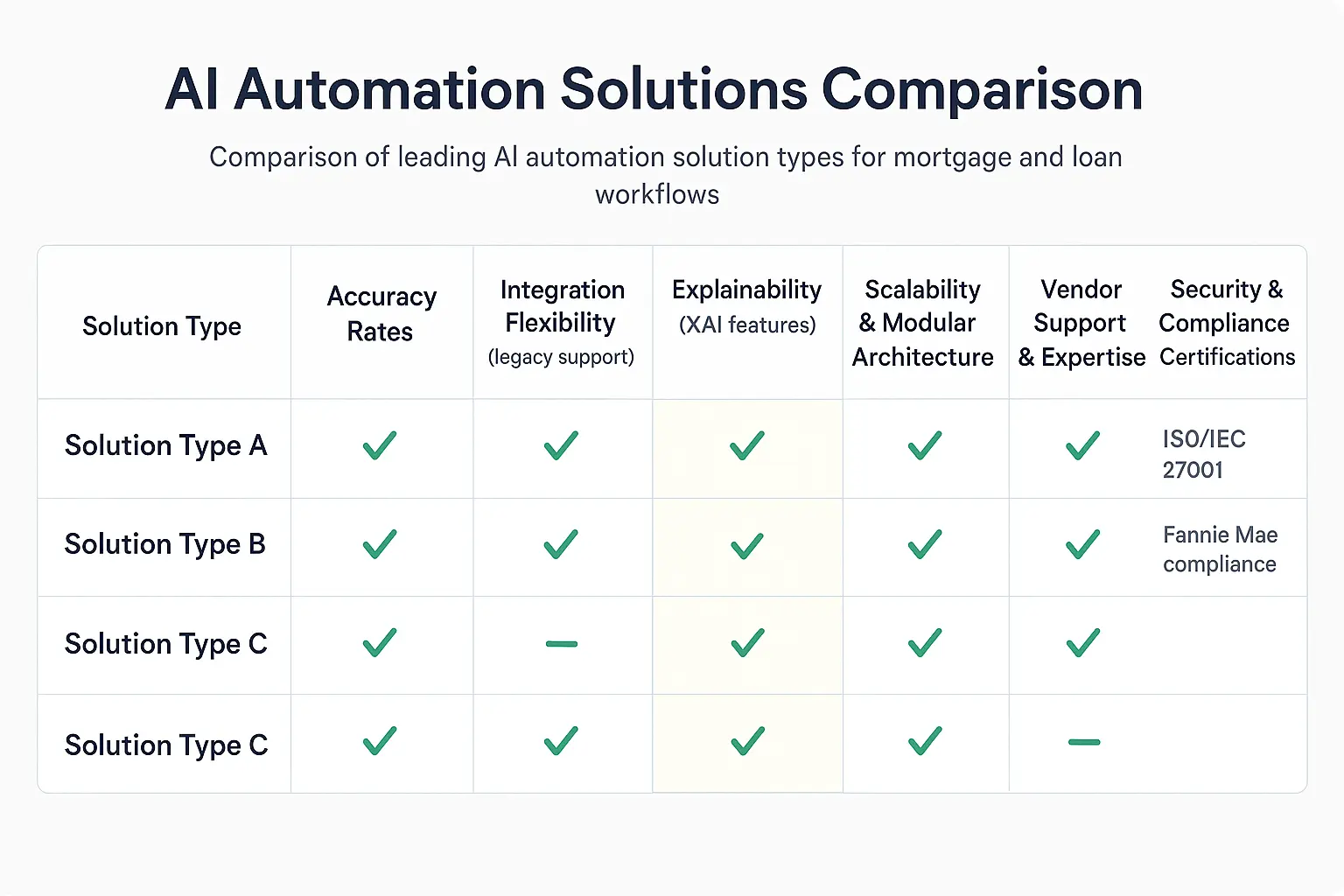
Understanding this distinction allows you to identify which parts of your workflow need a “doer” (RPA) and which need a “thinker” (AI). A robust solution leverages both.
The Lending Lifecycle Reimagined: AI & RPA in Action
Intelligent Automation isn’t a single tool; it’s a set of capabilities applied across the entire lending lifecycle. Let’s break down its impact at each critical stage.
Automated Document Extraction & Data Ingestion
The loan process begins with a mountain of paperwork: pay stubs, bank statements, tax forms, asset verifications. Intelligent Document Processing (IDP) uses AI to automate this initial, labor-intensive stage.
- How it works: IDP combines Optical Character Recognition (OCR) to convert scanned documents into text, NLP to understand the context of that text, and ML to classify documents and extract key data points. Critically, advanced IDP systems can perform inconsistency detection across multiple documents—for example, flagging when the employer name on a pay stub doesn’t match the one on the W-2. This is a common point of failure for simpler systems and a huge source of manual review.
Intelligent Decisioning & Underwriting Engines
Once data is extracted and verified, it feeds into the decisioning engine. Modern platforms use AI to move beyond simple credit scores and create a much richer risk profile.
- How it works: An AI-embedded decision engine doesn’t just follow a static rulebook. It uses ML models (like gradient boosting) trained on historical loan data to predict the likelihood of default with greater accuracy. Simultaneously, it can perform real-time parallel data enrichment, pulling data from credit bureaus, KYC/AML services, and alternative data sources to build a comprehensive applicant profile in seconds, not days. This allows for nuanced decisions, like accurately assessing income for gig economy workers—a process competitors like Ocrolus highlight as a key capability.
Task Orchestration & Workflow Management
After an initial decision is made, the workflow begins. An Intelligent Automation platform acts as the conductor, orchestrating tasks between AI models, RPA bots, and human experts.
- How it works: If the AI engine flags a large, unexplained deposit on a bank statement, it automatically creates an exception and routes the file to an underwriter for review with the specific item highlighted. For routine tasks, like ordering an appraisal or sending a disclosure notice, it directs an RPA bot to execute the action. This ensures that human experts spend their time on high-value, complex problem-solving, not administrative follow-up.
Fraud Detection & Compliance Monitoring
Maintaining regulatory compliance is non-negotiable. AI provides a dynamic layer of protection that static checklists cannot.
- How it works: AI algorithms continuously scan for anomalies and patterns indicative of fraud. Because the entire workflow is digitized and logged, the system creates a perfect audit trail, making it easy to demonstrate compliance to regulators. Explainable AI (XAI) is crucial here, as it allows you to understand why the AI made a particular decision, a key requirement for transparency.
The “Why” Behind the “How”: Measurable Benefits & ROI
Investing in new technology requires a clear business case. The data from lenders who have already adopted intelligent automation speaks for itself. The primary value drivers are not just theoretical; they are quantifiable improvements that directly impact your bottom line.
- Radical Efficiency Gains: Lenders implementing AI are seeing operational expense reductions of 30-50%. By automating document verification and data entry, some mid-sized US lenders have cut verification time from 48 hours to under 4 hours.
- Accelerated Speed to Close: Faster processing means a better borrower experience and increased capacity. Automated workflows are enabling loan closures 2.5 times faster than industry averages.
- Drastically Improved Accuracy: Manual data entry is a leading source of errors that cause costly delays. AI-powered data extraction achieves over 99% accuracy, while automated underwriting systems from providers like Gateless are already achieving 70-75% auto-clearing of loans with minimal human touch.
- Superior Risk Mitigation: The impact on credit quality is profound. Studies show AI adoption reduces unclassified credit ratings by 40.1% and, most importantly, decreases loan default rates by an average of 29.6%.
- Strategic Scalability: With automation handling the bulk of repetitive work, you can scale your loan volume without proportionally increasing headcount, allowing you to capture market opportunities more effectively.
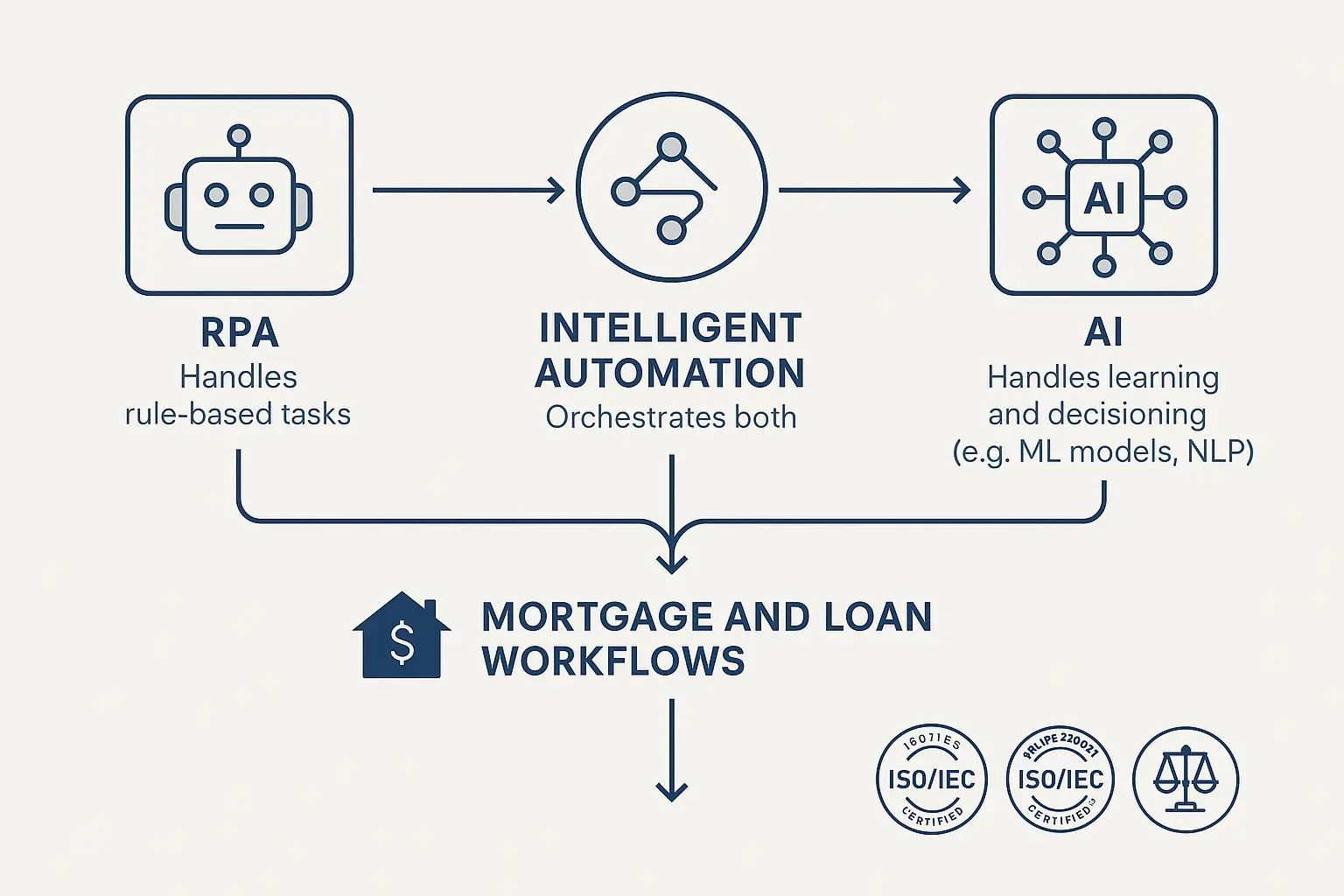
These aren’t just marginal improvements. They represent a fundamental shift in the economics of lending, a fact recognized by the 84% of financial institutions that now identify AI as a critical or high-priority component of their business strategy.
Navigating the Landscape: Choosing the Right AI Automation Solution (MOFU Focus)
As you evaluate potential partners, it’s easy to get lost in feature lists and accuracy claims. To make an informed decision, you need an objective framework that focuses on the factors that drive long-term success. Instead of relying on “best of” lists, use this structured approach to assess solutions.
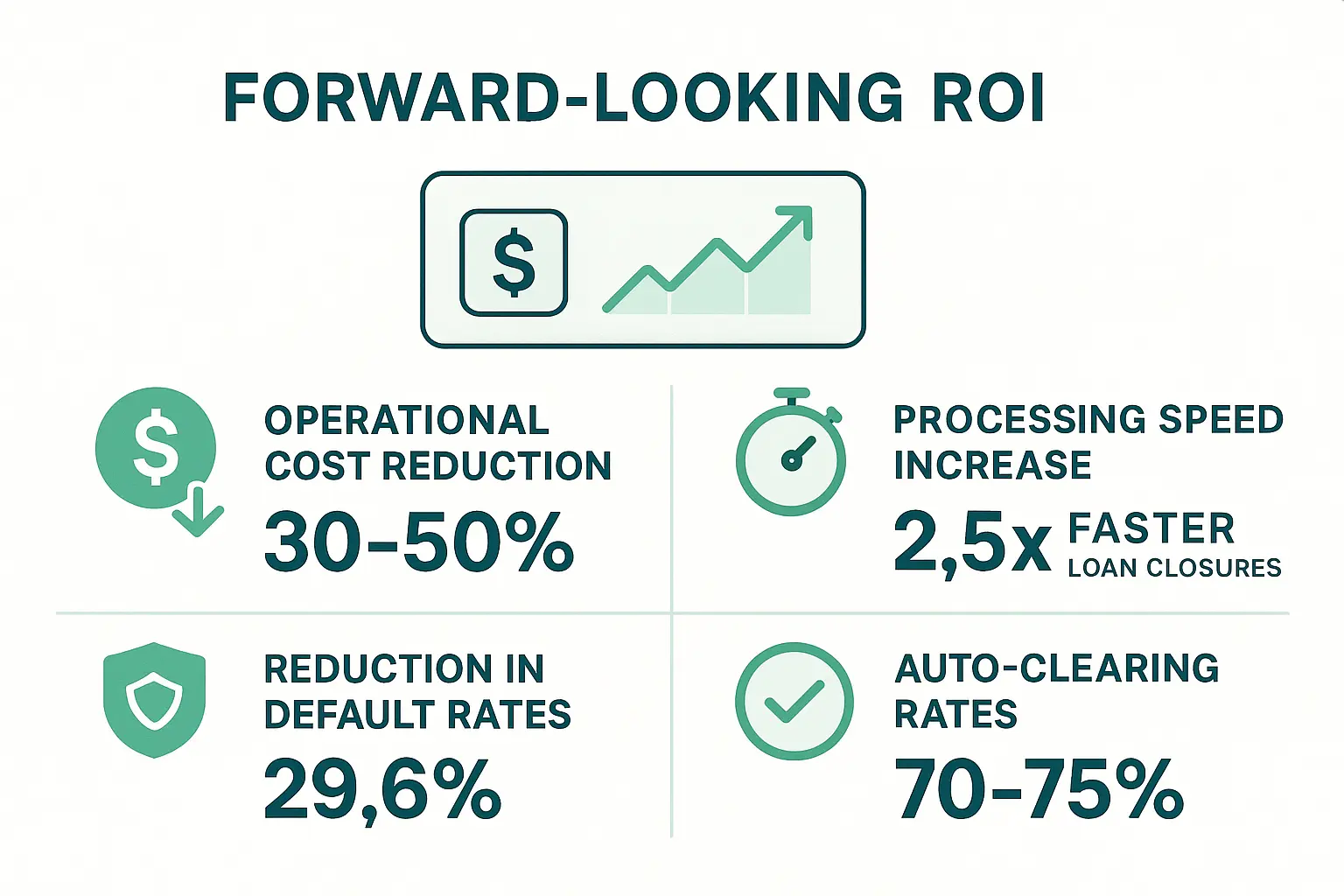
### The Core Evaluation Framework
-
Technical Capabilities & Accuracy:
- Go beyond the “99% accuracy” claim. Ask vendors about their methodology. How was this figure calculated? On what document types and data sets? What is the error rate for non-traditional income documents or complex commercial loan packages?
- Assess AI Model Transparency. Is it a “black box,” or does the vendor provide Explainable AI (XAI) capabilities? You need to be able to justify decisions to both regulators and borrowers.
- Evaluate Integration Flexibility. Does the platform offer pre-built integrations with major LOS like Encompass, or will it require a costly, custom build? How does it handle integration with older, legacy systems that may not have modern APIs? Look for solutions that offer end-to-end interoperability.
-
Handling Data Complexity:
- Probe on unstructured and non-traditional data. How does the system handle handwritten notes, low-quality scans, or the variety of formats used for “alternative data”? This is a major differentiator.
- Ask about data preparation. A common failure point for AI projects is poor data quality. Does the vendor provide tools or services to help you clean and label your historical data to train the models effectively?
-
Scalability & Future-Proofing:
- Is the architecture modular? Can you start with one component, like document processing, and add others like decisioning or servicing automation later? This allows for a phased rollout that matches your business needs and budget.
- Is the platform built for the future? Ask about their roadmap for incorporating emerging technologies like Agentic AI, which can proactively manage entire workflows with greater autonomy.
-
Vendor Expertise & Partnership:
- Look for deep industry expertise. Does the vendor’s team understand the nuances of mortgage lending, or are they a generic tech company? A true partner will help you re-engineer your workflows, not just sell you software.
- Inquire about support and training. How will they help you upskill your existing staff? What does the long-term maintenance and model-retraining process look like? The total cost of ownership goes far beyond the initial license fee.
Implementation Roadmap: From Pilot to Production
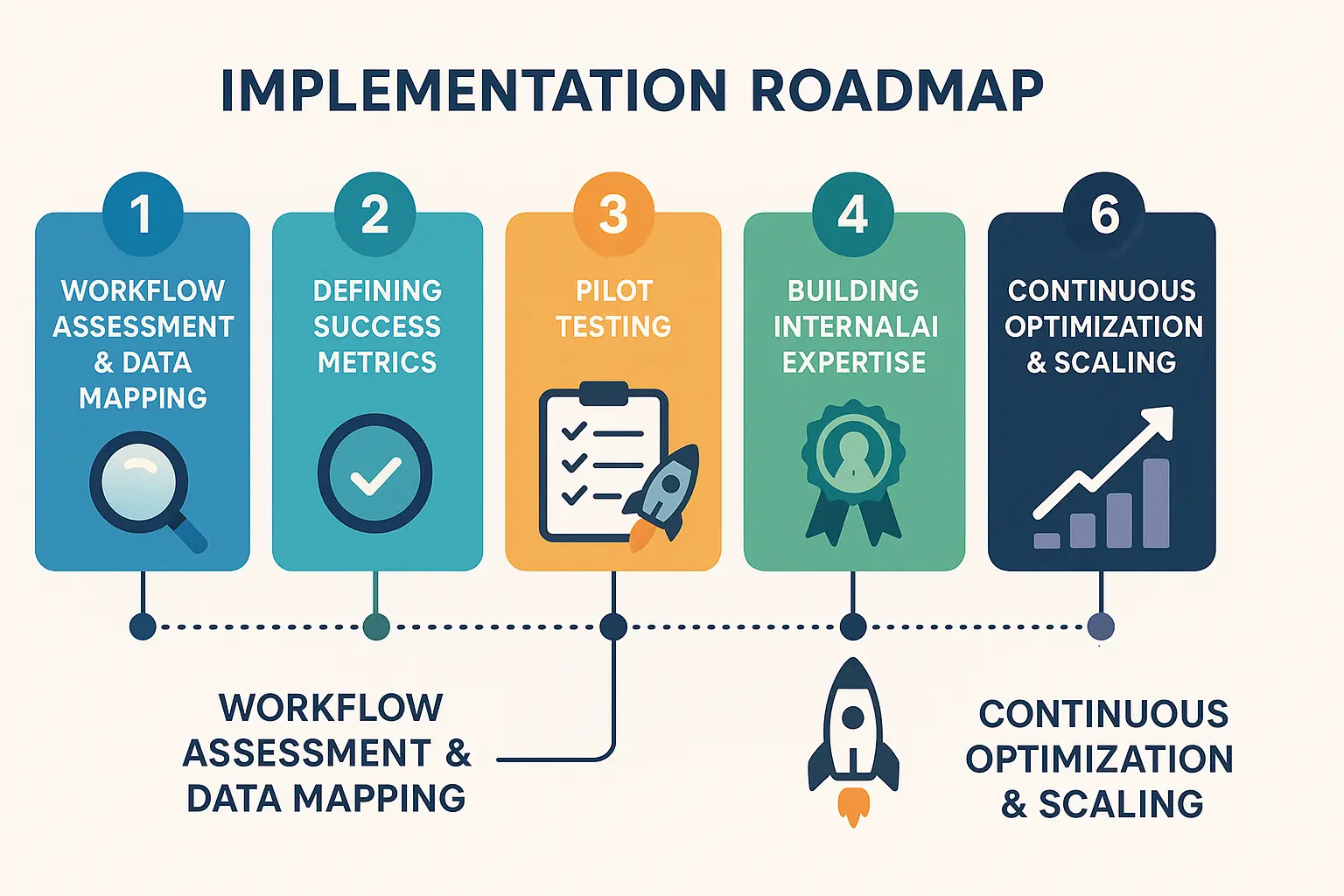
A successful AI deployment is a journey, not a flip of a switch. A structured, phased approach minimizes risk and builds momentum.
-
Phase 1: Assess & Strategize.
- Map your current workflows. Identify the most significant bottlenecks, sources of errors, and areas with the highest potential for ROI. Don’t automate a broken process.
- Define granular success metrics. Go beyond “faster closings.” Aim for metrics like “reduce underwriting touches per file by 40%” or “decrease time from application to clear-to-close by 3 days.”
-
Phase 2: Pilot Program.
- Start small. Select a single, high-impact process (like income verification for salaried borrowers) for a pilot project.
- Test and validate. Run the automated workflow in parallel with your manual process to validate accuracy and measure performance against your defined metrics. This builds trust and uncovers integration challenges in a low-risk environment.
-
Phase 3: Scale & Optimize.
- Execute a phased rollout. Use the learnings from the pilot to expand automation to other loan types and workflow stages.
- Focus on change management. Communicate clearly with your team about how the technology will change their roles for the better, focusing on the human-AI symbiosis.
- Continuously monitor and refine. AI models are not “set it and forget it.” They require ongoing monitoring and retraining to ensure they remain accurate and fair as market conditions and data inputs change.
The Human Element: Elevating Roles, Not Replacing Them
A common fear surrounding AI is job displacement. However, the reality in lending is a story of role transformation. Intelligent automation excels at the repetitive, administrative tasks that consume a loan officer’s or underwriter’s day.
By automating the “paper-pushing,” you free your most valuable asset—your people—to focus on what humans do best:
- Complex problem-solving: Handling unique loan scenarios and structuring complex deals.
- Relationship building: Providing high-touch service to borrowers and partners.
- Strategic oversight: Managing risk, interpreting nuanced situations, and making final judgment calls.
This Human-AI Symbiosis creates a more efficient, accurate, and fulfilling work environment. AI provides the data and insights; humans provide the wisdom and judgment.
Frequently Asked Questions
1. Will AI automation replace my underwriters?No, it will empower them. AI handles the routine data verification and initial risk assessment, allowing underwriters to function as strategic risk managers. They can focus their expertise on the complex, exception-based files that require human judgment, dramatically increasing their capacity and value.
2. How do we ensure the AI is fair and not biased?This is a critical concern. A trustworthy AI platform must include robust features for mitigating algorithmic bias. This involves training models on diverse and representative data sets, providing full transparency through Explainable AI (XAI), and continuous monitoring for model drift or unintended bias. Demand this from any vendor you consider.
3. What is the realistic timeline and total cost of ownership (TCO)?A pilot program can often be launched in 3-6 months. A full-scale rollout depends on the complexity of your operations. TCO includes more than the software license; factor in implementation costs, data preparation, internal training, and ongoing maintenance and support. A transparent vendor will help you model this accurately.
4. Our legacy systems are old. Can they even integrate with modern AI platforms?This is a common and valid challenge. Top-tier automation platforms are designed with this in mind, offering a mix of modern APIs, middleware connectors, and even RPA-based integration methods to bridge the gap with legacy systems. Be sure to specifically address your tech stack during vendor evaluations.
Your Next Step Toward Intelligent Lending
The question is no longer if AI will reshape mortgage lending, but how you will harness its power to gain a competitive advantage. The journey begins with a clear understanding of the technology, a strategic evaluation process, and a commitment to a phased, data-driven implementation.
By moving beyond the hype and focusing on the practical application of these powerful tools, you can build a more efficient, accurate, and scalable lending operation that better serves your borrowers and empowers your team.
