
AI Agent Capabilities: A Deep Dive Into the Core Technologies Powering Modern AI
You’re beyond the initial hype. You understand that AI agents are more than just chatbots—they are autonomous, goal-oriented systems poised to redefine industries. But as you evaluate solutions, you’ve hit the critical question: What exactly makes one AI agent more capable than another?
The answer isn’t in the high-level marketing promises, but in the core functional technologies that power them. With 40% of enterprise apps forecast to embed task-specific AI agents by 2026, understanding these foundational capabilities is no longer optional—it’s essential for making a confident, future-proof decision.
This guide provides the technical clarity you need. We’ll move past the surface to explore the fundamental mechanisms that define modern AI agents, from how they understand language to how they learn and remember. Consider this your definitive resource for evaluating the engine behind the agent.
Decoding AI Agents: Beyond the Hype to Core Functionalities
Before diving into specific technologies, it’s crucial to distinguish between modern agentic AI and traditional AI systems. While both leverage data, the difference lies in a fundamental shift from reactive programming to proactive execution.
What Makes an AI Agent “Agentic”?
An AI agent isn’t just a model; it’s a system defined by its ability to operate independently within an environment to achieve specific goals. This “agentic” nature is built on three pillars:
- Autonomy & Goal-Oriented Behavior: Unlike traditional AI, which typically requires explicit, step-by-step instructions, an AI agent is given a high-level goal. It then autonomously breaks that goal down into smaller tasks, plans a sequence of actions, and executes them.
- Perception & Environmental Interaction: Agents perceive their digital or physical environment through data streams, APIs, or sensors. They don’t just process information; they actively observe, interpret changes, and use that perception to inform their next action.
- Proactivity & Initiative: A traditional AI system reacts to a query. An agentic system takes initiative. It can anticipate needs, monitor for opportunities, and act on its own to move closer to its objective without constant human intervention.
At the heart of this functionality is a powerful reasoning engine, typically a Large Language Model (LLM) or a broader Foundation Model. This engine provides the cognitive horsepower for planning, problem-solving, and understanding, forming the “brain” of the agent.
Core Technology Deep Dive: The Functional Capabilities
An agent’s effectiveness is a direct result of how well its underlying technologies are engineered. Let’s dissect the five core capabilities that truly matter in your evaluation.
Natural Language Understanding (NLU) & Interaction
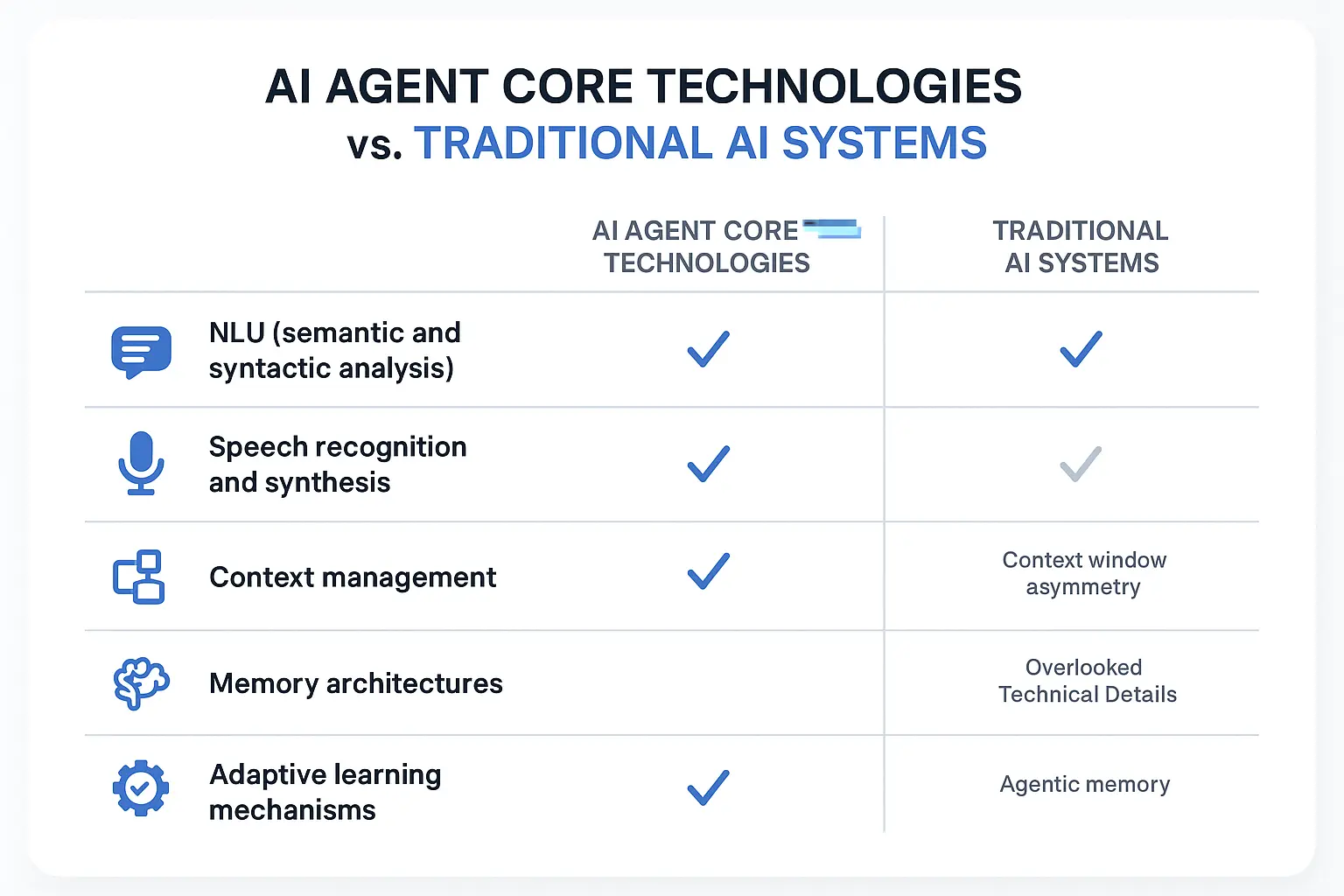
This is more than just recognizing keywords. True NLU is about comprehending intent, sentiment, and context from human language, whether typed or spoken. It’s what allows an agent to engage in coherent, multi-turn conversations and translate ambiguous human requests into specific, machine-executable tasks.
- What NLU Enables: Agents use NLU for semantic analysis (understanding the meaning and relationships between words) and syntactic analysis (understanding grammatical structure). This allows them to process complex commands, summarize documents, and interact with users naturally.
- Speech Recognition & Synthesis: For voice-based agents, this capability is mission-critical. Sophisticated speech recognition allows the agent to accurately transcribe spoken language, while synthesis enables it to respond with natural-sounding speech, crucial for applications in customer service and accessibility. In fact, AI agents have been shown to deliver a 128% ROI in customer experience, largely driven by superior NLU.
Context Management and Memory Architectures
An agent without memory is an agent without intelligence. The ability to retain and recall information—both within a single conversation and across multiple interactions—is what separates a simple bot from a sophisticated digital colleague.
This is arguably the most complex and critical area of agent design, where many solutions fall short.
-
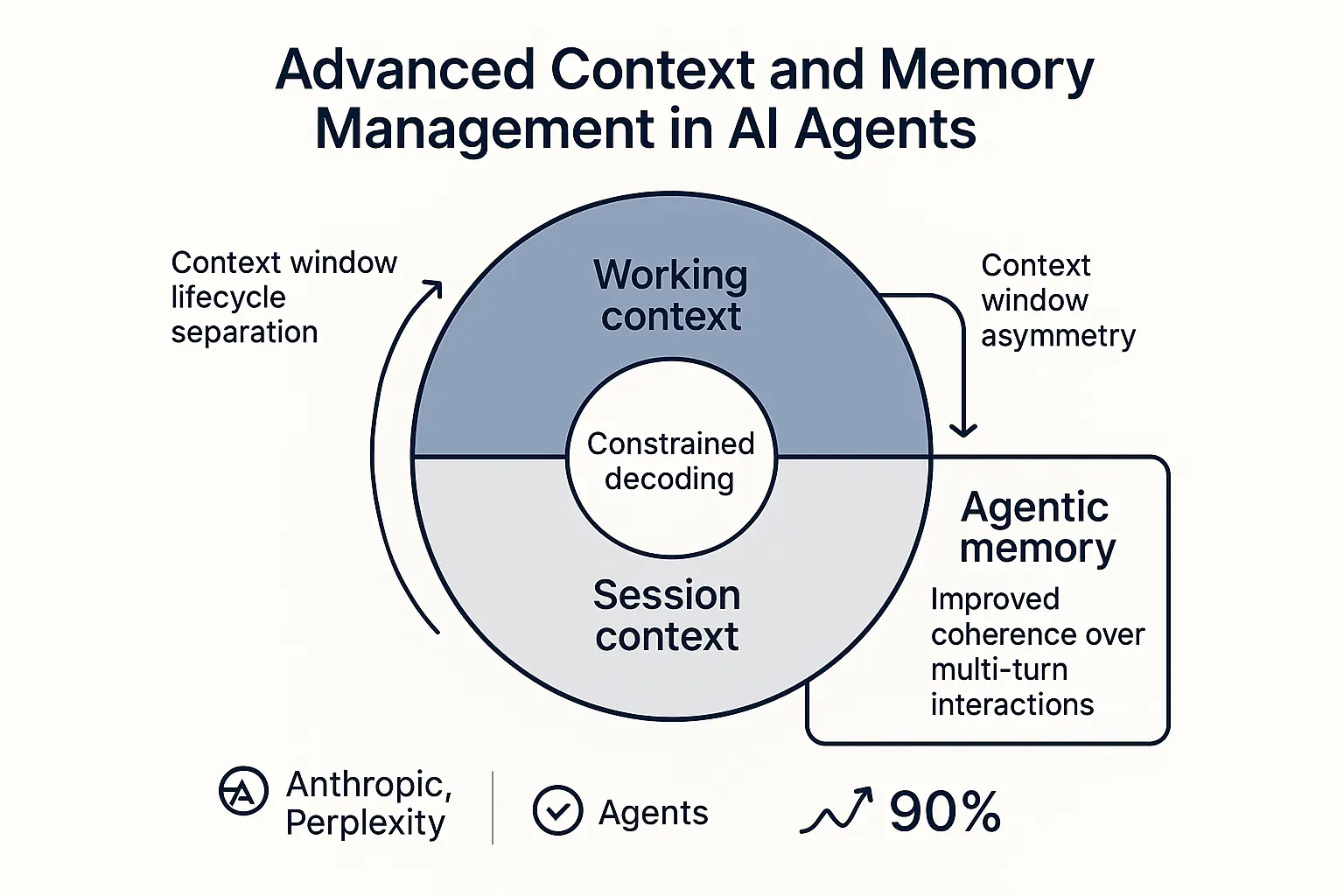
The Unseen Mechanics of Context: Every interaction an agent has is constrained by its “context window”—the amount of information it can hold in its active attention at one time. A common but often overlooked challenge is the “lost-in-the-middle” problem, where information presented in the middle of a large context window is less likely to be recalled accurately. Elite agentic systems address this with advanced context engineering, using techniques like context lifecycle separation (distinguishing between short-term “working” context and long-term “session” context) to ensure key information is never lost.
-
Short-Term vs. Long-Term Memory:
- Short-Term (Working Memory): This holds the immediate conversational history, allowing the agent to follow a coherent dialogue.
- Long-Term Memory: This is where the agent stores information for future use, enabling it to learn from past interactions, remember user preferences, and build a persistent knowledge base. This is often achieved using high-performance vector databases and knowledge graphs.
-
Advanced Memory: Structured Note-Taking: The most advanced agents employ agentic memory, a form of structured note-taking. Instead of just storing raw text, the agent actively summarizes, synthesizes, and structures information from interactions into a refined memory stream. This is far more efficient and reliable than simply feeding it a long, messy transcript of previous conversations.
Adaptive Learning Mechanisms
The defining feature of a truly intelligent agent is its ability to improve over time. Unlike traditional AI models that are static after training, agentic systems are designed for continuous learning.
- Feedback Loops: Agents learn through feedback mechanisms. This can be explicit (a user clicking a “thumbs up” button) or implicit (the agent observing that a certain sequence of actions successfully completed a task).
- Reinforcement Learning: Many agents use reinforcement learning from human or AI feedback (RLHF/RLAIF) to refine their performance. They learn which actions lead to positive outcomes and adjust their future behavior accordingly, constantly optimizing their strategies for achieving goals.
- The Adaptive Advantage: This continuous learning loop is a key differentiator from traditional AI. A traditional system might repeatedly make the same mistake, whereas an adaptive agent will recognize the error, learn from it, and avoid it in the future. This self-improvement is critical for maintaining high performance in dynamic business environments.
Tool Integration & External Interaction
An agent’s capabilities are not limited to its internal knowledge. Its true power is unlocked when it can interact with the outside world by using “tools.” These tools are typically APIs that allow the agent to perform actions like:
- Searching the web for real-time information.
- Accessing a company’s internal database.
- Sending an email or booking a meeting.
- Interacting with other software applications.
Effective tool use requires the agent to not only know what tools are available but also when and how to use them to accomplish its goal. The design and selection of these tools are crucial for building a capable and reliable agent.
Advanced Architectures & Orchestration: The Multi-Agent Future
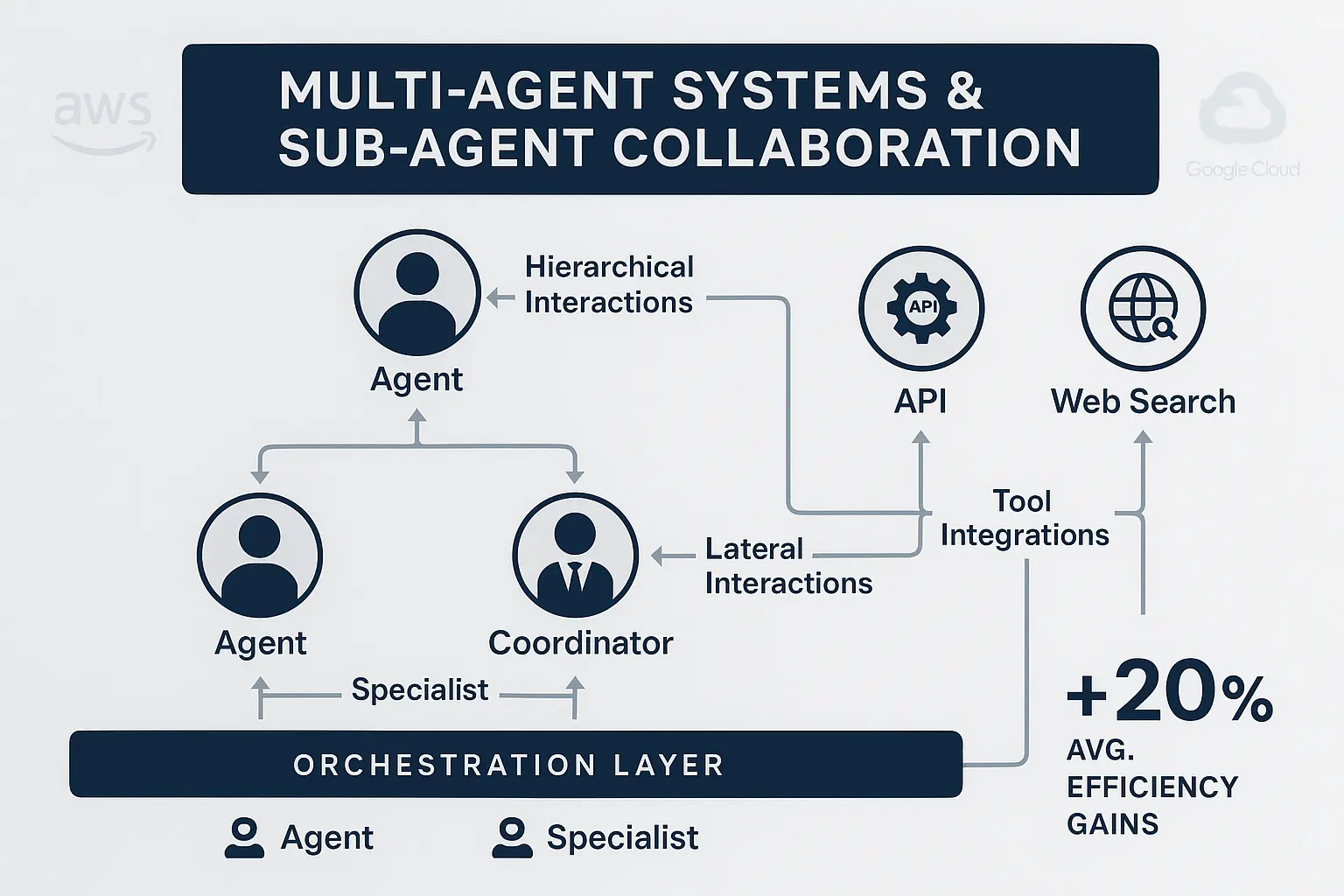
As business challenges grow in complexity, single-agent systems often aren’t enough. The future lies in Multi-Agent Systems (MAS), where multiple specialized agents collaborate to solve complex problems that are beyond the scope of any single agent.
- Collaborative Intelligence: In an MAS, you might have one agent specializing in data analysis, another in customer communication, and a third in logistics. They work together, sharing information and coordinating their actions to achieve a shared objective. For example, one agent might be responsible for [building a sales report], while another focuses on [scheduling follow-up meetings based on that report].
- Sub-Agent Architectures: This approach involves breaking a complex task into smaller sub-tasks and assigning each to a dedicated, temporary “sub-agent.” This improves efficiency and reliability, as each agent has a narrowly defined focus.
- Agent Control Planes: At an enterprise scale, managing hundreds or thousands of agents requires a new layer of infrastructure. Emerging “agentic operating systems” or control planes are being developed to handle orchestration, governance, and secure communication between agents, ensuring they operate efficiently and safely.
Real-World Impact & MOFU Applications
Understanding these core capabilities is key to unlocking significant business value. With over 80% of businesses having already adopted AI, those leveraging advanced agentic systems are creating a substantial competitive advantage.
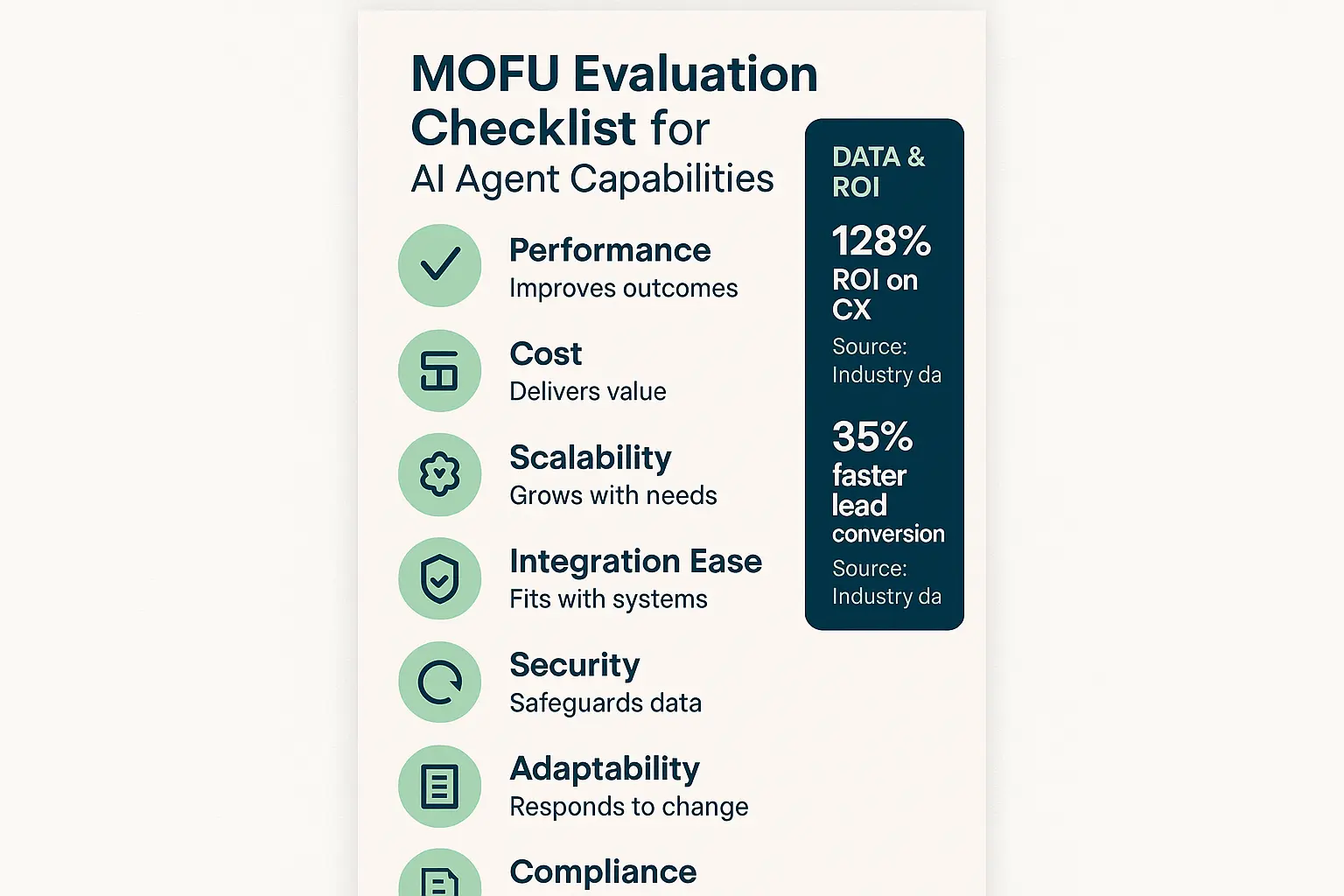
One of the most powerful applications is hyper-personalization. By combining deep NLU with persistent long-term memory, AI agents can move beyond generic customer segments to deliver truly one-to-one experiences. They can remember past purchases, understand individual preferences, and anticipate future needs, leading to outcomes like a 35% faster lead conversion rate.
This translates across industries:
- Healthcare: Agents can analyze patient records, schedule appointments, and provide personalized health reminders.
- Finance: They can automate financial analysis, detect fraud in real-time, and offer personalized investment advice, speeding up processes by 30-50%.
- Customer Service: Agents handle complex queries, process returns, and proactively solve customer issues, freeing up human agents for more strategic work.
Challenges, Risks, and Best Practices
While powerful, implementing AI agents comes with challenges. The top concerns for businesses are integration (46%), data quality (42%), and security (40%).
- Multi-Agent Dependencies: In multi-agent systems, it’s critical to avoid infinite feedback loops where agents get stuck passing a task back and forth. Robust orchestration and clear hierarchies are essential.
- Security and Data Privacy: Agents often need access to sensitive data and systems. Implementing strong access controls, encryption, and unique agent identifiers is non-negotiable.
- Human Oversight: The goal of autonomy is not to remove humans, but to empower them. Best practices include maintaining detailed activity logs, ensuring agents are easily interruptible, and keeping a human-in-the-loop for critical decisions.
Evaluating & Choosing AI Agent Solutions
As you evaluate potential solutions, move beyond feature lists. Use this framework to assess the core capabilities that will drive performance and ROI for your specific use case. A well-designed [AI agent platform] should provide transparent answers to these questions.
Frequently Asked Questions (FAQ)
1. How do AI agents differ from AI assistants like Siri or Alexa?While both use NLU, AI agents are fundamentally more autonomous and goal-oriented. An assistant primarily reacts to specific commands (“What’s the weather?”). An agent can be given a complex goal (“Plan a weekend trip to San Francisco for two under $1000, optimizing for weather and avoiding crowds”) and will independently research flights, book hotels, and create an itinerary to achieve it.
2. Is it difficult to integrate AI agents with our existing systems?Integration is a valid concern, ranking as the top challenge for 46% of businesses. However, modern agentic platforms are built with this in mind. They rely on robust API frameworks and tool integration, allowing them to connect with your existing CRMs, ERPs, and databases securely. The key is choosing a solution with a strong focus on enterprise-grade integration capabilities.
3. What kind of data is needed to train a custom AI agent?The data requirements depend on the task. For many applications leveraging powerful foundation models, you may need less proprietary data than you think. The focus is often on providing high-quality examples, access to relevant documentation (like API docs), and a clear definition of the agent’s goals and tools. Data quality (42% concern) is more important than sheer quantity.
4. How do we ensure the agents operate safely and ethically?This is a critical consideration. Best-in-class solutions incorporate “constitutional AI” principles and safety guardrails directly into the agent’s design. Best practices include implementing strict access controls, maintaining transparent audit logs of all agent actions, defining clear operational boundaries, and always having a human-in-the-loop for final approval on high-stakes decisions.
The Future is Agentic
Understanding the core technologies behind AI agents is the first step toward harnessing their transformative potential. By looking past the buzzwords and focusing on the functional capabilities—NLU, context, memory, learning, and tool use—you can make an informed decision that drives real business value. The era of reactive software is ending. The future belongs to the proactive, autonomous, and intelligent systems that will become your most valuable digital employees.
Ready to explore how these advanced capabilities can be applied to your unique challenges? Let’s discuss a roadmap for [building your first enterprise AI agent].
