
Beyond the Bot: A Strategist’s Guide to AI Agents in Sales & Marketing
You’ve seen the headlines and the demos. AI agents promise to revolutionize sales and marketing, offering a future of automated outreach, 24/7 lead engagement, and unprecedented efficiency. But as a decision-maker, you’re past the initial hype. Your challenge isn’t understanding if AI can help, but how to implement it strategically for tangible ROI.
The market is crowded with tools that offer simple automation. But true transformation lies beyond basic bots. It requires a sophisticated approach: building a coordinated workforce of intelligent agents that optimize every stage of your customer journey.
This guide is for you. It’s a blueprint for moving from isolated AI tools to a cohesive, high-impact strategy. We’ll cut through the noise to give you the frameworks, technical insights, and ROI models you need to make a confident, informed decision.
Decoding AI Agents: From Simple Automation to Strategic Orchestration
Before we dive into implementation, let’s clarify what we mean by “AI agents.” The term is often used loosely, but for a strategic evaluation, the distinctions are critical.
- Basic Automation Bots: These are task-oriented. They follow predefined scripts to schedule meetings, answer simple FAQs, or update a CRM field. They are helpful but not intelligent.
- AI Sales & Marketing Agents: These are a significant step up. Powered by large language models (LLMs), they can understand context, personalize communication, and handle more complex tasks like initial lead qualification or drafting follow-up emails. They operate with a degree of autonomy within a specific function.
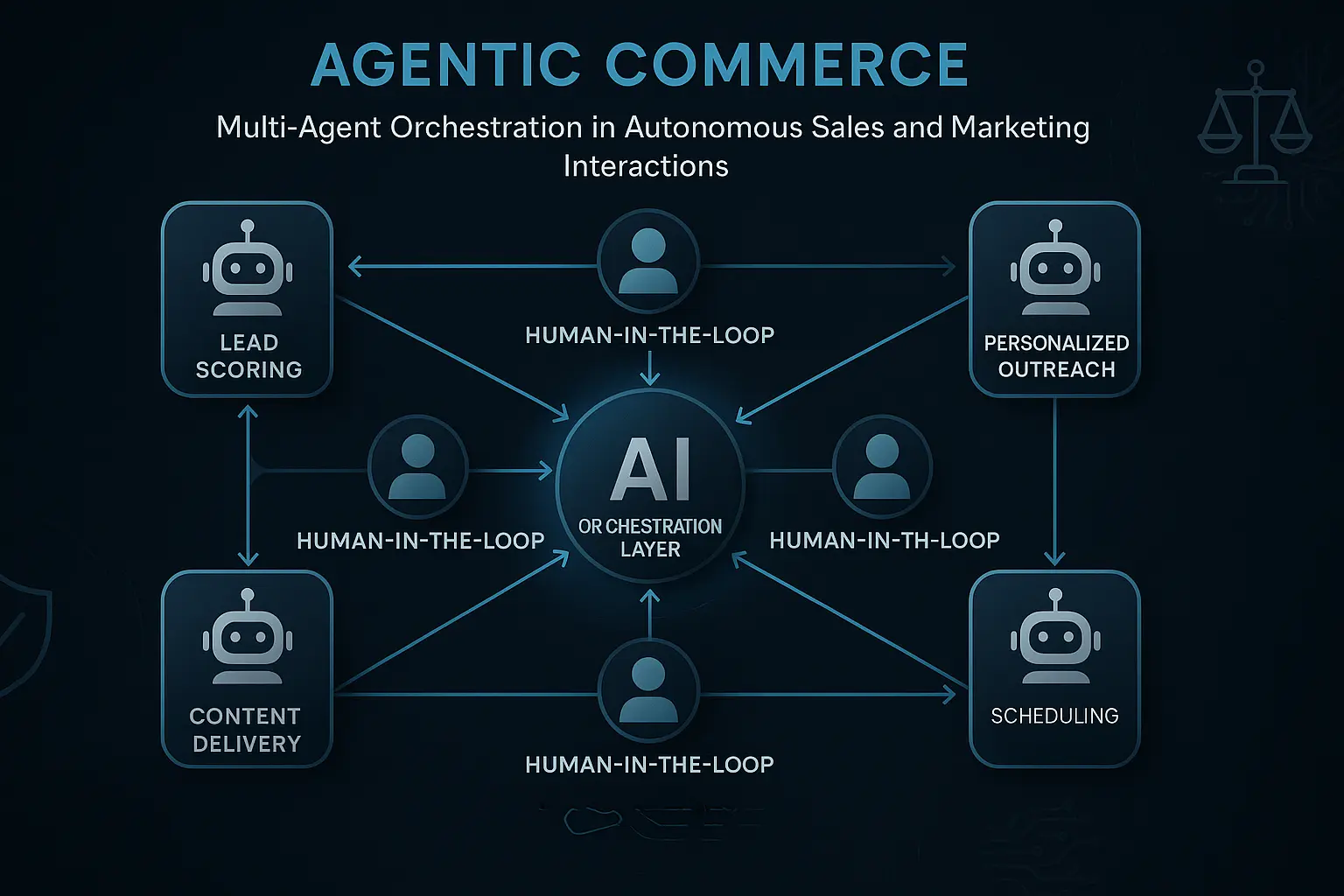
- Agentic AI Systems: This is the frontier. An agentic system isn’t a single agent but a team of specialized agents designed to work together. Imagine a Lead Scoring Agent identifying a high-value prospect, then handing them off to a Personalized Content Agent that curates a relevant case study, which then triggers a Smart Outreach Agent to suggest the perfect time for a human rep to connect. This is multi-agent orchestration, and it’s where companies are seeing transformative results.
The shift to agentic systems is accelerating. In fact, 54% of sales and marketing departments are already using some form of agentic AI. The goal is no longer just to automate tasks, but to create an intelligent, self-optimizing engine that powers your entire funnel.
The MOFU Decision Matrix: Comparing AI Sales & Marketing Agent Solutions
Choosing the right platform is more complex than comparing feature lists. You need a framework that evaluates solutions based on their strategic fit and technical maturity. Competitors often highlight what their tools do, but they rarely discuss the architectural differences that determine scalability and ROI.
Here are the key criteria you should be evaluating:
- Orchestration Capabilities: Does the platform allow you to build and coordinate multiple specialized agents, or is it a single, monolithic tool? The ability to manage handoffs and dependencies is crucial for a full-funnel strategy.
- Integration Depth: Look beyond a simple CRM connection. How does the platform handle real-time data synchronization? Can it integrate with your data warehouse, marketing automation platform, and communication tools to create a truly unified view of the customer?
- Customization & Control: Can you fine-tune the agents’ logic, tone, and decision-making parameters? Effective solutions provide “human-in-the-loop” controls, allowing your team to intervene, guide, and approve actions at critical junctures.
- Data Security & Governance: How does the platform handle sensitive customer data? Look for solutions with robust security guardrails, compliance certifications (like GDPR), and clear data governance policies.
- Scalability: Will the solution grow with you? Evaluate its ability to handle increasing data volumes, more complex workflows, and a larger number of agents without performance degradation.
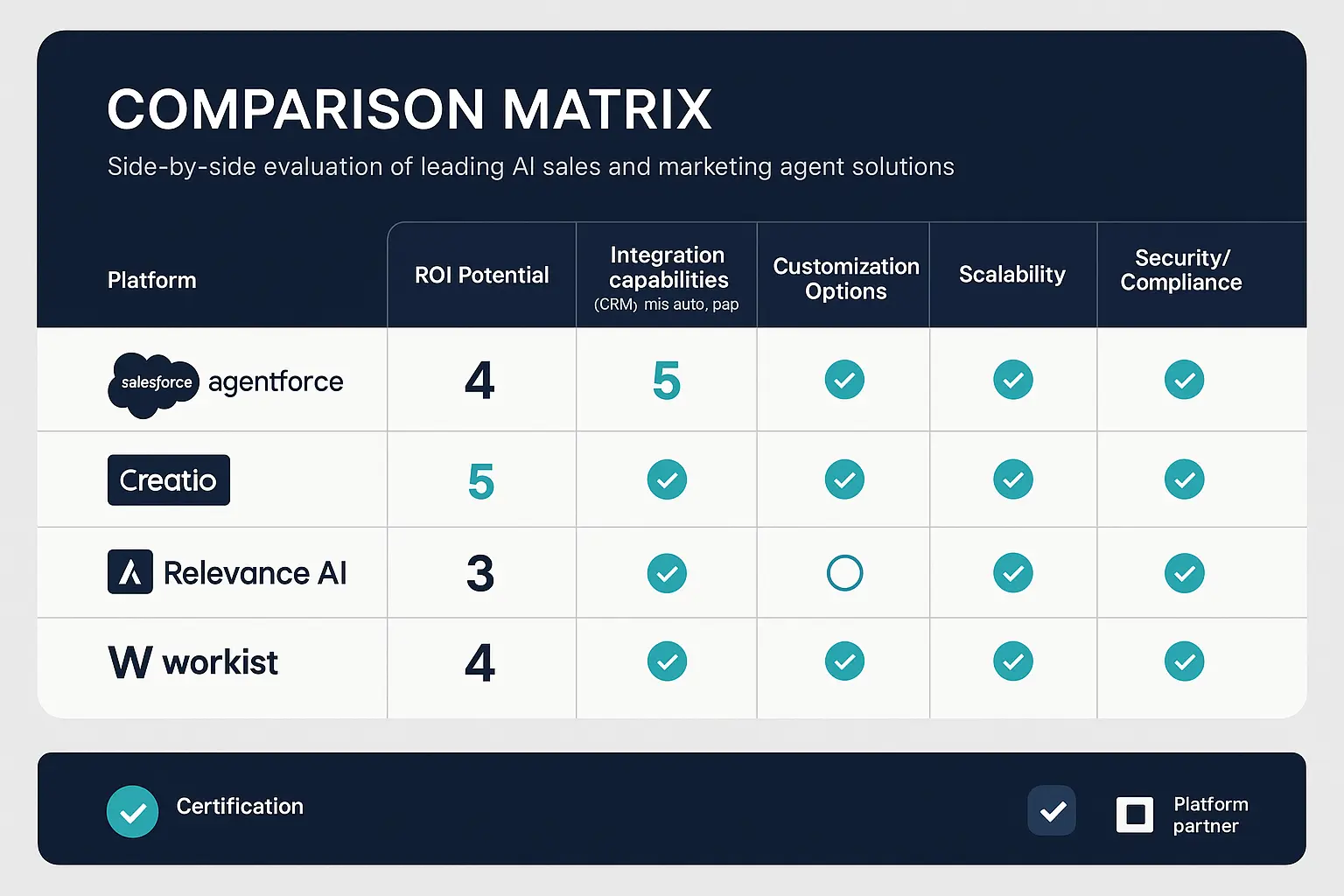
Platforms like Salesforce are strong on native CRM integration, while tools from vendors like Creatio emphasize the concept of agentic AI. Others, like Relevance AI, focus on providing the building blocks for custom “AI Teammates.” Your ideal solution will depend on your existing tech stack and your ambition for orchestration.
Building Your AI Agent Workforce: An Implementation Blueprint
Deploying an AI agent workforce isn’t a plug-and-play process. Success hinges on a methodical approach that addresses strategy, data, and governance from day one. Many initiatives fail because they overlook the foundational work required—research shows up to a 40% failure rate for projects without the proper infrastructure.
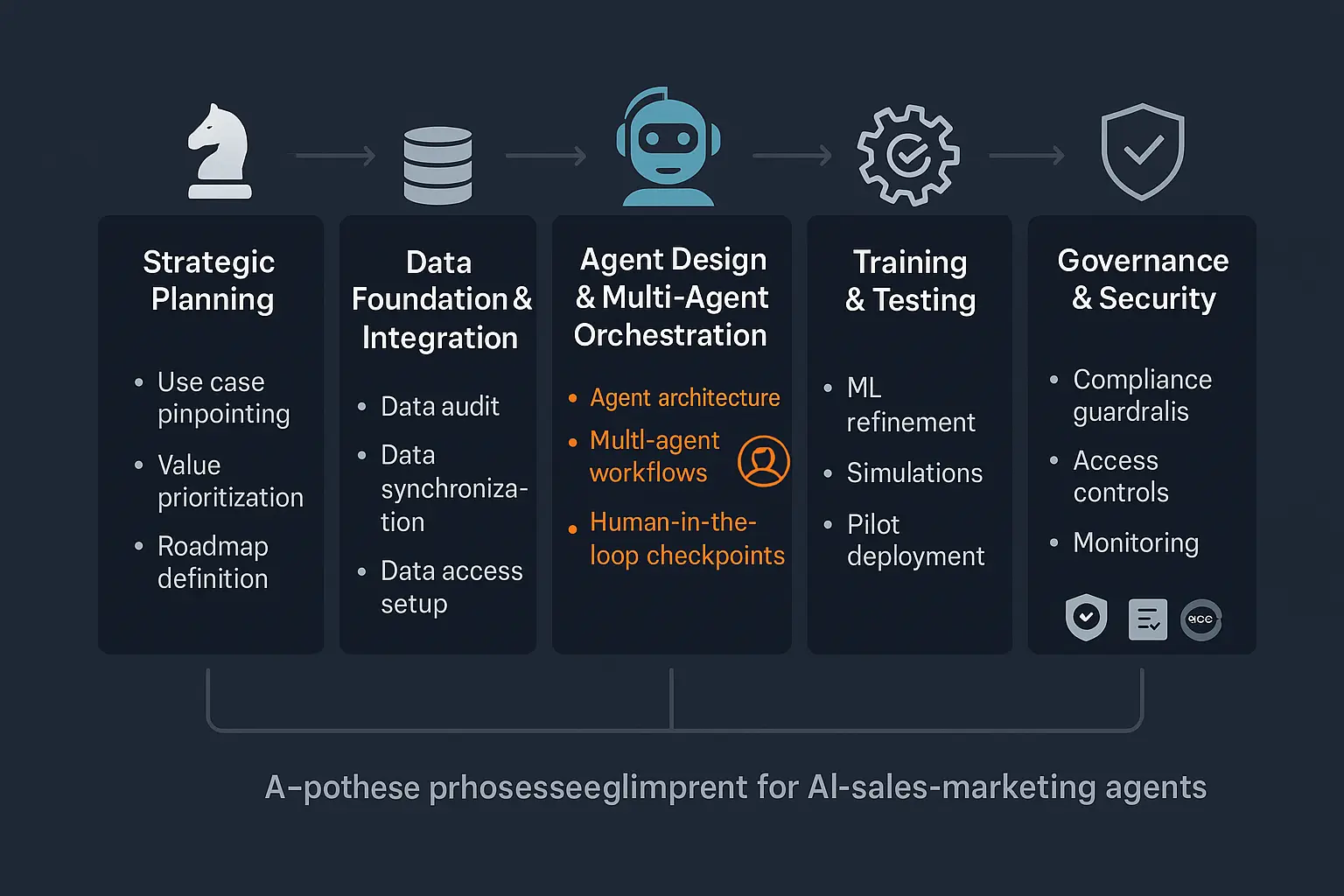
Follow this five-phase blueprint to de-risk your implementation and ensure a successful rollout.
Phase 1: Strategic Planning & Use Case Identification
Start small and aim for high impact. Don’t try to automate everything at once. Analyze your funnel and identify the biggest bottlenecks. Is it slow lead response times? Inconsistent lead qualification? Lack of personalization at scale?
Focus on specific, measurable goals. Good starting points often include:
- AI-powered lead scoring: An agent that analyzes behavioral and firmographic data to prioritize your sales team’s efforts.
- Automated sales prospecting: An agent that identifies ideal customer profiles and automates initial outreach.
- Personalized content delivery: An agent that dynamically serves the right asset to the right person at the right time.
Phase 2: Data Foundation & Integration
Your AI agents are only as good as the data they run on. This is the most critical and often underestimated phase. Focus on:
- Data Quality: Implement processes for cleansing and enriching your CRM and marketing data.
- Real-Time Sync: Ensure your AI platform has real-time, bi-directional access to your core systems (CRM, CDP). Lagging data leads to misinformed agents and poor customer experiences.
- Secure Ingestion: Establish secure data pipelines to feed information to your agents without compromising privacy.
Phase 3: Agent Design & Orchestration
This is where you design your “AI Teammates.”
- Define Roles: Assign clear roles to each agent (e.g., Prospecting Agent, Qualification Agent, Nurturing Agent).
- Build Workflows: Map out how agents will interact and hand off tasks. For example, once the Qualification Agent confirms a lead is sales-ready, it should automatically trigger the Scheduling Agent to propose a meeting.
- Implement Human-in-the-Loop: Designate clear checkpoints where a human needs to review or approve an agent’s action, such as before sending a high-value proposal. This builds trust and maintains quality control.
Phase 4: Training, Testing & Refinement
Launch is just the beginning.
- A/B Test Everything: Continuously test different agent scripts, timing, and strategies to see what performs best.
- Monitor Performance: Track key metrics for each agent and workflow. Use this data to refine their models and improve their decision-making over time.
- Gather Team Feedback: Your sales and marketing teams are on the front lines. Use their qualitative feedback to improve agent performance and usability.
Phase 5: Governance & Security
Establish clear rules of engagement.
- Set Guardrails: Define what your agents can and cannot do. For example, set limits on communication frequency or prohibit them from discussing pricing without approval.
- Ensure Compliance: Work with your legal and IT teams to ensure your AI deployment complies with regulations like GDPR and CCPA.
Maximizing ROI: Measuring the Impact of Your AI Agent Strategy
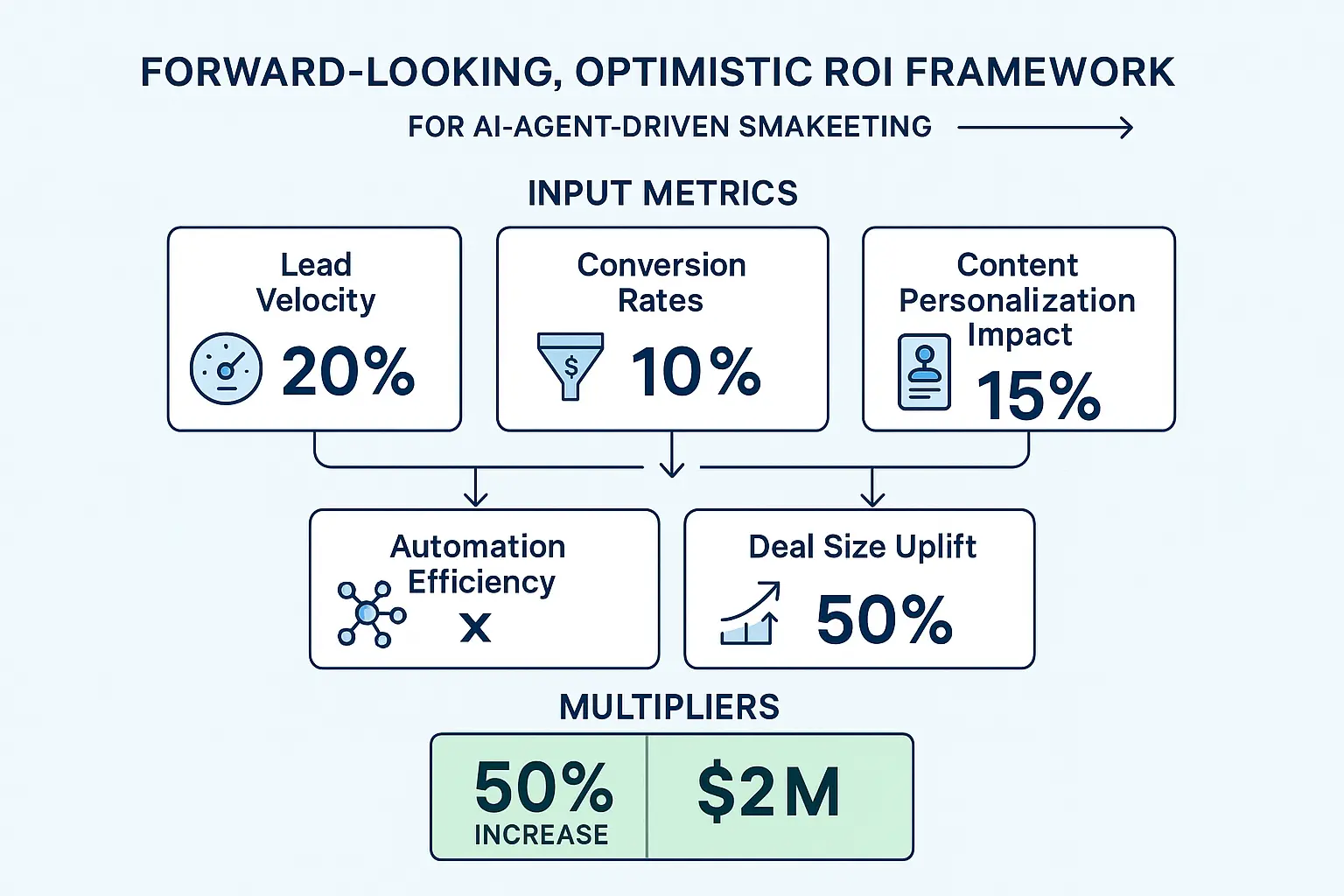
An investment in agentic AI must be justified by clear business outcomes. Moving beyond vague promises of “efficiency” to a concrete ROI model will build confidence and secure buy-in across your organization. The results can be staggering: companies using AI sales agents report 7-25% revenue increases and up to 30% cost reductions.
Here’s a framework for measuring the impact:
-
Top-Line Revenue Growth:
- Increased Lead Volume & Quality: Track the number of marketing-qualified leads (MQLs) and sales-qualified leads (SQLs) generated. Automation can yield 451% more qualified leads.
- Higher Conversion Rates: Measure funnel conversion rates at each stage. Agentic AI platforms have been shown to achieve 4-7x conversion rate improvements.
- Shorter Sales Cycles & Larger Deals: Sales teams using AI see 78% shorter deal cycles and 70% larger deals.
-
Operational Efficiency & Cost Savings:
- Reduced Cost Per Lead: With more efficient targeting and qualification, AI can lead to a 33% lower cost per lead.
- Increased Rep Productivity: By automating administrative tasks (which can take up 60% of a rep’s time), you free up your team to focus on high-value activities like closing deals. AI can slash research time by over 33%.
- Lower Overhead: 24/7 agent availability reduces the need for larger teams to cover different time zones or handle routine inquiries.
-
Customer Experience & Retention:
- Faster Response Times: Instantaneous engagement with leads dramatically improves their experience.
- Enhanced Personalization: Track engagement metrics on personalized content and communications.
- Higher Customer Satisfaction: Proactive AI engagement can deliver up to 105% incremental ROI through better experiences, and leaders report 90-94% customer satisfaction.
The Future is Agentic: Preparing for Automated Sales & Marketing Interactions
The evolution we’ve discussed is leading to a fascinating and disruptive future: Agentic Commerce. This is a world where AI agents don’t just act on your behalf—they act on behalf of your customers, too.
Imagine a procurement agent deployed by one of your target accounts. Its job is to autonomously research vendors, compare solutions based on a complex set of criteria, and even conduct initial negotiations. How do you sell to a bot?
Businesses that thrive in this new landscape will be those that become “agent-friendly.” This means:
- Structured, API-Accessible Data: Your product information, pricing, and technical specifications should be easily digestible by other AI agents.
- Transparent Business Logic: The rules and criteria your agents use for qualification and pricing should be clear and consistent.
- Agent-to-Agent Communication Protocols: Your AI workforce must be equipped to interact, negotiate, and transact with your customers’ AI agents seamlessly.
This may seem distant, but the groundwork is being laid now. Choosing an AI platform with a flexible, API-first architecture is not just a good technical decision for today; it’s a strategic necessity for tomorrow.
Frequently Asked Questions (FAQ)
We’ve worked with hundreds of leaders evaluating AI agent solutions. Here are the questions that come up most often.
Will AI agents replace my human sales and marketing teams?
No, they will augment them. The data shows that AI empowers teams to be more effective. With 77% of marketers already using AI for lead generation, the goal is to automate repetitive, low-value tasks so your human experts can focus on strategy, building relationships, and closing complex deals. Think of it as giving your best performers a team of tireless assistants.
How do we ensure the AI agent’s communications are on-brand and high-quality?
This is where “human-in-the-loop” controls and robust training are essential. A good platform allows you to:
- Train the agent on your company’s knowledge base, past communications, and brand voice guidelines.
- Set up approval workflows for sensitive communications.
- Continuously monitor agent interactions and provide feedback to refine its performance.
What are the biggest hidden challenges of implementation?
Beyond the technical setup, the two biggest hurdles are data quality and change management. If your source data in your CRM is messy, your agent will make poor decisions. Internally, you must clearly communicate the “why” behind the new tools, train your team on how to work with the agents, and showcase early wins to build momentum and enthusiasm.
How do we handle data privacy and security with customer information?
Choose a partner that prioritizes trust. Demand transparency on their data handling policies, security architecture, and compliance with standards like SOC 2, GDPR, and CCPA. The platform should offer features like data masking and role-based access control to ensure sensitive information is protected.
Can we start small? What does an initial project look like?
Absolutely. A great pilot project is automating the initial response and qualification for inbound website leads. It’s a high-volume, repetitive task with a clear success metric (e.g., increase the MQL-to-SQL conversion rate by 20%). This provides a contained environment to prove value and learn before expanding to more complex orchestrations like our approach to conversion optimization strategies.
The move to an AI-powered sales and marketing organization is an inevitability. The question is whether you will lead the transition or be forced to follow.
By adopting a strategic, orchestration-first mindset, you can build more than just a collection of tools. You can build a durable competitive advantage—an intelligent, adaptable engine that drives growth, efficiency, and a superior customer experience.
Ready to design your own AI agent blueprint? Let’s schedule a strategy session to map your high-impact use cases and build a tangible ROI model for your business.
