
The Definitive Guide to AI Agents in CX: From Evaluation to ROI
You know AI is transforming customer experience. You’ve seen the projections—a market rocketing towards USD 83.85 billion by 2033—and you understand the urgency. But moving from abstract potential to concrete strategy is a different challenge. The market is saturated with platforms all claiming to be the best, and the real-world complexities of integration, data quality, and team adoption are often glossed over.
How do you choose the right AI agent solution? How do you implement it without disrupting your operations? And most importantly, how do you prove its value to your organization?
This guide cuts through the noise. It’s not a sales pitch; it’s a strategic playbook for CX leaders. We’ll move beyond the basics of chatbots to explore the technical hurdles, ethical considerations, and advanced ROI models that competitors rarely discuss. This is the resource you’ll return to as you navigate one of the most critical technology decisions for your business.
Chapter 1: Redefining Customer Experience with AI Agents – Beyond Traditional Chatbots
Let’s start by clearing up a common misconception. When we talk about AI agents, we’re not just talking about the rigid, script-following chatbots of the past. The technology has evolved into something far more powerful. As consulting firm BCG notes, we’re entering an era of “agentic AI”—autonomous systems that can reason, plan, and execute complex, multi-step tasks to achieve a goal.
This is the shift from simply answering questions to accomplishing “customer missions.”
- Reactive vs. Proactive: A traditional chatbot reacts to a query like “Where is my order?” An AI agent proactively identifies a shipping delay from carrier data, cross-references the customer’s purchase history to see if it’s a high-value order, and sends a personalized message offering a discount on a future purchase—before the customer even thinks to ask.
- Conversational vs. Executable: A chatbot can provide information. An AI agent can understand a customer’s intent—like “I need to change my flight and book a hotel near the new airport”—and then access multiple systems to execute the flight change, find and book a suitable hotel, and update the customer’s calendar.
The most forward-thinking companies are preparing for what the World Economic Forum calls the rise of the “agentic internet,” where a customer’s personal AI agent will interact with a company’s AI agent to negotiate deals and solve problems. While this future is still unfolding, the underlying technology is here now, and it’s critical for evaluating any solution. Is it just a better FAQ, or is it a true problem-solver?
Chapter 2: The Symbiotic Relationship: AI and Human Agents for Unbeatable CX
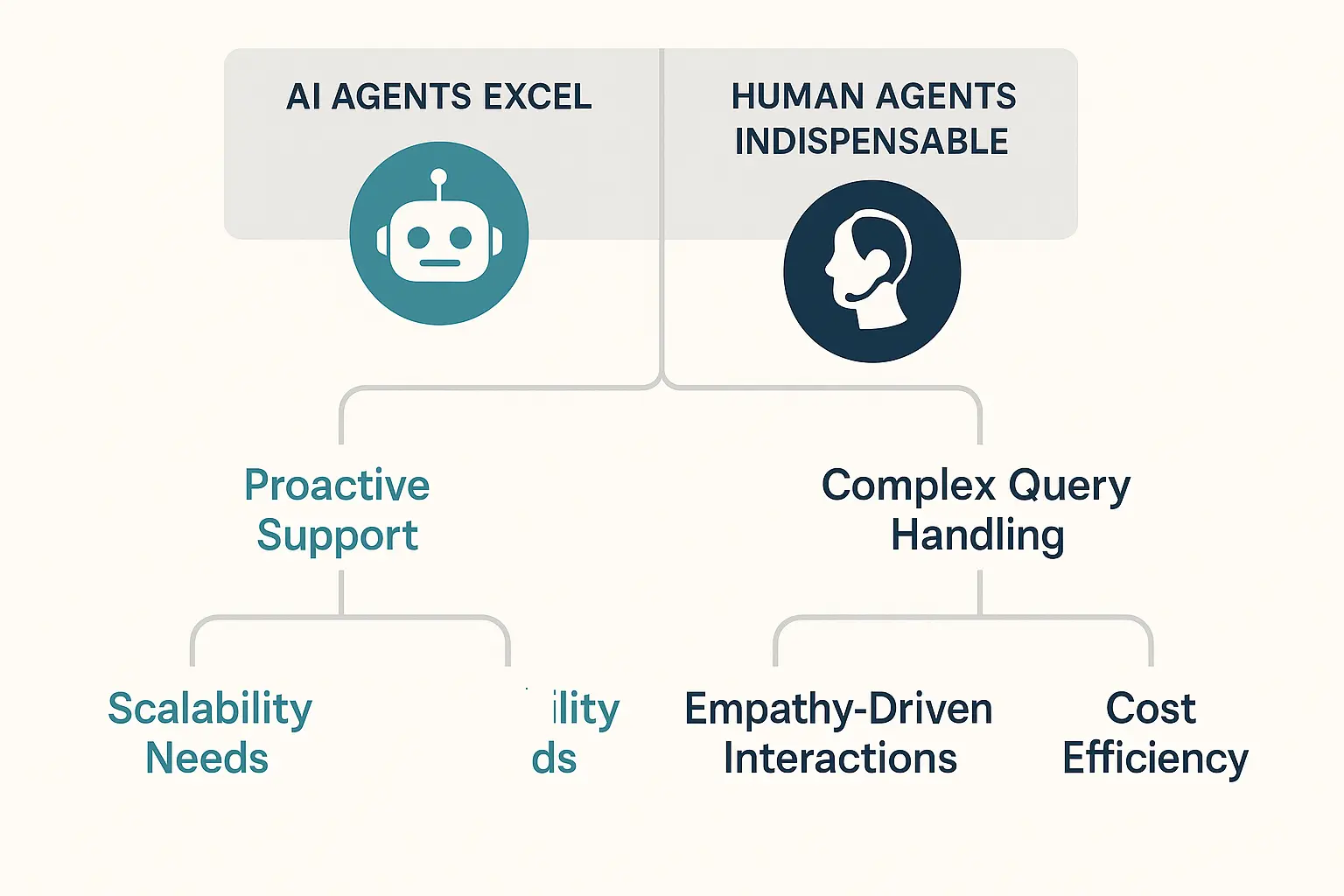
The fear that AI will replace human agents is understandable, but the data paints a different picture. While 90% of companies now use AI to improve CX, a significant 79% of Americans still prefer interacting with a human. The goal isn’t replacement; it’s elevation. The most successful CX strategies create a symbiotic relationship where AI handles the routine, and humans manage the complex and emotional.
This approach delivers powerful results. Businesses leveraging AI in their support units report a 69% improvement in customer service and a 55% decrease in wait times. It’s about striking the right balance.
Identifying the optimal balance: When AI shines, when humans are indispensable
The key is to intelligently route tasks to the right resource. AI agents excel at speed, data processing, and 24/7 availability. Human agents are unmatched in empathy, creative problem-solving, and building relationships.
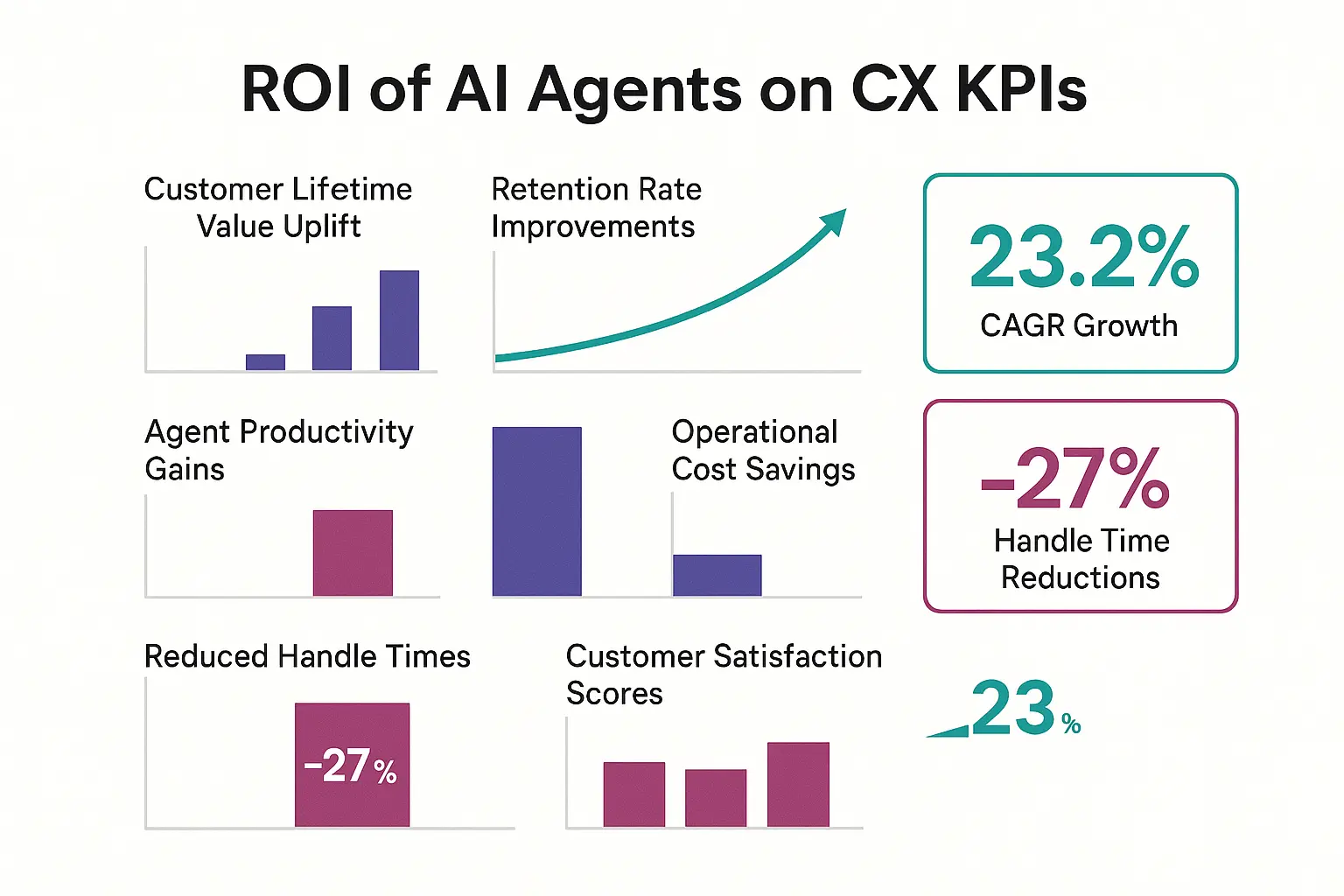
True collaboration happens when AI empowers your human team. Tools like “agent assist” can listen to a conversation in real-time, surface relevant knowledge base articles, and suggest responses, leading to a 27% reduction in average handle time. This frees your best agents from tedious data-digging and allows them to focus on what they do best: creating exceptional, brand-defining customer moments.
Chapter 3: Strategic Imperatives for AI Agent Implementation – From Vision to Reality
This is where most implementations either succeed or fail. Selecting a platform is only one piece of the puzzle. Successfully integrating an AI agent into your CX ecosystem requires navigating a series of technical, ethical, and organizational challenges.
Overcoming Technical Hurdles
Many vendors will promise a simple, “plug-and-play” solution. For any enterprise with existing systems, the reality is more complex.
- Legacy System Integration: Your customer data likely lives in multiple places: a CRM, an e-commerce platform, a proprietary database. A powerful AI agent must connect to all of them. Look for solutions with robust API frameworks, pre-built connectors, and the flexibility to work with middleware to bridge gaps between old and new systems.
- Data Quality and Governance: An AI agent is only as smart as the data it’s trained on. Before you begin, you need a strategy for cleaning, structuring, and continuously governing your data. This isn’t a one-time task; it’s an ongoing process to ensure the AI’s responses remain accurate and relevant.
- Workflow Orchestration: What happens when the AI can’t solve a problem? The escalation path to a human agent must be seamless. This involves designing intelligent routing rules that consider agent skill sets, availability, and the full context of the AI’s conversation so the customer never has to repeat themselves.
Ethical AI & Trust Building
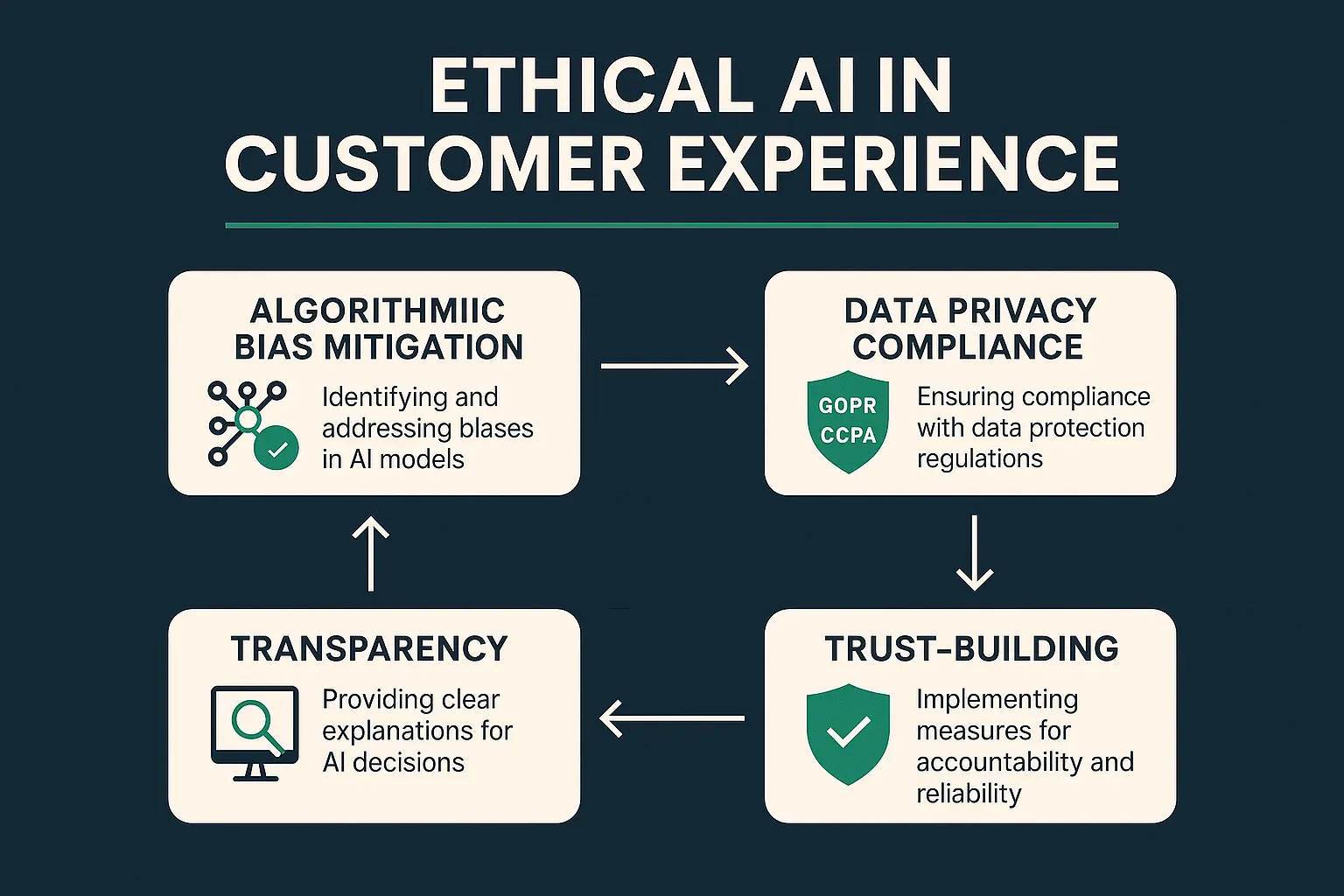
Customer trust is your most valuable asset. In an era where 59% of consumers believe generative AI will change how they interact with companies, building that trust through responsible AI is non-negotiable.
- Mitigating Algorithmic Bias: If your historical support data contains biases, your AI will learn and amplify them. A key evaluation criterion should be the platform’s tools for identifying and mitigating bias to ensure fair and equitable treatment for all customers.
- Data Privacy and Security: AI agents handle sensitive customer data, making compliance with regulations like GDPR and CCPA paramount. You need clear governance on how data is stored, processed, and anonymized, along with robust security protocols to prevent breaches.
- Transparency and Explainability: When an AI makes a decision—like approving or denying a claim—you need to be able to explain why. This is crucial not only for regulatory compliance but also for troubleshooting and maintaining customer trust.
Organizational Change Management
Don’t underestimate the human element. The most sophisticated AI will fail if your team doesn’t embrace it.
- Reskilling the Workforce: Frame AI adoption as an opportunity for growth. Your agents are transitioning from being simple problem-solvers to becoming CX strategists, data analysts, and AI trainers. Invest in training programs that prepare them for these higher-value roles.
- Fostering Collaboration: Address fears of job displacement head-on. Communicate a clear vision for how AI will augment, not replace, your team. Create feedback loops where agents can help refine the AI’s performance, making them partners in its success.
Chapter 4: The AI Agent Platform Playbook: Evaluating & Selecting Your Solution
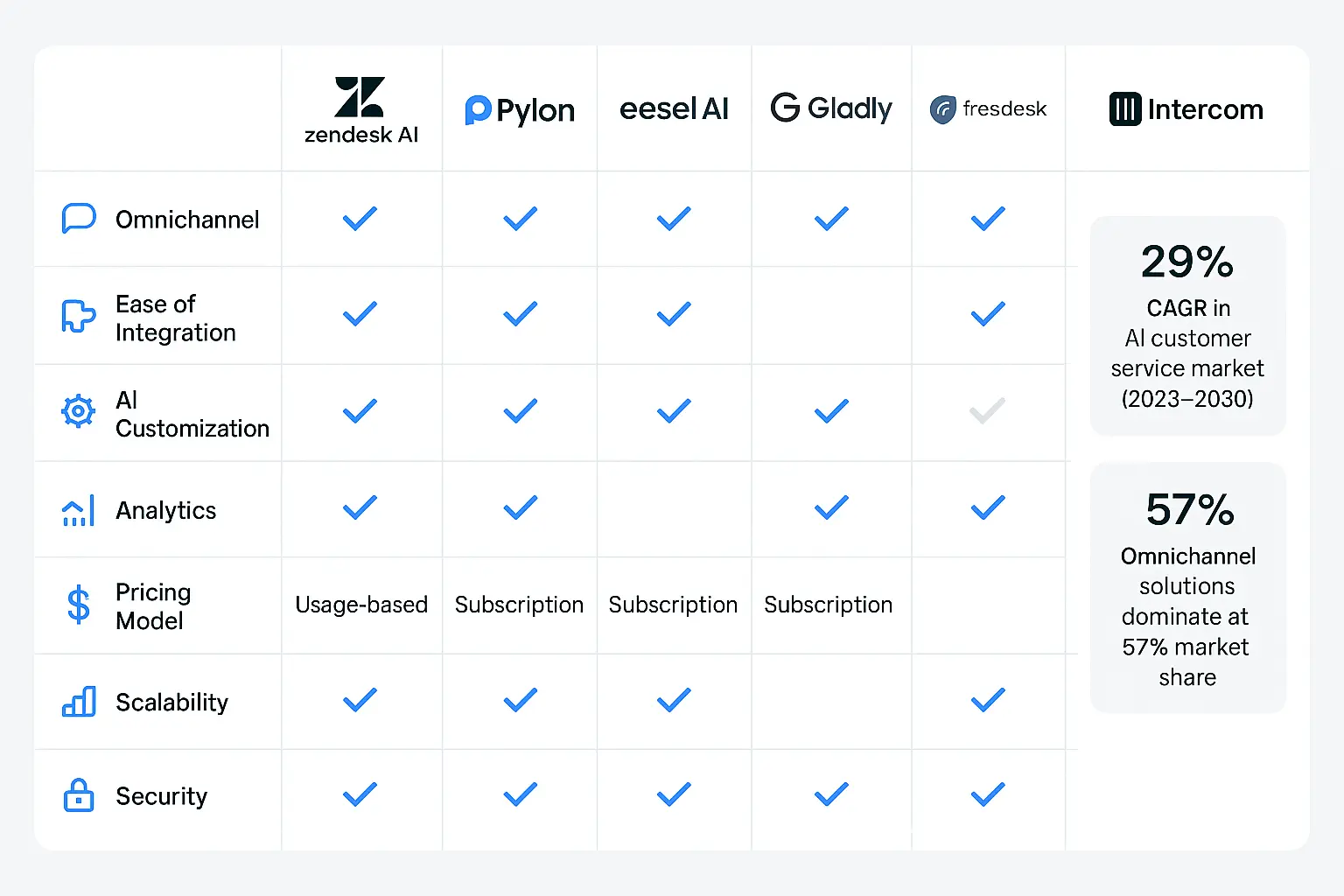
With a clear understanding of the strategic imperatives, you’re now ready to evaluate platforms. Your goal is to find a solution that not only meets your current needs but can also scale with your future vision. Use these criteria as your guide for a comprehensive AI customer service platforms comparison.
Key Evaluation Criteria for MOFU Buyers:
- Omnichannel Native: Can the AI provide a consistent experience across every channel—voice, chat, email, social, and even within platforms like Slack or Teams for B2B support? Or is it just a web chatbot with other channels bolted on?
- Intelligent Routing and Context: Does the platform go beyond basic keyword routing? Can it analyze intent, customer history, and CRM data to route complex B2B issues to a specific account manager while sending a simple inquiry to a self-service flow?
- Custom AI & Knowledge Integration: How easily can you train the AI on your specific knowledge base, product documentation, and past conversations? Look for systems that learn continuously from every interaction, not just a static FAQ document.
- Analytics and Optimization: The platform should provide a clear dashboard with more than just deflection rates. You need insights into conversation topics, resolution success, customer sentiment, and areas where the AI is struggling, so you can continuously refine its performance.
- Scalability and Security: Ensure the platform is built on a reliable infrastructure that can handle fluctuating volumes. It must also have enterprise-grade security certifications (like SOC 2, ISO 27001) and a clear data compliance roadmap.
In-depth Platform Comparisons
While many lists compare basic features, a true evaluation requires looking at how these features support specific business needs. A startup’s needs differ from a large enterprise, and a B2C retailer’s priorities are different from a B2B SaaS company’s. Use the framework above to analyze how different solutions stack up for your unique use case.
Chapter 5: Proving the Value: Quantifying ROI & Optimizing AI Agent Performance
An investment in AI agents demands a clear return. As you know, 81% of businesses plan to invest in AI for CX in 2025 and beyond, and the C-suite will want to see the financial impact. A comprehensive ROI model goes far beyond basic efficiency metrics.
Developing a comprehensive ROI framework
Success isn’t just about deflecting tickets or reducing Average Handle Time (AHT). A holistic view connects AI performance to core business outcomes.
- Operational Efficiency: This is the baseline. Track metrics like First Contact Resolution (FCR), ticket deflection rate, and cost per resolution. But also measure the productivity gains for your human agents. Are they closing more complex tickets per hour?
- Revenue Impact: This is where the story gets compelling. Measure the impact on Customer Lifetime Value (CLV) by tracking the spending habits of customers who interact with the AI. Can you link proactive AI outreach to a reduction in customer churn? Quantify the conversion rates from AI-powered product recommendations.
- CX & Loyalty: Use metrics like Customer Satisfaction (CSAT) and Net Promoter Score (NPS), but segment them by interaction type (AI-only, AI-human hybrid, human-only) to understand the impact. Faster, 24/7 resolutions from AI directly translate to improved customer loyalty and retention.
- Employee Experience (EX): Don’t overlook the impact on your team. Track agent retention rates and employee satisfaction (eNPS). When AI handles repetitive tasks, agent morale improves, reducing costly turnover.
Continuous performance monitoring is key. Use A/B testing to try different conversational flows and feedback loops (e.g., a simple “Was this helpful?” after an AI interaction) to gather data for constant refinement.
Frequently Asked Questions
Q: Will implementing an AI agent make my brand sound robotic and impersonal?A: This is a common concern, but modern AI agents are designed for personalization. By integrating with your CRM, they can use a customer’s name, purchase history, and past interactions to create a highly contextual and natural conversation. The key is to design the AI’s personality to reflect your brand’s voice and to establish clear guidelines for when to escalate to a human for more empathetic or complex issues.
Q: My company’s data is messy and spread across different systems. Can we still implement an AI agent?A: Yes, but it requires a strategic approach. The initial phase of your project should focus on data discovery and cleansing. Leading AI platforms provide tools to help ingest, tag, and structure data from multiple sources. It’s often best to start with a limited scope—for instance, training the AI on a single, well-documented product line—and then expand as your data governance practices mature.
Q: What is the real total cost of ownership (TCO) beyond the initial platform license?A: TCO includes several factors: the platform subscription fee, implementation and integration costs (which may involve professional services), data cleansing and preparation, initial and ongoing training for your team, and the internal resources required to manage and optimize the AI over time. A transparent vendor will help you model these costs so you can build a realistic budget and ROI projection.
Q: How do we start without committing to a massive, risky project?A: The best approach is to start small, prove value, and then scale. Identify the most common, repetitive, and time-consuming query types your support team handles. Launch a pilot program with an AI agent focused solely on automating that specific workflow. Measure the results meticulously. This creates a low-risk case study that demonstrates the AI agents CX benefits and builds internal momentum for broader implementation.
The Golden Era of CX – Your Roadmap to AI Agent Dominance
We are at the beginning of a new golden era for customer experience, one defined by the intelligent partnership between humans and AI. The businesses that will win are not those that simply buy a tool, but those that build a comprehensive strategy around it.
You’ve seen the data, you understand the technical and ethical stakes, and you now have a framework for evaluation and proving value. The path forward is an iterative one: start with a clear business problem, choose a partner that can scale with your vision, and empower your team to be part of the solution. By doing so, you won’t just be scaling customer support—you’ll be building a more efficient, intelligent, and ultimately more human customer experience.
