
Beyond the Prompt: Navigating the Next Wave of AI Agents
You’re seeing the term “AI agents” everywhere, from breathless headlines to board-level strategy decks. But beneath the hype lies a critical evaluation challenge: how do you separate today’s reality from tomorrow’s revolution? You know the potential is massive, but you need a clear, authoritative guide to understand the advanced capabilities that will actually redefine your business—not just another article rehashing the basics.
This is that guide. We’re moving beyond simple definitions to explore the tangible, next-generation features that are shaping the future of work. We’ll examine the core advancements in multi-modal perception, cognitive reasoning, and spatial computing that separate truly intelligent agents from sophisticated chatbots. This is the crucial knowledge you need to make confident, forward-looking decisions for your organization.
Understanding the New Breed: What Makes AI Agents “Advanced”?
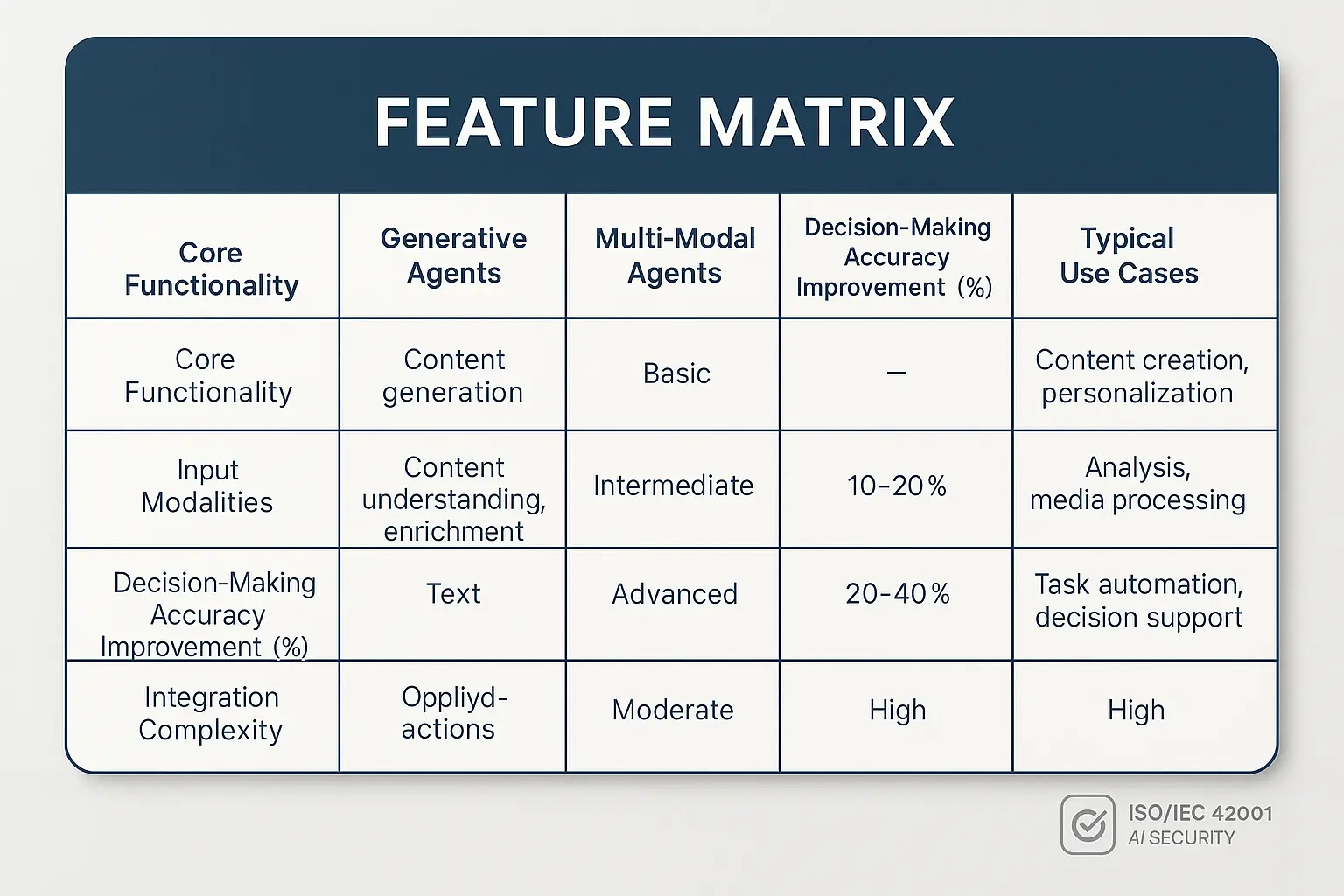
The leap from current generative AI tools to the next generation of AI agents isn’t just an incremental update; it’s a fundamental shift in capability. While today’s tools excel at responding to prompts, advanced agents are designed to understand intent, formulate multi-step plans, and execute complex tasks autonomously. The market reflects this explosive potential, projected to surge from around $5 billion in 2024 to as much as $251 billion by 2034.
Let’s break down the three pillars of this evolution.
Generative AI Agents Refined
This is the foundation. A generative agent uses a large language model (LLM) not just to create content, but as a reasoning engine. It can observe its environment (like a software application or database), make a plan based on a goal you’ve set, and take action using available tools (like APIs). The key advancement is their ability to self-correct. If a step fails, they can reassess the plan and try a different approach—a primitive form of digital problem-solving.
The Rise of Multi-Modal Agents
True understanding of the world requires more than just text. Multi-modal agents are a significant leap forward because they fuse and interpret multiple data types simultaneously—text, images, audio, and sensor data—to create a rich, holistic context. This isn’t just about accepting different inputs; it’s about reasoning across them.
For example, a multi-modal agent in a manufacturing setting could “watch” a video feed of a machine, “listen” for anomalies in its operating sound, and cross-reference that sensory data with the latest text-based maintenance logs to predict a failure before it happens. This fusion of data leads to dramatically better outcomes; research shows that multi-modal agents can outperform single-modal systems by up to 40% in decision-making accuracy due to this enhanced contextual understanding.
Emergence of Cognitive Agents
Cognitive agents represent the frontier. They build on multi-modal capabilities by incorporating more advanced, human-like reasoning processes. This includes:
- Long-Term Memory: They can recall past interactions and results to inform future decisions, learning and adapting over time.
- Complex Problem-Solving: They can break down ambiguous, open-ended goals into logical sub-tasks without explicit step-by-step instructions.
- Self-Reflection: They can critique their own performance, identify knowledge gaps, and actively seek new information to improve their next attempt.
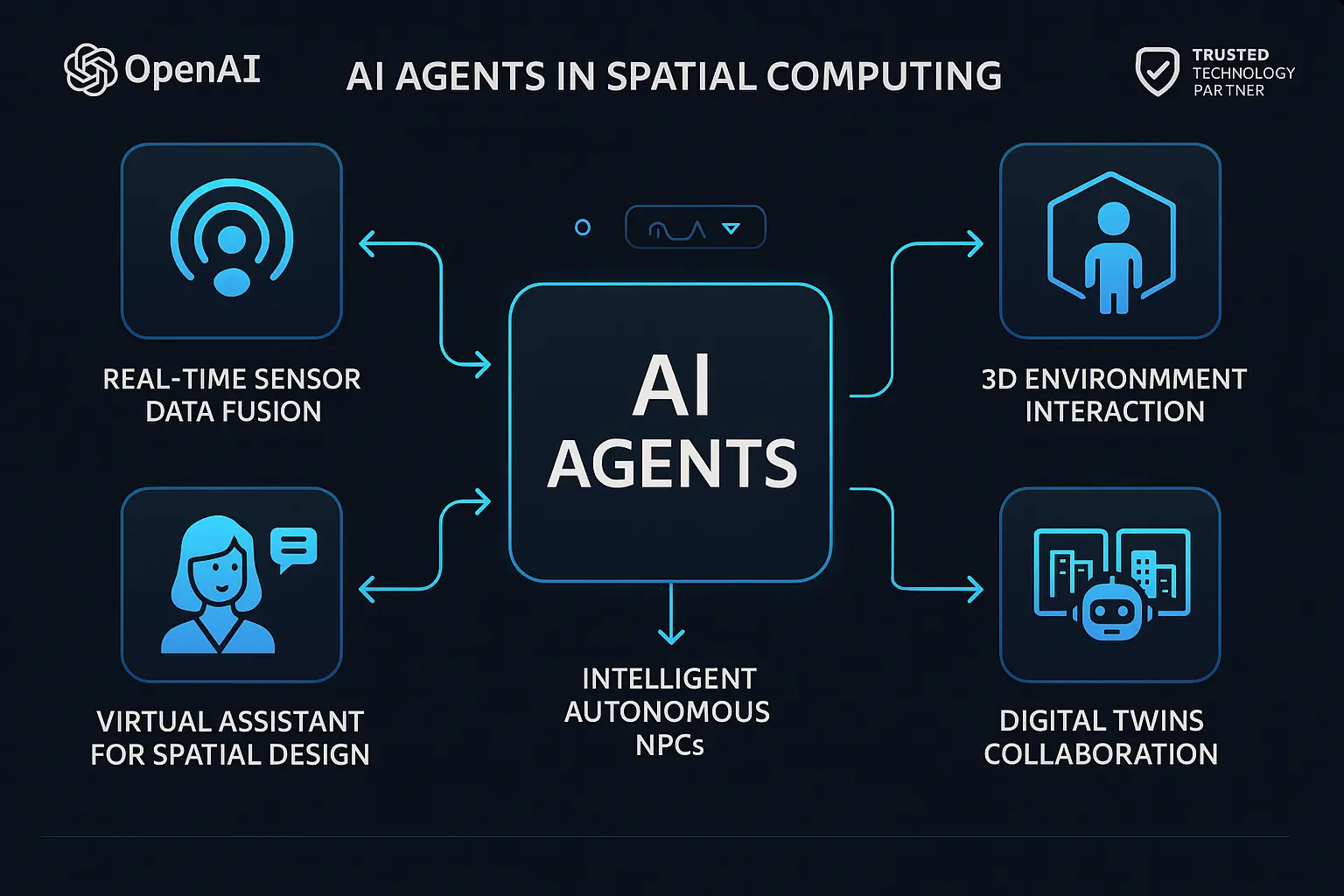
While still emerging, these capabilities are why McKinsey projects that 65% of enterprises will adopt cognitive AI agents by 2025. They promise to move beyond task automation toward becoming true digital teammates, capable of strategic thought partnership. This ecosystem of interacting agents, often called multi-agent systems, is a massive market in itself, projected to reach $184.8 billion by 2034.
Future Frontiers: AI Agents in Uncharted Territory
The most transformative potential of AI agents lies in their application to entirely new digital landscapes and their ability to handle the inherent ambiguity of creative tasks.
Integration with Spatial Computing & the Metaverse
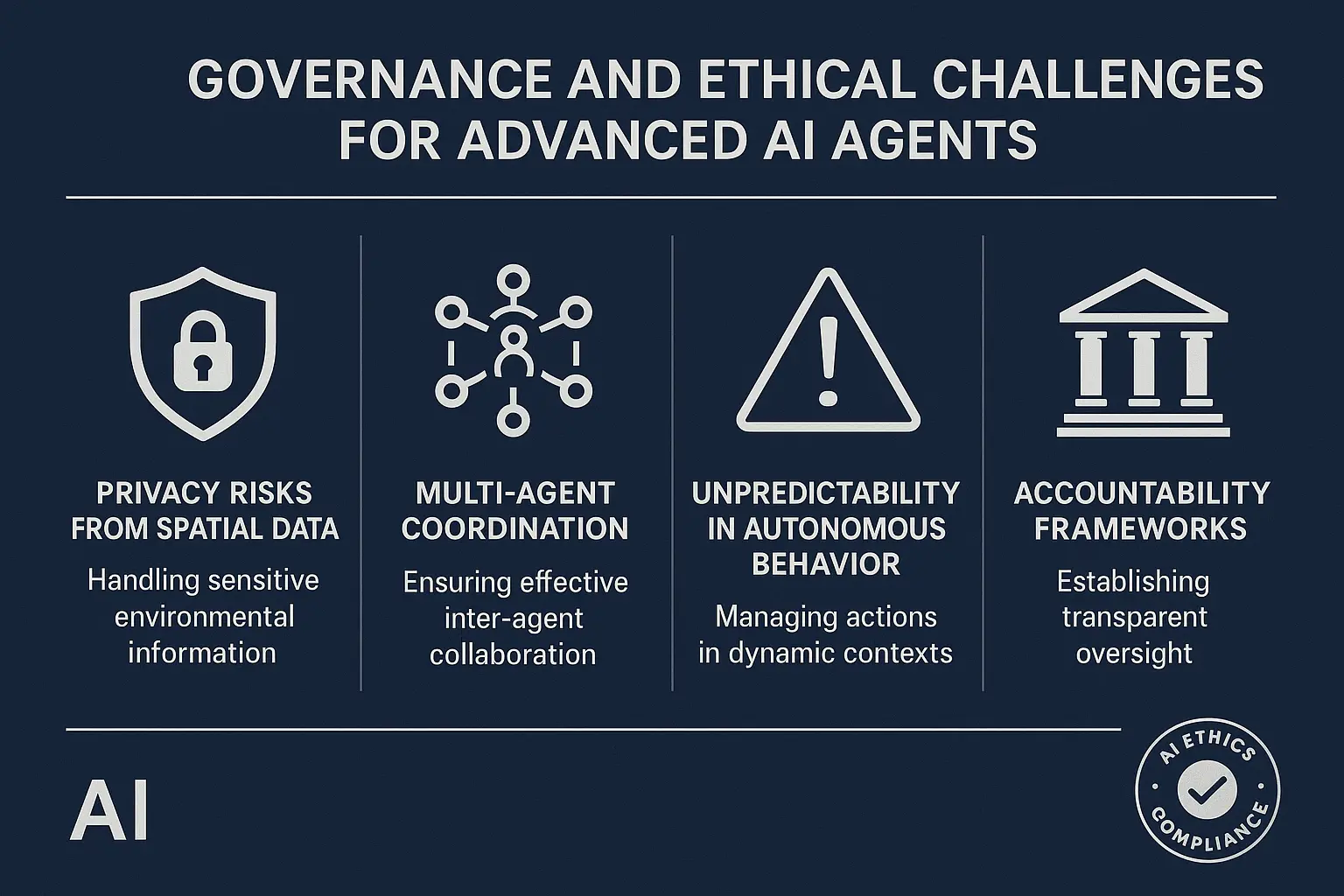
Spatial computing—the blending of digital and physical reality through AR, VR, and mixed reality—is the next major computing platform. Advanced AI agents are the key to making these 3D worlds dynamic, interactive, and truly useful.
Instead of being passive environments, metaverses and digital twins will be populated by AI agents that can:
- Navigate and Interact: Autonomously move through 3D spaces, manipulate virtual objects, and interact with human users in a spatially aware manner.
- Create and Build: Act as intelligent assistants for designers and engineers, generating 3D models from text descriptions or building entire virtual environments based on a set of rules.
- Power Digital Twins: Inhabit a virtual replica of a factory or city, running simulations, optimizing workflows, and identifying potential issues before they manifest in the real world.
The technical challenges are significant—requiring real-time sensor fusion, low-latency rendering, and complex physics calculations—but the payoff is a truly immersive and intelligent digital layer over our physical world. For businesses, this opens up new possibilities for training, collaboration, and product design that you can explore in our AI operating system.
Beyond Determinism: Navigating Non-Deterministic Generative AI
Unlike traditional software that produces the exact same output every time, generative AI agents are non-deterministic. Ask them to perform the same task twice, and you may get two slightly different, yet equally valid, results.
For businesses, this can be both a challenge and a strength.
- The Challenge: In highly regulated or safety-critical applications, variability can be a risk.
- The Opportunity: In creative fields like marketing, R&D, or design, this variability is a feature, not a bug. It allows agents to explore a wider solution space and generate novel ideas that a deterministic program never could.
The key is to build a governance framework that sets clear boundaries and constraints for the agent, allowing for creativity within safe and productive limits. It’s about guiding their autonomy, not eliminating it.
Proactive & Predictive Capabilities
The ultimate goal is for agents to shift from being reactive to proactive. By analyzing data streams and learning user patterns, future agents won’t wait for a command. They will anticipate needs, identify opportunities, and surface insights before you even know to ask. An agent could, for instance, detect a negative trend in customer support tickets, identify the root cause in recent product updates, and proactively draft a solution for the engineering team to review.
Transforming Business: New Models and Competitive Advantage
The adoption of advanced AI agents will do more than just improve efficiency; it will fundamentally alter business models and redraw competitive lines.
- Redefining Workflows: Complex, open-ended processes in software development, scientific research, and financial analysis that currently require teams of experts will be managed by a single human overseer collaborating with a team of specialized AI agents.
- Accelerating Innovation: Product design cycles will shrink dramatically as agents generate and test thousands of prototypes in simulation. Hyper-personalized marketing campaigns and customer experiences will become the norm, tailored to each individual by a cognitive agent.
- Augmenting Strategic Decision-Making: Executives will rely on “knowledge-infused” agents that act as tireless strategic advisors, capable of analyzing market data, modeling complex scenarios, and stress-testing business strategies against millions of variables.
This evolution will give rise to “AI-native” businesses whose core value proposition is built around the unique capabilities of their agentic workforce, creating new revenue streams and disrupting established industries.
Navigating the Complexities: Challenges, Ethics, and Governance
Unlocking the immense value of advanced agents requires a clear-eyed approach to their challenges and risks. For decision-makers, building a robust governance framework is not optional; it is the foundation of successful and responsible implementation.
Technical Hurdles Revisited
Beyond the conceptual promise, practical deployment requires solving significant technical challenges, including immense computational demands, data pipeline integrity, and ensuring interoperability between different agents and enterprise systems. When evaluating solutions, it’s critical to assess their scalability and their approach to API standards.
Ethical Considerations Amplified
The increased autonomy and capability of advanced agents amplify ethical concerns. A trustworthy implementation plan must address:
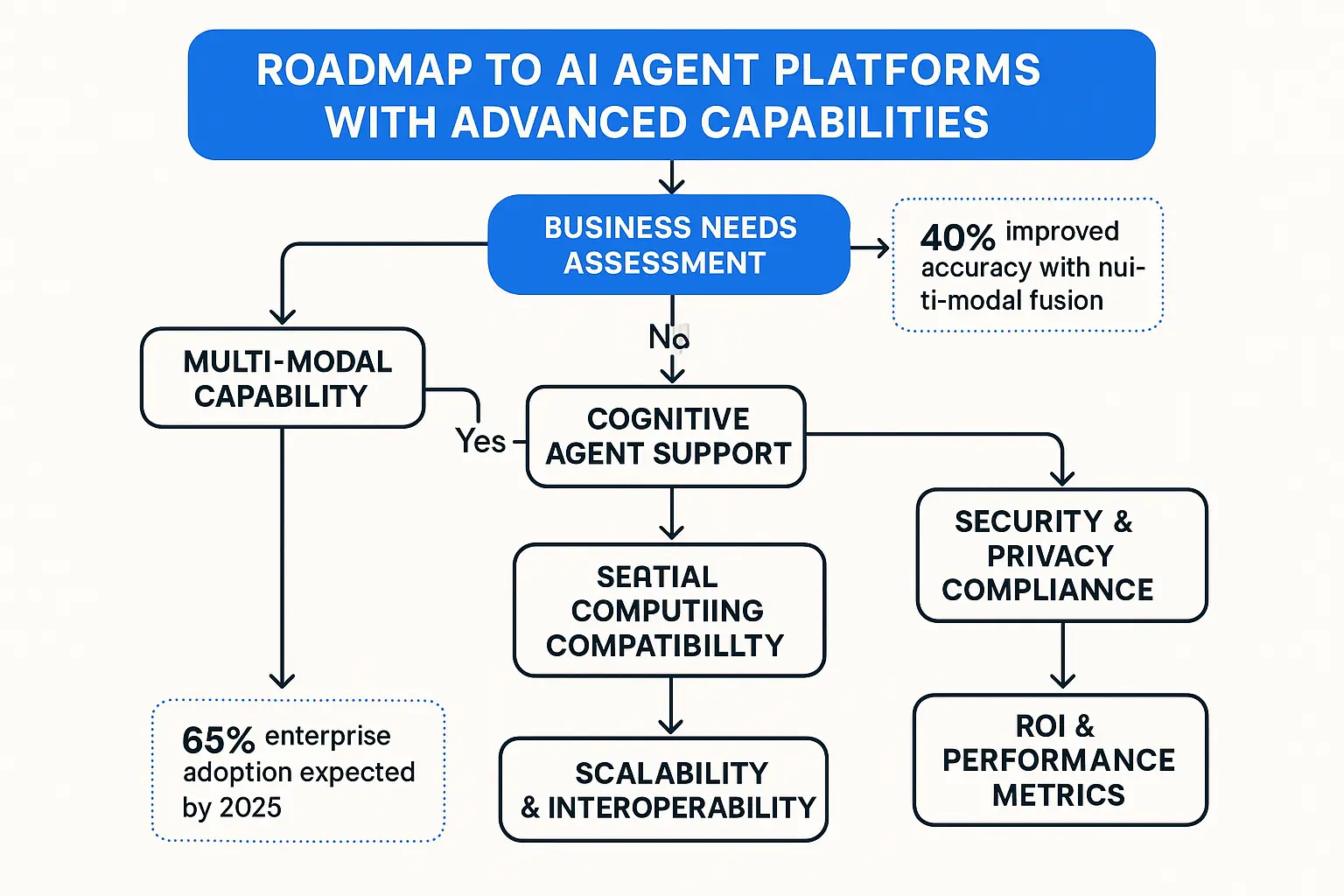
- Privacy and Surveillance: Spatially aware agents in AR/VR environments collect vast amounts of environmental and biometric data, creating significant privacy risks if not properly managed.
- Accountability: When an autonomous agent or a system of multiple agents makes a critical error, who is responsible? Clear lines of accountability and transparent decision-logging are essential.
- Coordination Failures: In multi-agent systems, there’s a risk of unintended consequences, such as agents competing for resources in harmful ways or creating destabilizing feedback loops.
- Safety and Predictability: Deploying non-deterministic agents in safety-critical applications (e.g., healthcare, autonomous vehicles) requires new methods for validation, testing, and ensuring predictable behavior within safe boundaries.
Human-in-the-Loop 2.0
The role of human oversight evolves from direct task management to strategic direction and exception handling. Humans will set the goals, define the ethical guardrails, and intervene when an agent encounters a novel situation it’s not equipped to handle. This collaborative model, “Human-in-the-Loop 2.0,” maximizes the strengths of both human and machine intelligence.
Strategic Roadmap: Preparing for the Agent-Driven Future
Moving from understanding to action requires a deliberate, strategic approach. Avoid the temptation of “AI for AI’s sake” and focus on creating tangible value.
Assessment & Prioritization
Start by identifying business domains with complex, knowledge-based workflows and high potential for automation or augmentation. Look for processes that are currently bottlenecked by the need to synthesize large amounts of unstructured data from multiple sources.
Data Strategy
Advanced agents are only as good as the data they can access. Ensure your data is accurate, well-organized, and accessible through clean APIs. A robust data foundation is the single most important prerequisite for success.
Talent Development
Your team’s roles will shift. Invest in upskilling your workforce to focus on AI agent strategy, oversight, and collaboration. The most valuable employees will be those who can effectively direct and partner with digital agents to achieve business goals. To get started, you can learn more about designing gen AI workflows.
Selecting the Right Tools/Platforms
As you evaluate platforms, move beyond baseline features. Your selection criteria should be future-focused, prioritizing the advanced capabilities that will drive long-term competitive advantage. A recent survey of over 1,300 professionals confirmed that performance quality, not cost, is the top concern for companies deploying AI agents. Choose a partner who can deliver on that promise.
Frequently Asked Questions
How are advanced AI agents different from today’s chatbots or generative AI tools?
The key difference is autonomy and action. A chatbot responds to a query, usually with information. A generative AI tool creates content based on a prompt. An advanced AI agent understands a goal, creates a multi-step plan to achieve it, executes that plan using various software tools, and adapts if it runs into problems—all with minimal human intervention.
What is the real ROI of adopting advanced agents, beyond efficiency?
While efficiency is a major benefit, the true ROI comes from capability expansion and innovation. Agents can unlock new business models by enabling hyper-personalization at scale, accelerate R&D by running complex simulations, and improve strategic decision-making by revealing insights hidden in vast datasets. The long-term value lies in doing things that were previously impossible.
Our data isn’t perfect. Can we still implement these agents?
Yes. While clean, structured data is ideal, many advanced agents are specifically designed to work with messy, unstructured information. The key is to start with a well-defined pilot project in an area where your data is strongest. This allows you to demonstrate value quickly while you continue to improve your broader data infrastructure.
How do we manage the risks of autonomous, non-deterministic agents?
Risk management is about establishing a robust governance framework before deployment. This involves setting clear operational boundaries, defining ethical guardrails, creating rigorous testing and validation protocols, and implementing strong human-in-the-loop oversight for critical decisions. The goal is to grant “constrained autonomy,” allowing agents freedom to operate within safe and well-defined limits.
What skills does my team need to manage and collaborate with these agents?
The focus shifts from technical execution to strategic direction. Your team will need skills in “prompt engineering” (clearly defining goals for agents), systems thinking (understanding how multiple agents interact), data analysis (interpreting agent outputs), and ethical oversight (ensuring responsible use). It’s less about being a coder and more about being an effective manager of a digital workforce.
The Inevitable Evolution
The transition to an agent-driven enterprise won’t happen overnight, but it is happening. The technologies and capabilities discussed here are not science fiction; they are the active focus of leading research labs and are already being deployed by forward-thinking companies.
Understanding this new frontier of multi-modal, cognitive, and spatially aware AI is the first step. The next is to build a strategy that harnesses their power responsibly and effectively. The organizations that begin this journey now will be the ones that define the competitive landscape of the next decade.
