
Your Complete Guide to Implementing and Managing an Enterprise AI Agent Ecosystem
You’ve seen the potential of AI agents—autonomous systems that can reason, plan, and execute complex tasks. The promise of automating workflows and unlocking new efficiencies is immense. In fact, 96% of enterprises are already planning to expand their use of AI agents in the next year. But moving from a promising proof-of-concept to a secure, scalable, and governed enterprise ecosystem is a monumental leap.
The challenge isn’t a lack of technology; it’s the absence of a clear, holistic roadmap. Technical guides focus on code, while high-level strategy often ignores the messy reality of integration and governance. This leaves decision-makers like you navigating a critical gap, trying to connect the “why” with the “how.”
This guide bridges that gap. It’s a comprehensive, lifecycle-based framework designed for enterprise leaders and technical decision-makers. We’ll walk through every stage, from initial strategy and vendor selection to deployment, monitoring, and ongoing governance, giving you the clarity needed to build with confidence.
The AI Agent Ecosystem Lifecycle: A Strategic Framework for Implementation
Successfully deploying AI agents isn’t a single project; it’s about cultivating a living ecosystem. This requires a phased approach that balances innovation with enterprise-grade stability and control.
Phase 1: Strategy & Planning
Before writing a single line of code, a robust strategy is essential. This phase is about aligning agent capabilities with core business objectives and preemptively addressing risk.
- Identify High-Value Use Cases: Move beyond generic applications. Pinpoint specific, high-impact workflows within your organization. Examples include:
- IT Operations: An agent that automates root cause analysis for system outages, triaging alerts and executing initial diagnostic scripts.
- Customer Support: A multi-agent system where one agent understands user intent, another retrieves data from knowledge bases, and a third drafts a personalized, accurate response for human review.
- Finance: An agent that automates invoice processing and reconciliation by reading documents, cross-referencing against internal databases, and flagging discrepancies.
- Define Clear Goals and KPIs: Success must be measurable. Go beyond vague goals like “improve efficiency.” Define concrete KPIs from the start:
- Reduction in Mean Time to Resolution (MTTR) for support tickets
- Decrease in manual data entry errors by X%
- Cost per automated transaction
- Risk Assessment and Mitigation: Proactively identify potential pitfalls. This isn’t just about security; it includes:
- Operational Risk: What happens if an agent gets stuck in a loop or makes a critical error?
- Ethical Risk: Could the agent produce biased outcomes or handle sensitive data inappropriately?
- Financial Risk: How will you control unpredictable LLM token costs?
- Assemble Your Team: A successful agent ecosystem requires a cross-functional team, including AI/ML engineers, data scientists, DevOps specialists, domain experts, and a dedicated product or project manager to ensure alignment.
Phase 2: Vendor & Framework Selection (Addressing a key gap)
The “build vs. buy” decision is pivotal. Whether you choose an open-source framework like LangChain or CrewAI, or a proprietary enterprise platform, your evaluation must be rigorous. With AI integration complexity (31%) being a top barrier to adoption, this choice sets the foundation for your entire ecosystem.
Use a structured framework to compare your options across critical enterprise dimensions.
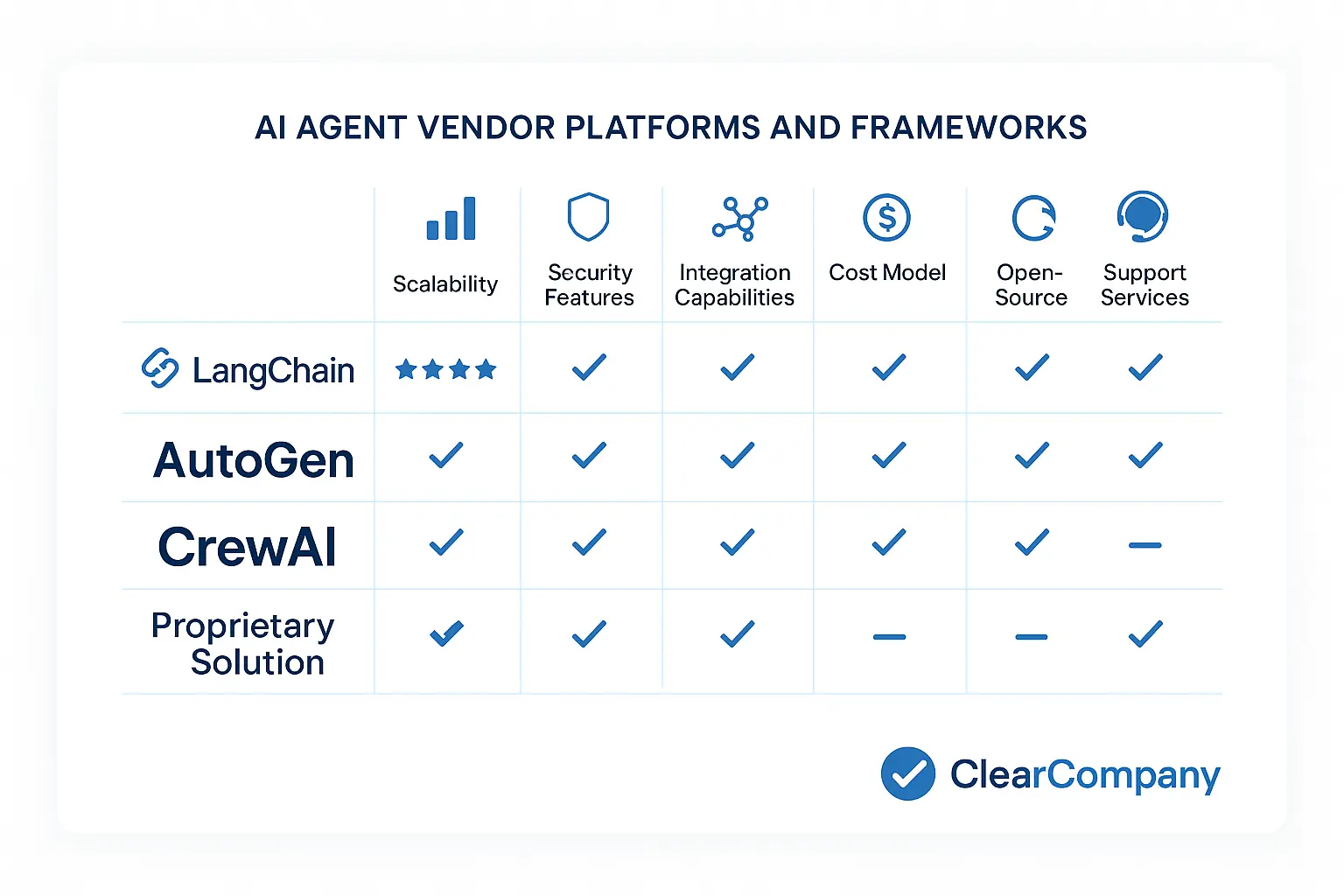
Key Decision Factors:
- Scalability & Performance: Can the solution handle thousands of concurrent agent tasks without degradation?
- Security & Compliance Features: Does it offer built-in PII redaction, access controls, and detailed audit logs?
- Integration Capabilities: How easily does it connect with your existing tech stack (APIs, databases, legacy systems)?
- Cost Model & Token Economics: Is the pricing transparent? Does it provide tools for monitoring and controlling LLM token consumption?
- Observability & Debugging: How easy is it to trace an agent’s reasoning process to identify and fix errors?
Phase 3: Design & Development
This is where strategy becomes architecture. The design of your agents and the system they operate in will determine their effectiveness and reliability.
- Choose the Right Architectural Pattern:
- Stateless Agents: Best for simple, single-turn tasks like data retrieval.
- Stateful Agents: Essential for multi-step processes that require memory and context, like planning a complex project.
- Event-Driven Architecture: A highly scalable model where agents are triggered by specific events (e.g., a new customer support ticket), making the system responsive and efficient.
- Data Management for Agents: An agent is only as good as the data it can access. This involves setting up robust Retrieval-Augmented Generation (RAG) pipelines, which connect agents to your proprietary knowledge bases, vector databases, and other data sources.
- Ethical AI by Design: Embed fairness, transparency, and accountability from the start. This means auditing training data for bias, ensuring agent decisions can be explained, and designing systems where accountability is clear.
Phase 4: Deployment & Integration
Moving agents from a developer’s laptop to a production environment is where most initiatives stumble. A production-grade deployment strategy requires thinking like a modern software engineering team.
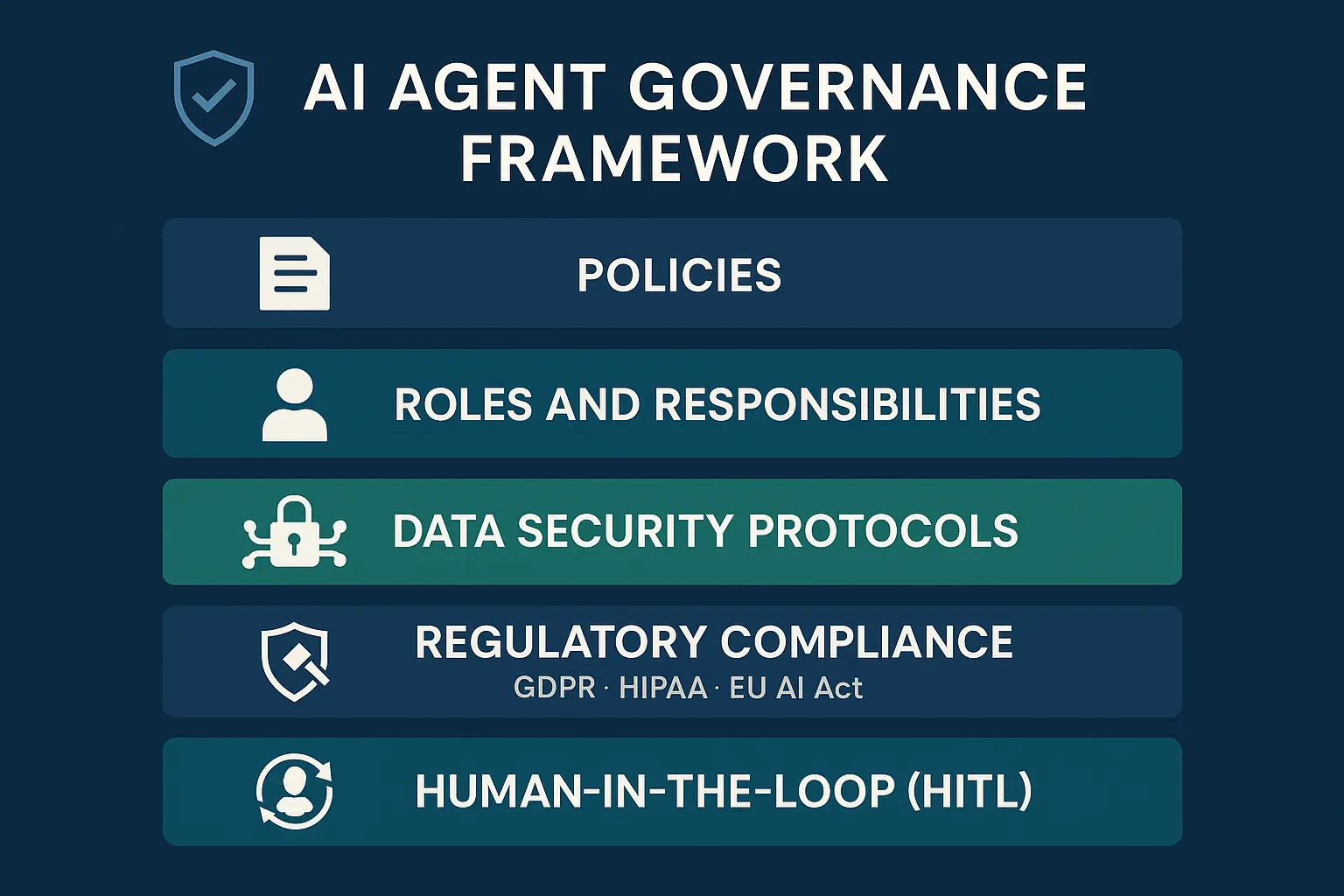
- Establish CI/CD Pipelines for AI Agents: Automate the testing and deployment process. This includes unit tests for agent tools, integration tests for workflows, and continuous evaluation to prevent performance drift. Methodologies like blue-green or shadow deployments can minimize production risks.
- Integrate with Existing Enterprise IT: Agents don’t operate in a vacuum. Your architecture must account for seamless integration with legacy systems, enterprise data warehouses, and third-party APIs. This often involves building a library of secure, standardized tools and API connectors that your agents can reliably use.
Phase 5: Performance Monitoring & Optimization
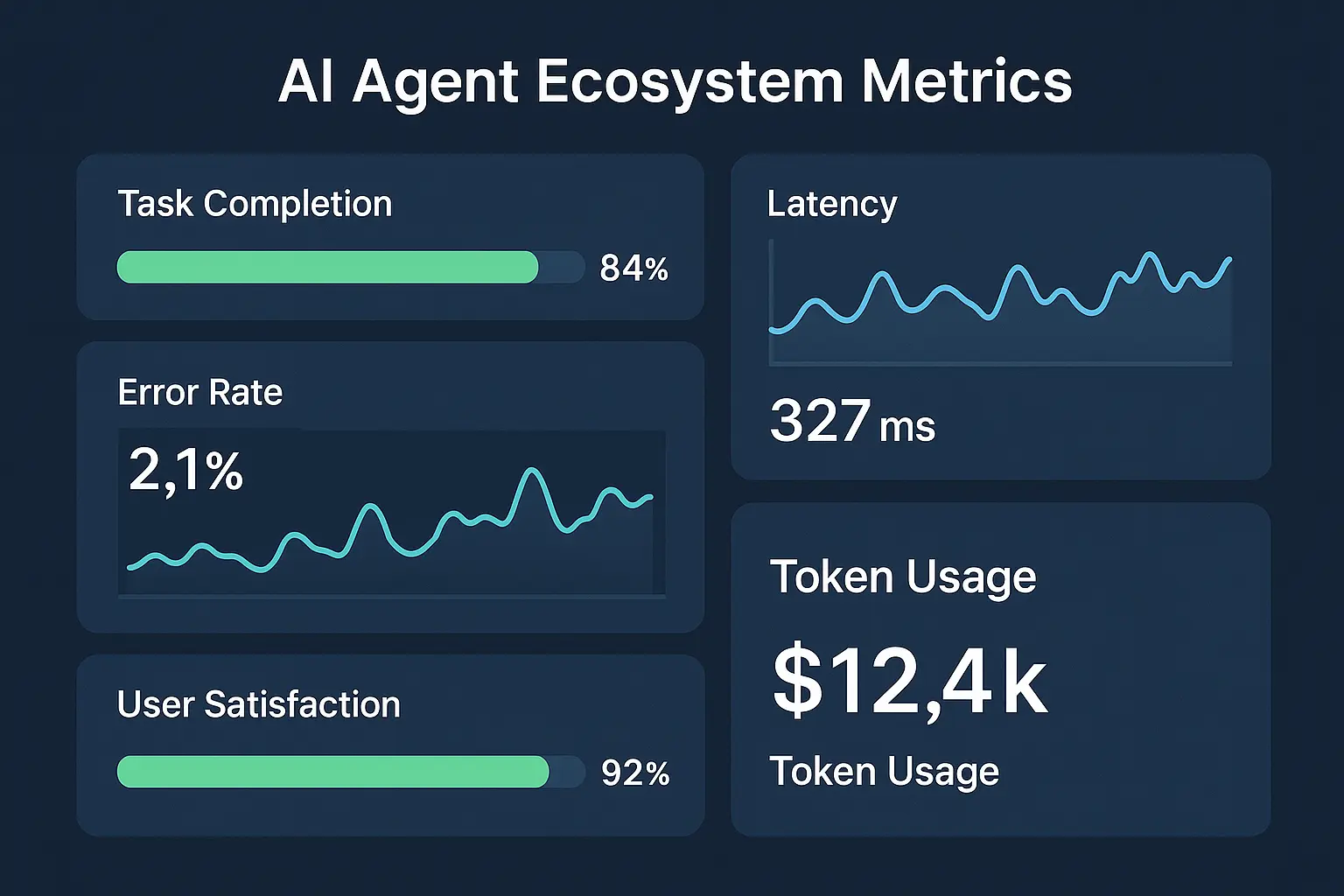
Once deployed, the work has just begun. Continuous monitoring is non-negotiable for maintaining performance, controlling costs, and ensuring reliability.
- Focus on Actionable Metrics: Track a balanced set of indicators:
- Quality & Accuracy: Task completion rate, error frequency, user satisfaction scores.
- Performance: End-to-end latency, processing time per task.
- Cost: Token usage per agent, cost per completed task.
- Implement Robust Observability: Use tools that provide deep insights into agent behavior. Structured logging and tracing are essential for debugging complex, multi-agent interactions and understanding exactly why an agent made a particular decision. This visibility is the foundation of trust and continuous improvement.
Phase 6: Governance, Security & Compliance
This is the most critical phase for enterprise adoption and the one most often overlooked. With security and compliance (28%) being a primary barrier, strong governance is what transforms a powerful tool into a trusted enterprise asset. Tellingly, companies with established AI governance deploy 12 times more projects.
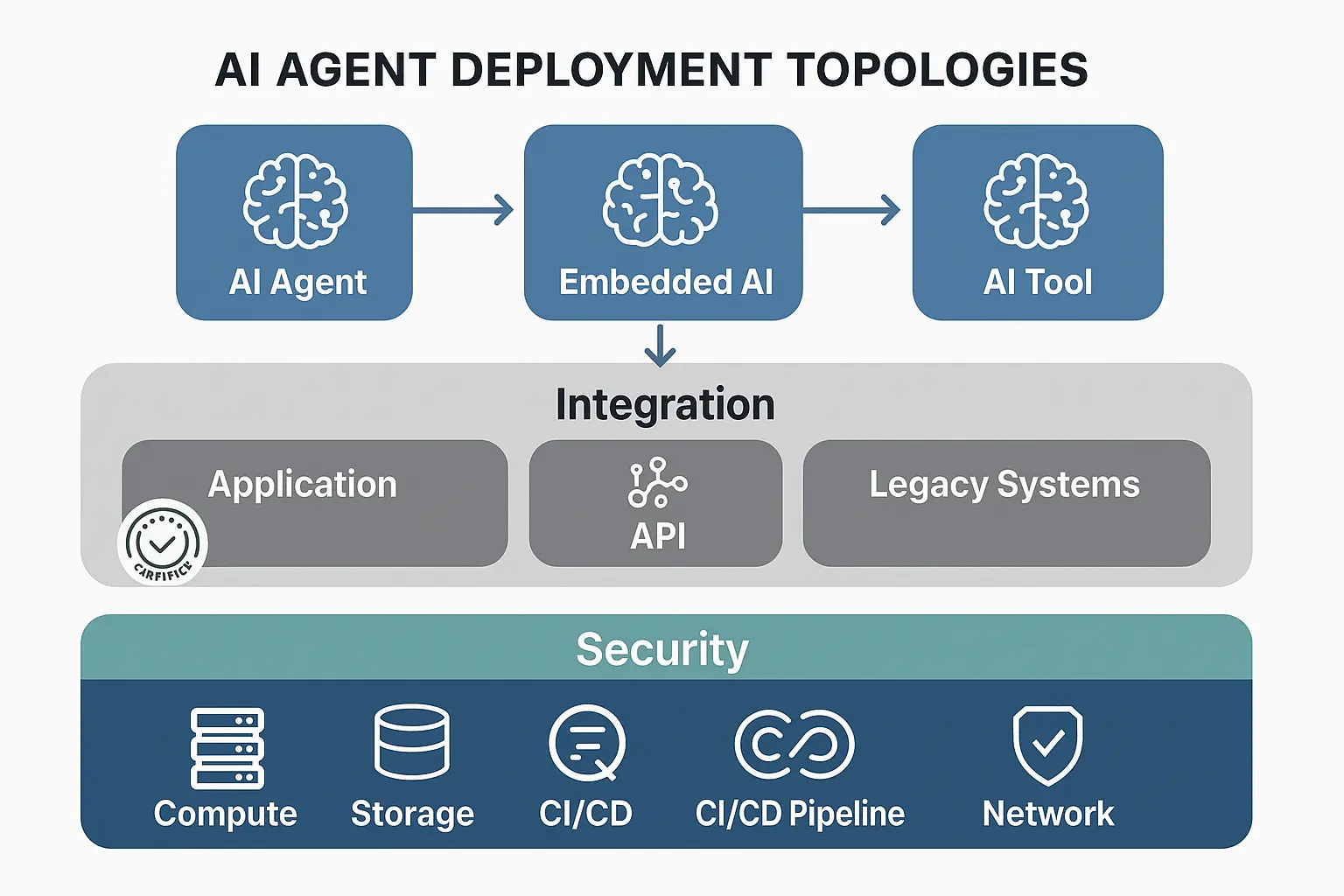
- Establish an AI Agent Governance Framework: Define clear policies, roles, and responsibilities. Who is accountable for an agent’s actions? What is the review process for deploying a new agent or giving an existing agent access to a new tool? An AI gateway can be instrumental here, acting as a central control point for security policies, access control, and auditing.
- Implement Data Security Best Practices:
- Access Control: Enforce the principle of least privilege. Agents should only have access to the data and tools absolutely necessary for their tasks.
- Data Protection: Use techniques like prompt injection prevention and automatic PII redaction to safeguard sensitive information.
- Audit Trails: Maintain immutable logs of all agent actions, decisions, and data access for full traceability.
- Navigate Regulatory Compliance: The regulatory landscape is evolving rapidly. Your agent ecosystem must be designed with compliance in mind for regulations like GDPR, HIPAA, and the EU AI Act, which requires transparency and human oversight for high-risk AI systems.
Deep Dive: Human-in-the-Loop (HITL) Strategies
For high-stakes environments, full autonomy is often too risky. A Human-in-the-Loop (HITL) strategy is crucial for building trust, ensuring accuracy, and maintaining control. This isn’t just a feature; it’s a core architectural principle.
- Technical Implementation: HITL requires designing specific intervention points in an agent’s workflow. This could be a UI where a human operator must approve a financial transaction over a certain threshold or validate a complex customer response before it’s sent.
- From HITL to HOTL: The goal is to gradually build trust. You can start with a strict HITL approach (human validates every action) and, as the agent proves its reliability, transition to Human-on-the-Loop (HOTL), where the human supervises and intervenes only by exception.
- Invest in People and Processes: Successful HITL isn’t just about technology. Up to 70% of the investment is in training human operators, refining workflows, and establishing clear feedback mechanisms to help the agents learn and improve from human guidance.
Future-Proofing Your AI Agent Strategy
The world of AI is changing at an unprecedented pace. An effective strategy is not static; it’s agile and adaptable. Keep an eye on emerging trends like autonomous, self-healing agent systems and employee-centric agent teams that act as personal assistants for every knowledge worker. By building on a modular, secure, and well-governed foundation, you can innovate confidently, integrating new capabilities without compromising enterprise stability.
Frequently Asked Questions (FAQ)
1. Aren’t AI agents just another version of chatbots?While they can power conversational interfaces, AI agents are fundamentally different. A chatbot typically follows a predefined script or answers questions based on a knowledge base. An AI agent is autonomous: it can understand a goal, create a multi-step plan, use different tools (like APIs or databases) to execute that plan, and adapt its approach based on the results.
2. How do we control the costs, especially with LLM token usage?Cost management is a critical governance function. A robust implementation includes:
- Monitoring: Track token consumption per agent, per task, and per user.
- Optimization: Use smaller, more efficient models for simpler tasks.
- Controls: Set budgets and rate limits through an AI gateway to prevent runaway costs.
- Caching: Cache common requests and responses to avoid redundant LLM calls.
3. What is the biggest security risk with AI agents, and how do we mitigate it?One of the most significant risks is granting agents overly broad permissions, allowing them to access sensitive data or perform destructive actions. This is mitigated through a strong governance framework based on the principle of least privilege, where each agent only has access to the specific tools and data it absolutely needs. Robust auditing and prompt injection defenses are also essential layers of security.
4. Will AI agents replace jobs in our organization?The most effective AI agent strategies focus on augmentation, not replacement. Agents are deployed to handle repetitive, time-consuming tasks, freeing up human experts to focus on strategic work, creative problem-solving, and high-value customer interactions. The goal is to create a collaborative environment where humans and AI work together, with HITL strategies ensuring humans remain in control of critical decisions.
