
If you’re managing a commercial building or portfolio, you’re likely aware of the familiar statistic: the U.S. Department of Energy estimates that about 30% of the energy consumed in commercial buildings is wasted. That’s a staggering figure, representing a significant drain on your budget and a major hurdle to your sustainability goals. You’ve probably conducted traditional energy audits, replaced some lighting, and tuned up your HVAC. But what if the biggest sources of waste are the ones you can’t see?
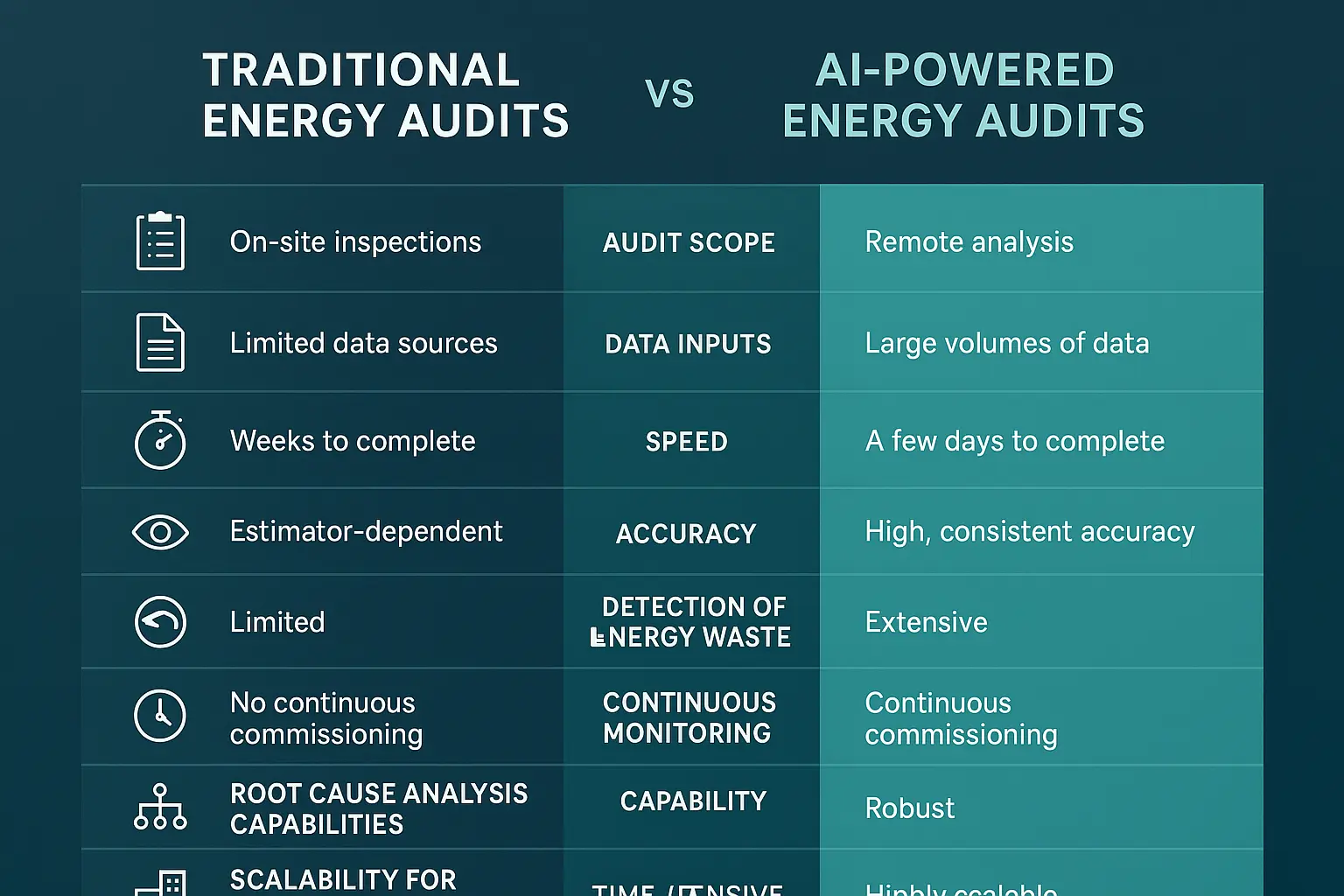
Traditional audits, while valuable, provide a static snapshot in time. They can identify obvious inefficiencies but often miss the complex, dynamic issues hidden within your building’s daily operations. They struggle with the sheer volume of data needed for a truly comprehensive analysis, leaving you with a partial picture.
This is where AI-powered energy diagnostics change the game. It’s not just an upgrade; it’s a fundamental shift from periodic assessments to continuous, intelligent performance management. This guide will walk you through how this advanced methodology works, what it uncovers, and how to evaluate a solution that delivers unparalleled accuracy and insight.
Unmasking the Invisible: What is Hidden Energy Waste?
Hidden energy waste isn’t about leaving the lights on. It’s the result of complex, interacting factors that traditional, manual audits are ill-equipped to detect. It’s the “death by a thousand cuts” for your energy budget.
Think of it as:
- Operational Drift: HVAC systems that were commissioned perfectly but have slowly drifted from their optimal settings over months or years.
- Subtle Equipment Degradation: A chiller that is still running but has become 5% less efficient due to a minor fault that hasn’t triggered an alarm.
- Sub-optimal System Interactions: A lighting system generating heat that causes the HVAC to work harder in a specific zone during shoulder seasons.
- Phantom Loads and Inefficient Scheduling: Energy being drawn by equipment outside of standard operating hours due to control sequence errors that are invisible on a utility bill.
Traditional methods struggle to find these issues because they require analyzing thousands of data points from multiple systems simultaneously and comparing them against a dynamic baseline—a task that is simply too complex and time-consuming for human analysis alone.
AI-Powered Energy Audit Methodology: A Deep Dive into Accuracy and Insight
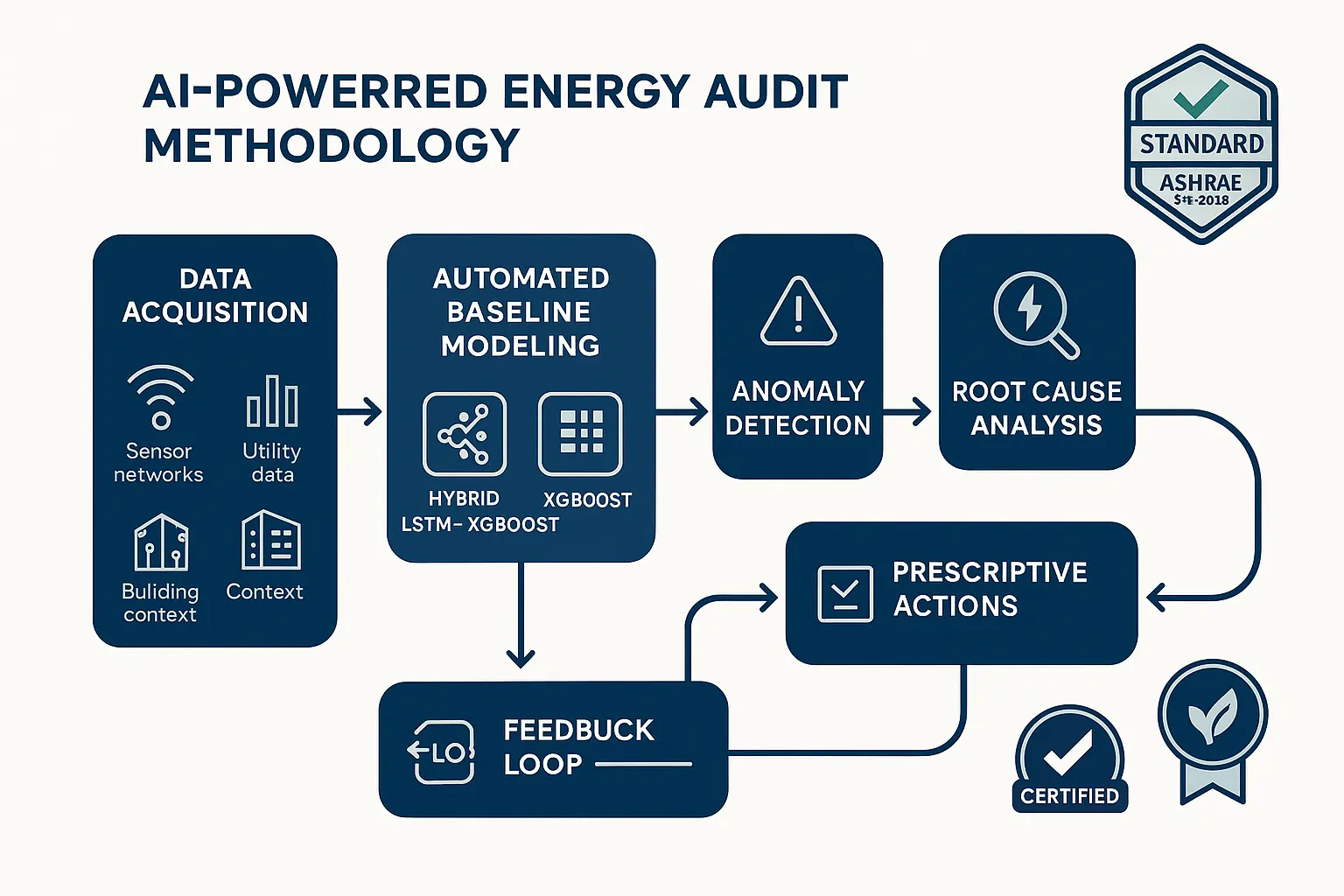
An AI-powered audit moves beyond a simple checklist to become a living, breathing analysis of your building’s health. It leverages machine learning to process vast datasets, identify patterns invisible to the human eye, and pinpoint the root causes of inefficiency with surgical precision. This is a core part of our AI-Powered Energy Audit Methodology, which is built on three key pillars.
Automated Baseline Modeling for Commercial Portfolios
To find what’s abnormal, you first need a flawless definition of what’s normal. Traditional baselines often use simple regression against monthly utility bills, which misses the daily and hourly nuances of building operations.
AI revolutionizes this with dynamic, Automated Baseline Energy Modeling for Commercial Portfolios. Advanced algorithms, including hybrid models like LSTM–XGBoost, process multiple data streams to create a highly accurate “digital twin” of your building’s expected energy use for any given moment. These models fuse high-resolution sensor data with weather patterns, occupancy schedules, and even building design context to understand temporal patterns and complex nonlinear interactions.
The result? A baseline so precise it can instantly flag a deviation of a few percentage points, signaling an emerging issue long before it impacts your utility bill.
Advanced Data Analysis for True Root Cause Analysis
Identifying an anomaly is only half the battle. The real value lies in understanding why it happened. AI excels at context-driven fault diagnosis, moving beyond simple alarms to provide actionable insights.
Instead of just flagging high energy use in Zone 3, an AI-powered system can infer the cause. It analyzes data from the air handling unit, VAV box, thermostat, and occupancy sensor for that zone, compares it to historical performance, and might conclude: “Energy consumption in Zone 3 is 12% above baseline due to a stuck damper in VAV-3B, causing simultaneous heating and cooling.” This level of diagnostic detail allows your team to fix problems faster and more effectively.
Identifying Hidden Energy Waste with Unmatched Precision
By combining a dynamic baseline with advanced root cause analysis, AI becomes exceptionally skilled at Identifying Hidden Energy Waste in Commercial Buildings. It can detect issues like:
- Inefficient Boiler or Chiller Staging: Bringing on a second chiller too early or too late, wasting massive amounts of energy.
- Control Loop Instability: Systems that are constantly “hunting” for a setpoint instead of operating smoothly.
- Simultaneous Heating and Cooling: A common and costly issue in large buildings that is often invisible without granular, time-series data analysis.
This deep diagnostic capability is why 55% of commercial building decision-makers are already using AI for energy management, with 84% planning to increase its use in the coming year, according to a recent Honeywell study.
Beyond the Snapshot: AI for Continuous Commissioning
Perhaps the most significant advantage of AI is its ability to enable continuous commissioning. A traditional audit is a project with a start and end date. An AI diagnostic platform is an ongoing process that ensures your building operates at peak efficiency every single day.
It constantly monitors your systems, identifying performance drift and operational inefficiencies in real-time. This proactive approach allows you to:
- Sustain Savings: Prevent the natural degradation of building performance over time.
- Extend Equipment Life: Catch minor issues before they become major failures, reducing repair costs and downtime.
- Adapt to Change: Automatically adjust to changes in occupancy, weather, or operational schedules without manual intervention.
This makes it an ideal solution for organizations looking for Remote Energy Diagnostics for Multi-Site Properties, allowing a central team to monitor and optimize an entire portfolio from anywhere.
The Data Advantage: Unlocking Deeper Insights with Uncommon Data Sources
The accuracy of any AI system depends on the quality and breadth of its data. While utility bills are a starting point, true insight comes from fusing them with more granular, high-value data sources, including:
- High-resolution HVAC sensor networks (BMS/BEMS data)
- Building design and mechanical system context
- Historical maintenance records and equipment specifications
- Granular occupancy data from security or Wi-Fi systems
- Real-time weather forecasts and solar positioning
By integrating these disparate sources, AI builds a holistic understanding of your building’s ecosystem, enabling diagnostics that are simply impossible with a surface-level approach.
Quantifying the Impact: The ROI of AI-Powered Energy Audits
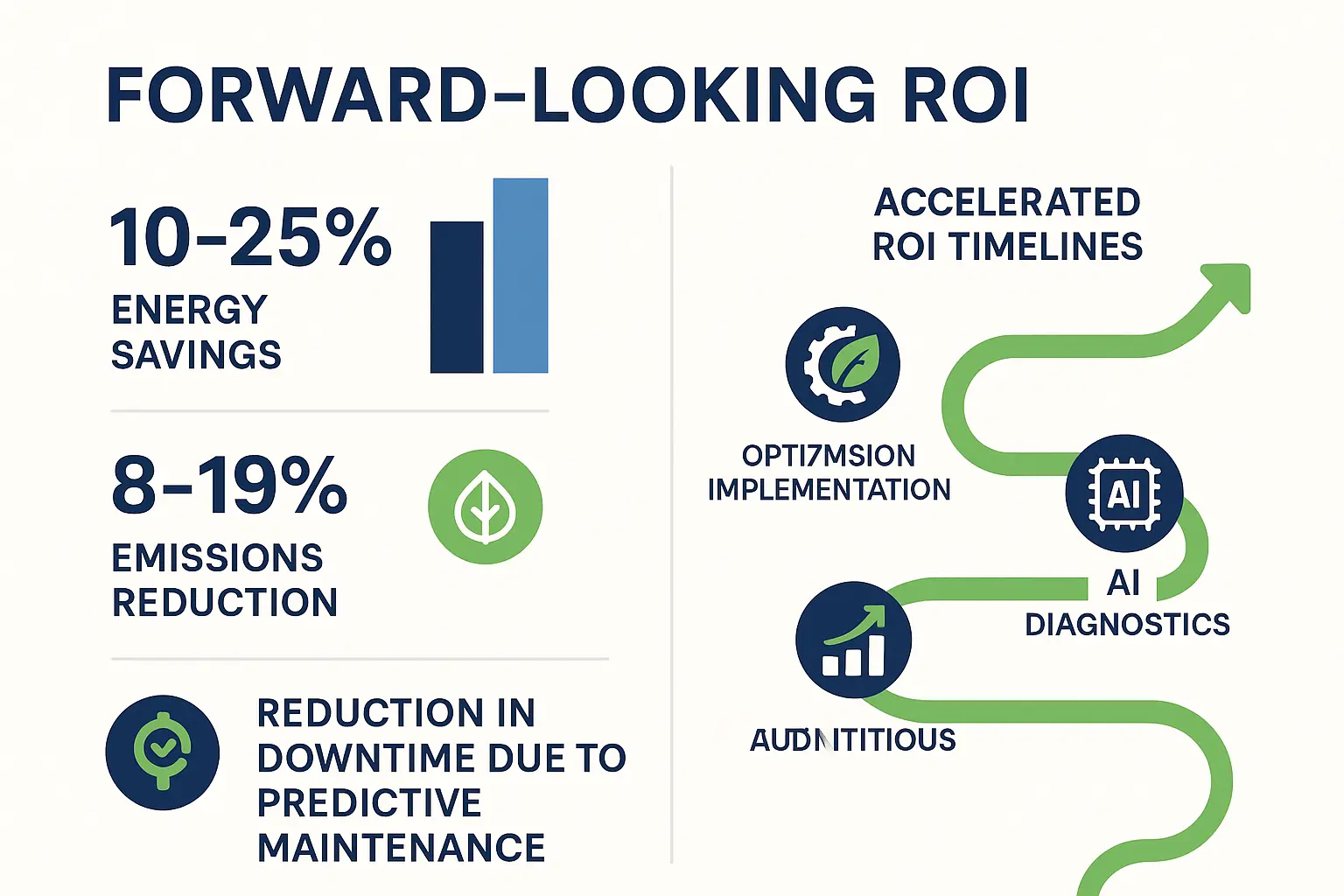
Adopting an AI-powered approach isn’t just about technical sophistication; it’s about delivering a clear and compelling return on investment. The data shows that AI-driven building systems can trim energy usage and carbon emissions by 8–19%.
The ROI comes from multiple streams:
- Direct Energy Savings: By precisely targeting the 30% of energy that is commonly wasted, you achieve significant reductions in utility costs.
- Reduced Maintenance Costs: Predictive analytics can identify early warning signs of equipment malfunction, leading to fewer catastrophic failures and lower repair bills.
- Increased Asset Value: A high-performing, energy-efficient building is more valuable and attractive to tenants.
- Streamlined ESG Reporting: Automated data collection and analysis provide the verifiable proof needed for sustainability and compliance reporting.
Choosing Your AI Energy Audit Partner: What to Look For
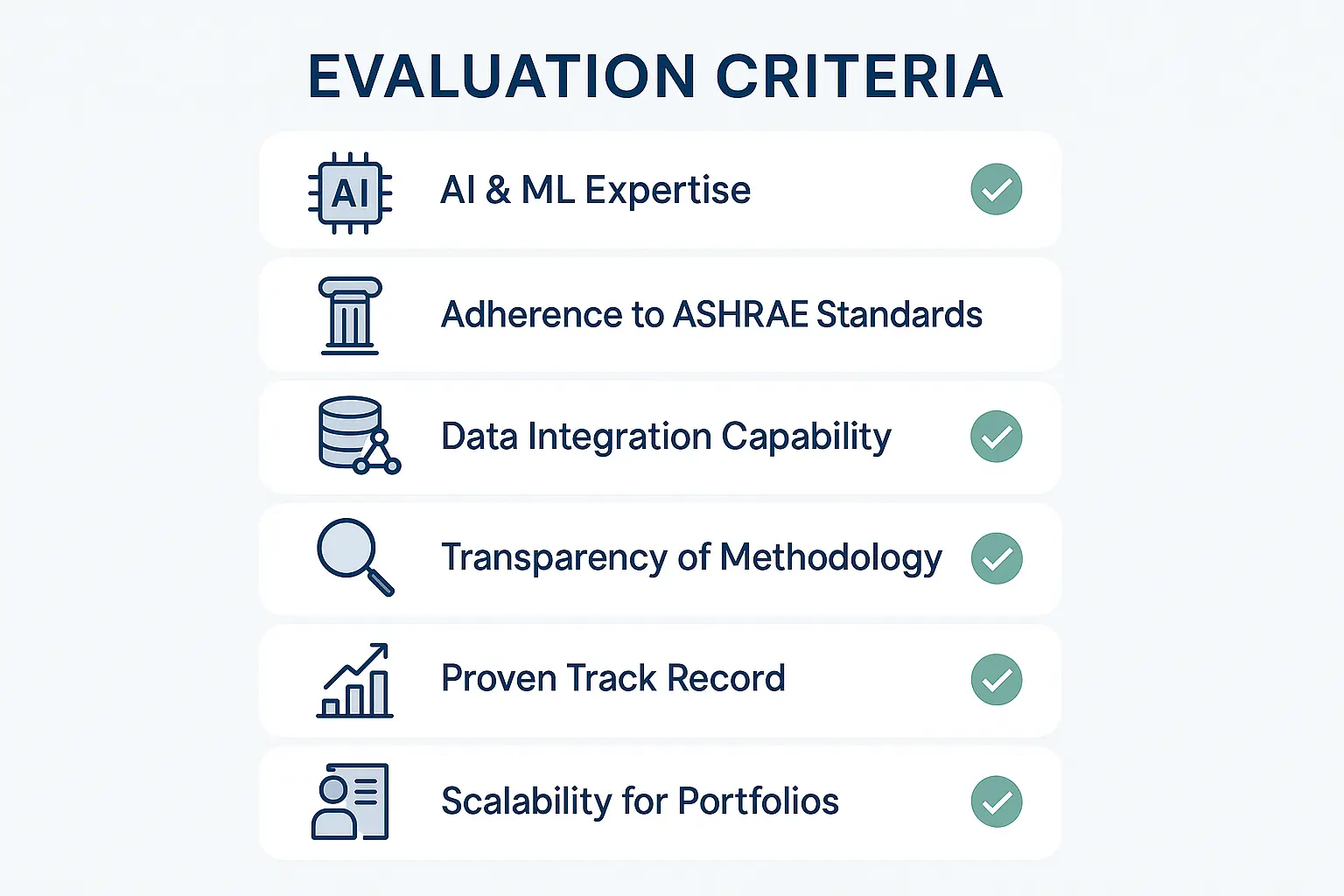
As you evaluate solutions, it’s crucial to look past the buzzwords and assess the true capability of a potential partner. Not all “AI” is created equal. Use this framework to guide your decision:
- Methodological Transparency: Do they clearly explain how their AI works? Can they discuss the types of models and data they use?
- Data Integration Capability: How well can they integrate with your existing BMS and ingest the diverse data sources needed for deep analysis?
- Expertise in Building Science: AI is a tool. The real value comes when it’s wielded by experts who understand building physics, HVAC systems, and control logic.
- Adherence to Standards: Look for alignment with industry standards like ASHRAE Guideline 14 and Standard 211 to ensure a rigorous and credible approach.
- Proven Track Record: Ask for case studies and references that demonstrate quantifiable results in buildings similar to yours.
Frequently Asked Questions About AI-Powered Diagnostics
Is this difficult to implement?
Modern AI platforms are designed for seamless integration. Typically, the process involves connecting to your existing Building Management System (BMS) through a secure gateway. The heavy lifting of data analysis and modeling is done in the cloud, requiring minimal effort from your on-site team.
Does this replace my facility management team?
Absolutely not. AI is a powerful tool that augments, rather than replaces, your team’s expertise. It acts as a force multiplier, handling the complex data analysis so your facility managers can focus on strategic decision-making and executing high-value fixes.
What is the typical cost and payback period?
The cost varies based on the size and complexity of your building or portfolio. However, the business model is often a subscription service (SaaS), which avoids large upfront capital expenditures. With typical energy savings between 8-19%, many clients see a payback period of less than two years.
How secure is my building’s operational data?
Data security is paramount. A reputable provider will use industry-best practices for data encryption, both in transit and at rest. Ensure any potential partner can provide clear documentation on their security architecture and protocols.
The Future is Intelligent: Embrace AI for Sustainable Performance
The commercial building landscape is evolving. Rising energy costs, stricter regulations, and ambitious ESG goals demand a more intelligent and proactive approach to energy management.
Relying on traditional, snapshot-in-time audits is no longer enough. To truly capture the significant savings hidden within your operations, you need a solution that is continuous, data-driven, and intelligent. AI-powered performance diagnostics provide the visibility and insight needed to not only find waste but to create a cycle of sustained peak performance.
If you’re ready to move beyond the obvious and uncover the full potential of your building portfolio, it’s time to explore what AI can do for you.
