
Your smart meter knows when you wake up, when you go on vacation, and even what new appliance you just bought. This data is incredibly powerful for energy companies using AI to predict demand and optimize the grid. But it’s also incredibly personal. What happens if the AI model making these predictions inadvertently reveals your daily routine to the world?
This isn’t a far-off sci-fi scenario; it’s a critical challenge today. As AI becomes woven into the fabric of the energy sector, ensuring the privacy of consumer data isn’t just good practice—it’s a legal and ethical necessity. But how can you be sure an algorithm is respecting privacy? You audit it.
If you’re just starting to explore this topic, the idea of “auditing AI” might sound impossibly complex. You’re not alone. Many are asking the same questions: What does an AI audit even look like? What are the biggest risks? And where do you even begin?
This guide is your starting point. We’ll demystify the process, translating jargon into clear concepts and providing a roadmap to help you understand how to ensure AI in the energy sector is both innovative and trustworthy.
The Foundation: Why Auditing AI in Energy is a Unique Challenge
Before diving into the “how,” it’s crucial to understand the “what” and “why.” General AI audits are one thing, but when you combine them with the unique nature of energy data and strict privacy laws, you enter a whole new territory.
Core Concepts, Simply Explained
- What is an AI Audit? Think of it as a comprehensive health check for an AI system. An AI audit is a systematic evaluation to verify that an AI model works as intended and aligns with legal, ethical, and organizational standards. It examines everything from the data used for training to the decisions the model makes, checking for fairness, transparency, and, crucially for our topic, data privacy compliance.
- What is Data Privacy Compliance? This refers to following laws and regulations designed to protect individuals’ personal information. You’ve likely heard of the General Data Protection Regulation (GDPR) in Europe or the California Consumer Privacy Act (CCPA). These frameworks establish rules for how organizations collect, use, and store personal data, giving individuals rights over their information. The upcoming EU AI Act will add another layer, regulating AI systems based on their potential risk to citizens.
- The Uniqueness of Energy Data: Energy consumption data is more than just numbers. It can reveal patterns of life—when you’re home, how many people live there, your sleep schedule, and even your financial status. This makes it highly sensitive. When an AI model analyzes this data to make predictions, it could inadvertently learn and expose these personal details, a risk known as “data leakage.”
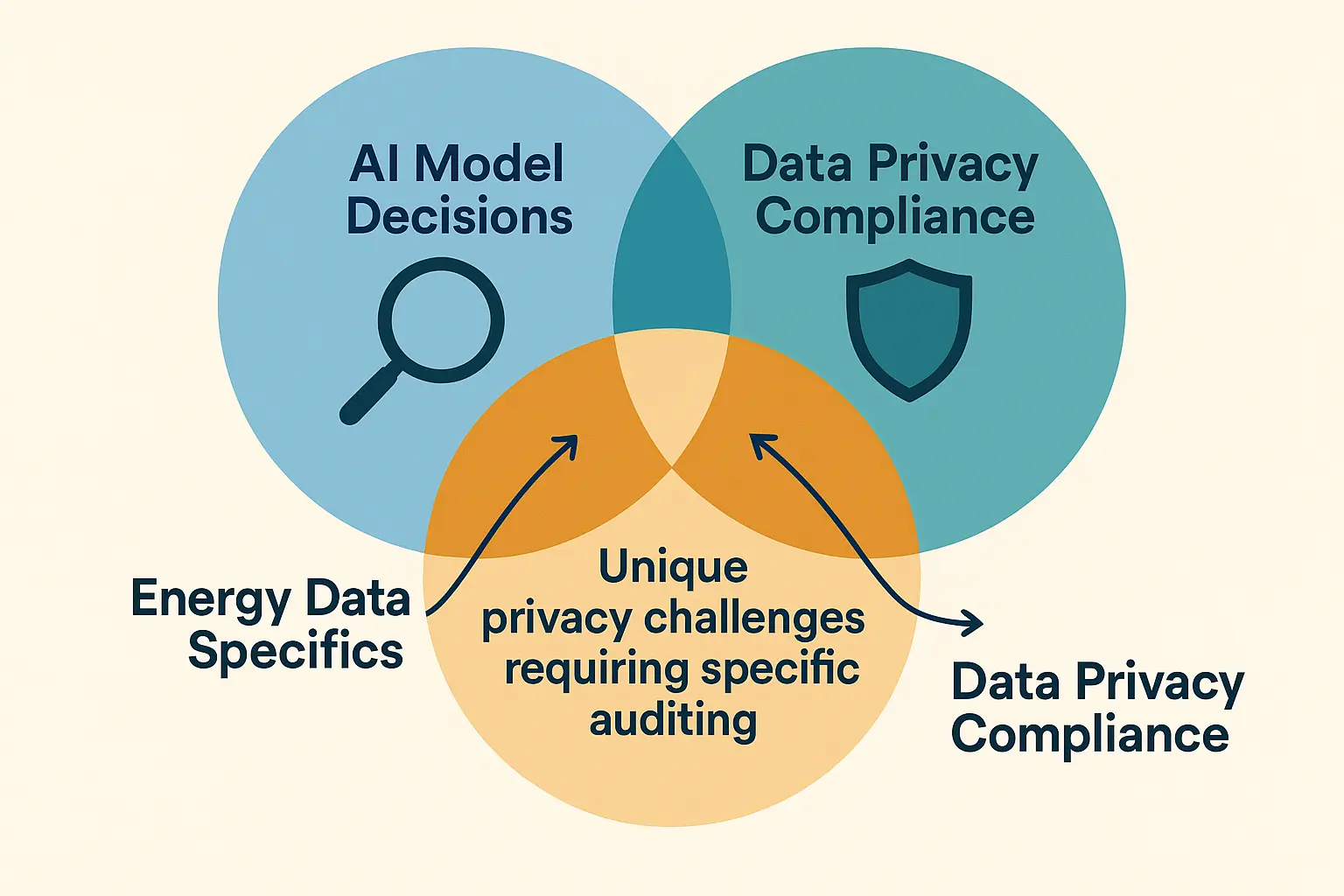
This visual clarifies how AI model decisions, sensitive energy data, and strict privacy regulations overlap to create unique challenges that require specialized auditing approaches in the energy sector.
The intersection of these three areas creates a perfect storm of privacy risk. You can’t just apply a standard IT audit; you need a specialized approach that understands the nuances of both AI and the energy sector.
A Step-by-Step Look: Auditing Along the AI Lifecycle
An AI model isn’t a single event; it’s a process. To effectively audit for privacy, you need to examine each stage of its lifecycle. A privacy issue that creeps in during data collection can become magnified by the time the model is making real-world decisions.
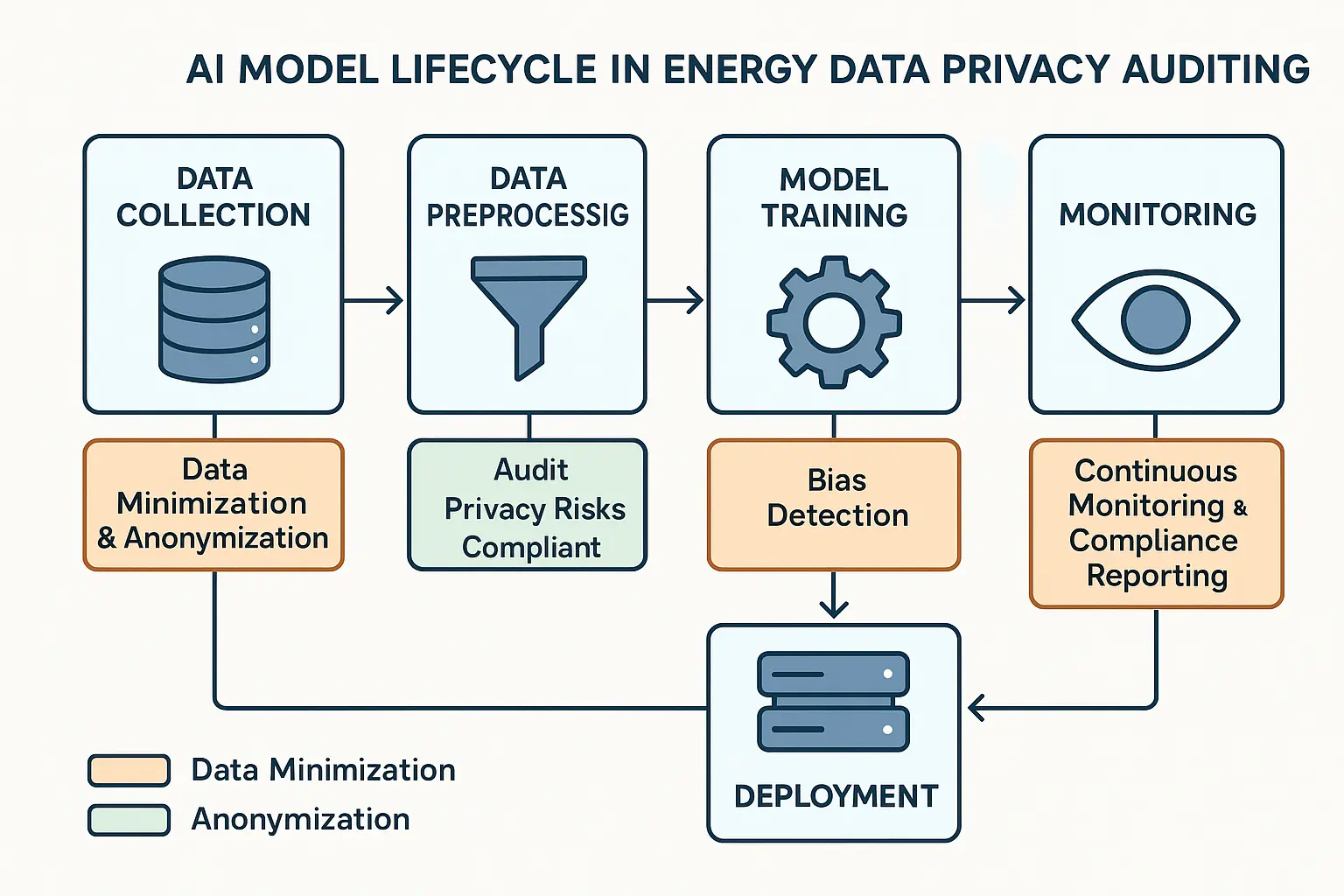
This visual anchors understanding of how ethical guidelines and strong governance structures safeguard AI decisions and energy data privacy, underscoring the importance of continuous auditing for compliance and trust in AI applications.
Frequently Asked Questions (FAQ)
Navigating this topic for the first time often brings up some common questions. Let’s clear them up.
### What is the main goal of an AI audit for energy data?
The primary goal is to verify that an AI system using energy data is safe, fair, transparent, and compliant with data privacy regulations like GDPR. It’s about building trust with both regulators and the public by demonstrating responsible AI practices.
### What are the first steps to starting an AI audit?
- Define the Scope: Clearly identify the specific AI model you are auditing and its purpose.
- Assemble a Team: An effective audit requires a cross-functional team, including data scientists, legal/compliance experts, and IT security personnel.
- Identify Applicable Regulations: Determine which privacy laws (like GDPR, CCPA, or the EU AI Act) apply to your data and operations.
- Choose a Framework: Use an established framework, like the NIST AI Risk Management Framework (RMF), to structure your audit.
### What are the most common privacy concerns with AI in the energy sector?
The top three concerns are:
- Re-identification: Anonymized data being linked back to a specific individual or household.
- Unintended Data Leakage: The model’s outputs accidentally revealing the sensitive data it was trained on.
- Algorithmic Bias: The model making decisions that unfairly disadvantage certain customer groups based on their consumption patterns or location.
Your Path to Building Trustworthy AI
Understanding how to audit AI for data privacy is no longer optional—it’s fundamental to responsible innovation in the energy sector. It’s about more than just avoiding fines; it’s about earning and maintaining the trust of the customers you serve.
By moving from a “check-the-box” mentality to a culture of continuous monitoring and ethical governance, you can unlock the immense potential of AI while upholding the highest standards of data privacy.
Ready to take the next step? Exploring established AI governance frameworks and familiarizing yourself with explainable AI tools are excellent ways to continue your learning journey.
