
If you’re responsible for the security and reliability of critical energy infrastructure, you’re navigating a landscape of unprecedented risk. The question is no longer if an attack will occur, but how your organization will withstand and recover from it. Traditional, siloed approaches to security are failing, leaving dangerous gaps between incident response plans, disaster recovery protocols, and long-term resilience strategies.
The data paints a stark picture. In 2024 alone, cyberattacks targeting U.S. utilities surged by nearly 70%. Meanwhile, 67% of energy organizations were hit by ransomware, and the average recovery cost has ballooned to $3.12 million. This isn’t just about data; it’s about operational continuity, public safety, and national security.
This guide provides a unified framework for decision-makers evaluating how to move beyond fragmented tactics. We will break down the three essential pillars of a modern defense—Incident Response (IR), Disaster Recovery (DR), and Cyber Resilience (CR)—and show you how to integrate them into a single, cohesive strategy tailored for the unique physics and operational demands of OT/ICS environments.
The New Threat Reality for Energy Infrastructure
To build an effective defense, you first need to understand the battlefield. The threats facing the energy sector are not only increasing in frequency but also in sophistication. Your evaluation process must account for a multi-front war against:
- Advanced Persistent Threats (APTs): Nation-state actors are highly motivated and well-funded. The energy sector appeared in 43% of observed APT campaigns, with attackers seeking to establish long-term persistence for intelligence gathering or future disruption.
- Ransomware in OT: Threat actors are increasingly targeting OT environments, understanding that the high cost of downtime makes energy utilities a lucrative target. With 80% of ransomware attacks now leading to data encryption, the threat to operational control is severe.
- Supply Chain Compromise: Your security is only as strong as your weakest link. With 45% of industry breaches originating from third-party vendors, the vast ecosystem of suppliers and contractors represents a significant and often overlooked attack surface.
- AI-Enabled Attacks: Emerging threats leverage AI to automate reconnaissance, craft highly convincing phishing campaigns, and identify vulnerabilities at machine speed, outpacing traditional human-led defensive measures.
These threats exploit vulnerabilities inherent to energy infrastructure—from legacy SCADA systems lacking modern security controls to the ever-expanding connectivity of IT/OT convergence and smart grid technologies. A successful strategy must address these root causes, not just the symptoms.
Pillar 1: Proactive Incident Response in OT/ICS Environments
In an Operational Technology environment, incident response is not an IT function; it’s an engineering and safety discipline. When a control system is compromised, the primary goals are to ensure human safety, maintain grid stability, and protect physical assets. This requires a fundamental shift in mindset from the typical IT-centric “disconnect and reimage” approach.
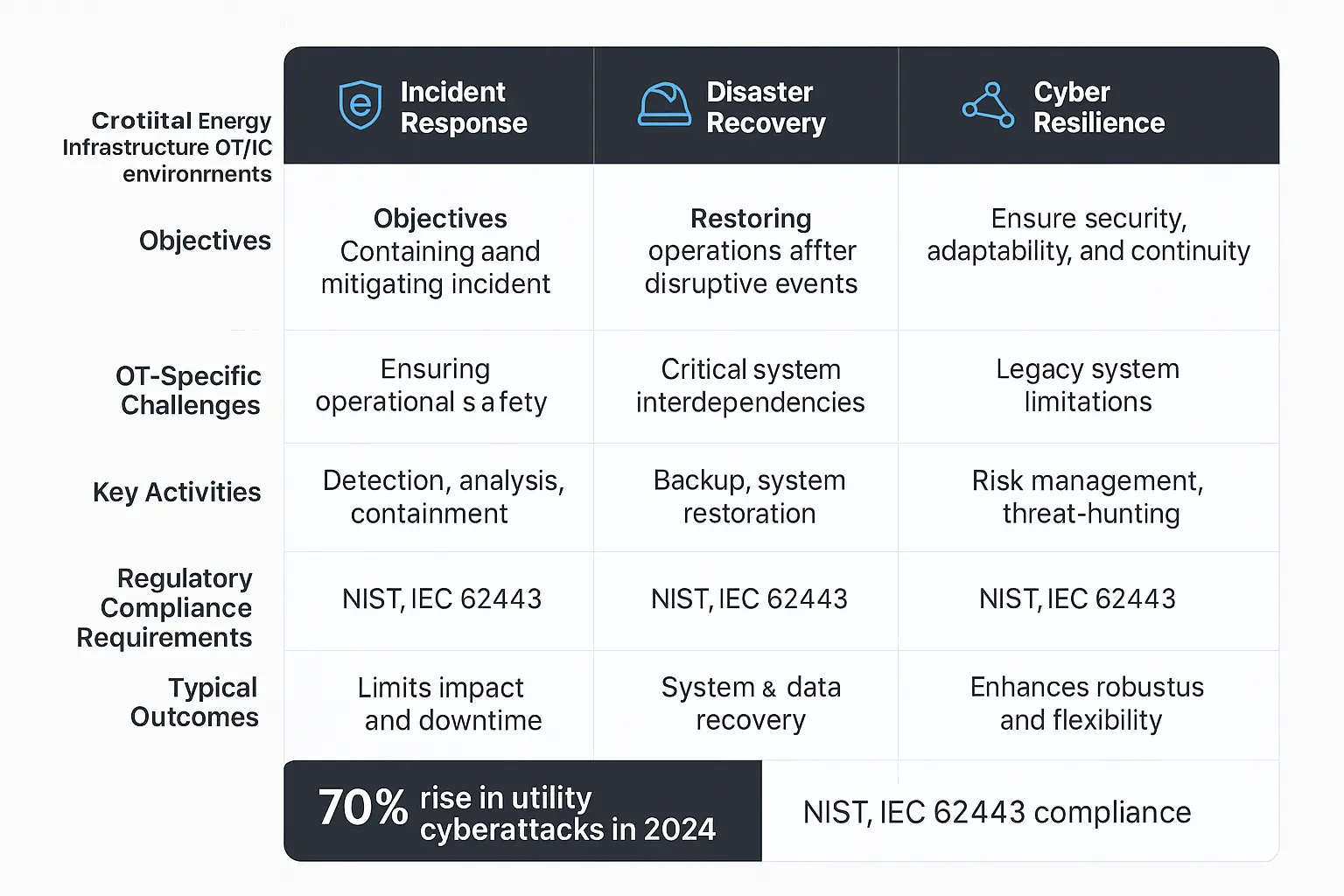
An effective OT/ICS incident response plan is built on a “safety-first, engineering-led” imperative. It recognizes that pulling a network cable from a PLC could have catastrophic physical consequences.
Developing Your OT/ICS Incident Response Plan
Your plan should follow the standard six phases but with critical OT-specific considerations at each step:
- Preparation: This is the most crucial phase. It involves creating detailed network diagrams of your OT environment (often mapped to the Purdue Model), establishing ICS-aware remote access protocols, and pre-deploying tools that can provide visibility without disrupting operations.
- Identification: How do you detect a malicious command versus a legitimate operational change? This requires deep industrial threat detection that understands protocols like Modbus, DNP3, and IEC 61850. Baselines of normal process behavior are essential for spotting anomalies.
- Containment: In OT, containment is a delicate surgical procedure. It might involve isolating a specific segment of the control network, failing over to a redundant controller, or shifting to manual operations, all while coordinating closely with plant operators to ensure process stability.
- Eradication: Removing the threat requires specialized knowledge of embedded devices. You can’t simply run antivirus on a 20-year-old RTU. This phase often involves firmware re-flashing, restoring from a known-good configuration backup, and ensuring no persistence mechanisms remain.
- Recovery: Bringing systems back online safely is paramount. This involves rigorous testing in a non-production environment (if available), phased re-introduction to the network, and continuous monitoring to ensure the threat is truly gone.
- Lessons Learned: A post-incident review must involve both cybersecurity staff and control engineers. Why did the attack succeed? Were operators aware of the response plan? How can process and technology be hardened to prevent a recurrence?
Pillar 2: Robust Disaster Recovery & Business Continuity for Energy Utilities
While incident response focuses on containing a specific cyber event, disaster recovery and business continuity planning answers a broader question: “How do we continue to deliver power when a critical system is completely unavailable?”
For energy utilities, this goes far beyond restoring servers from backups. True business continuity strategies for utilities are about maintaining the physical process of energy generation, transmission, and distribution.
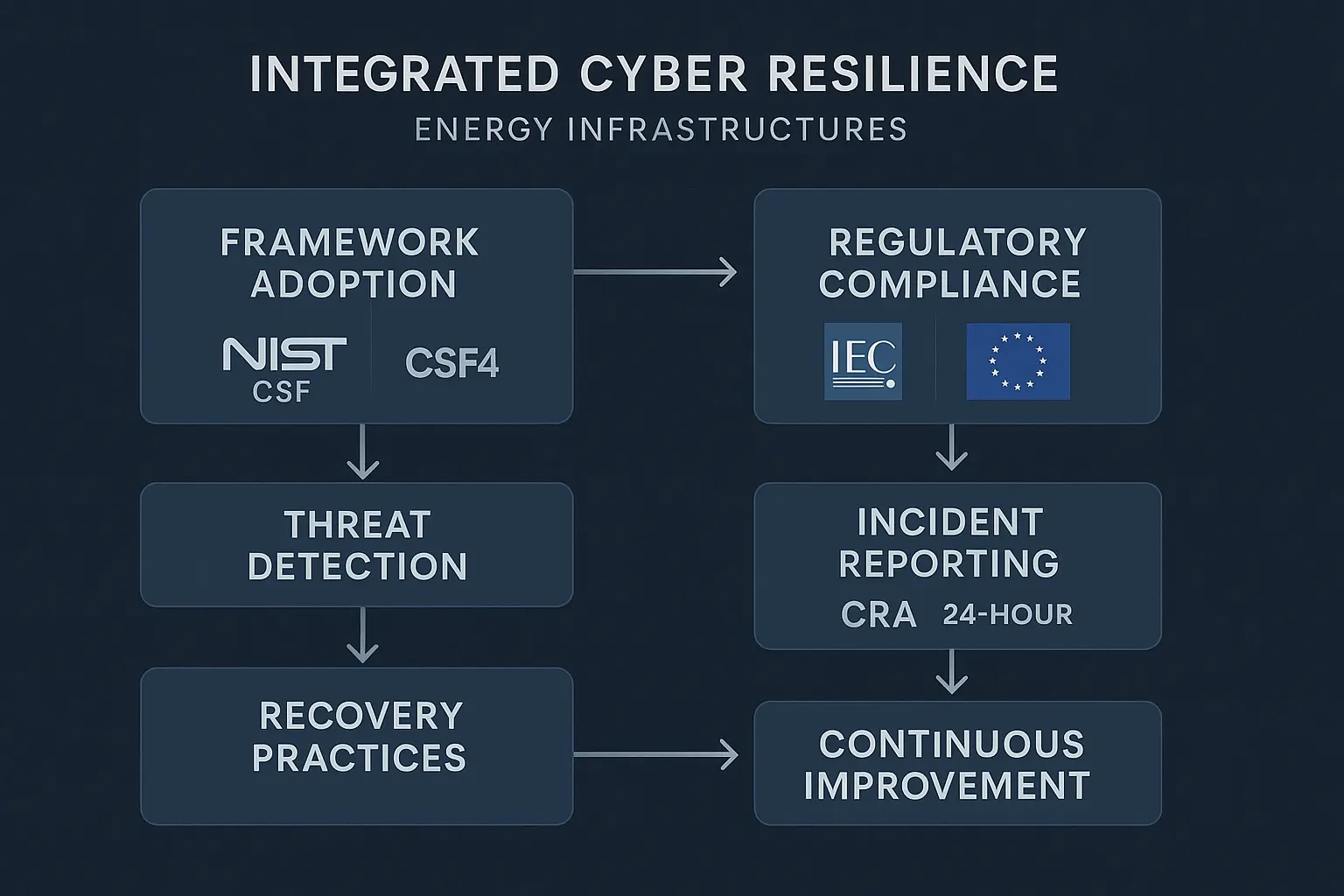
Key elements of an energy-sector DR/BCP plan include:
- Defining Acceptable Downtime: What is the maximum tolerable outage for each part of the grid? This calculation must factor in regulatory penalties, customer impact, and the cascading effects on other critical infrastructure.
- Contingent Operations Planning: What is the plan B? This could involve switching to backup control centers, leveraging microgrids to power critical loads, or reverting to manual operation procedures for certain substations. These plans must be documented and regularly drilled.
- Black Start Capabilities: In a widespread outage scenario, how will you restart generation facilities without power from the grid? Testing and validating black start procedures are a cornerstone of energy sector disaster recovery.
- Supply Chain Resilience: If a key piece of equipment fails during an incident (e.g., a specific make of PLC is compromised), what is your plan to replace it? Your DR plan must account for supply chain dependencies and have pre-vetted alternatives.
Pillar 3: Building Holistic Cyber Resilience Across the Grid
Resilience is the ultimate goal. It’s the ability to anticipate, withstand, recover from, and adapt to adverse conditions and attacks. While IR and DR are reactive, resilience is a proactive, strategic state achieved through continuous improvement.
For the energy sector, crisis management and recovery protocols are guided by established frameworks, but their application requires deep domain expertise.
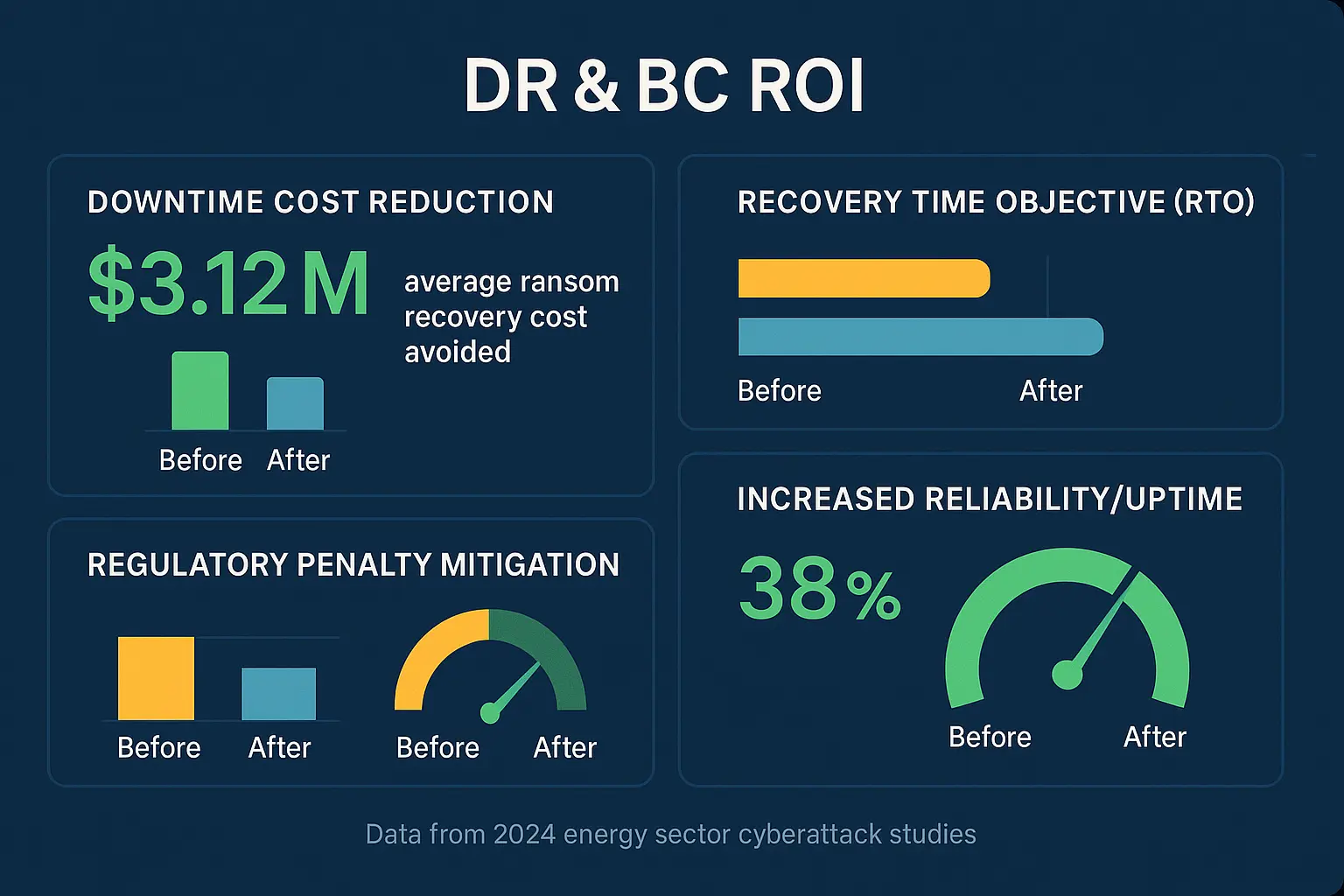
Frameworks and Regulations in Practice
- NIST Cybersecurity Framework (CSF): A powerful tool for organizing your security program around five core functions: Identify, Protect, Detect, Respond, and Recover. Applying it to OT means identifying physical assets and control zones, protecting them with network segmentation, and detecting anomalies in industrial protocols.
- IEC 62443: This is the leading international standard for the security of industrial automation and control systems. It provides a detailed, risk-based approach to implementing security controls across the entire lifecycle of your OT assets.
- EU Cyber Resilience Act (CRA): This is a game-changer. For any energy organization using “products with digital elements” in the EU, the CRA imposes strict cybersecurity requirements. Most critically, it mandates a 24-hour security incident reporting window starting in September 2026. Your IR plan must be refined to meet this aggressive timeline for triage, analysis, and reporting.
Building resilience requires a culture of security that extends from the control room to the boardroom, supported by technologies that provide deep visibility and process-aware threat detection across your entire operational landscape.
The Unseen Challenge: Mastering Forensic Analysis in Critical OT Environments
When an incident occurs, the ability to conduct effective forensic analysis is critical for understanding the attack, eradicating the threat completely, and supporting legal or regulatory action. However, OT forensics is a world apart from traditional IT forensics.
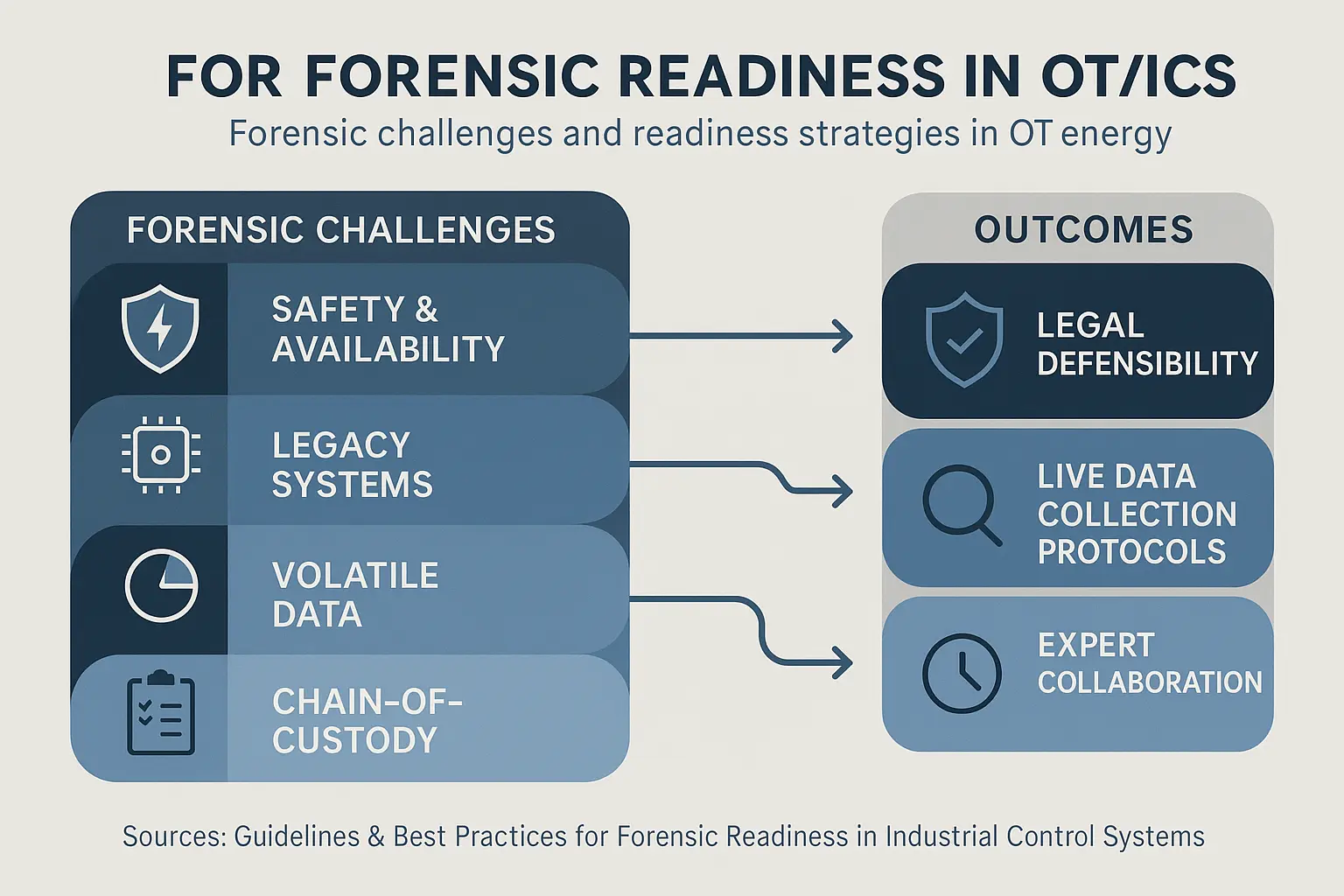
Investigators face unique challenges:
- Preserving Availability and Safety: You cannot simply power down a PLC or a SCADA server to create a forensic image. Any action must be carefully vetted by operations staff to avoid disrupting a live physical process.
- Limited and Volatile Data: Many embedded devices have minimal logging capabilities and store data in volatile memory that is lost upon reboot. Live collection techniques are often the only option.
- Specialized Tools: Traditional forensic tools do not understand industrial protocols or the proprietary file systems used by many OT devices.
- Chain of Custody: Maintaining a legally defensible chain of custody for evidence collected from a complex, distributed control system requires meticulous planning and documentation.
The solution is to build “forensic readiness” into your environment before an incident. This involves deploying sensors capable of capturing and storing OT network traffic, implementing robust logging on any systems that support it, and having a pre-vetted plan for how to safely collect evidence from critical controllers with the help of specialized forensic analysis in critical environments.
From Theory to Practice: Simulating Cyber Scenarios
The best plans are useless if they haven’t been tested. Regular tabletop exercises and simulation drills are essential for building muscle memory and identifying weaknesses in your IR and DR processes.
Effective simulations for energy infrastructure should be highly realistic, moving beyond generic scenarios like “ransomware” to more specific threats:
- A manipulated sensor reading causes a generator to trip offline.
- An attacker gains remote access to an engineering workstation and attempts to upload a modified PLC logic file.
- A denial-of-service attack targets the communication link to a remote substation, forcing a switch to manual operations under pressure.
These exercises should involve a cross-functional team—cybersecurity, control engineers, plant operators, and crisis management leaders—to ensure that response actions are coordinated and that everyone understands their role.
Choosing the Right Resilience Partner: Key Evaluation Criteria
As you evaluate solutions and service providers, it’s crucial to ask the right questions. Look for a partner who demonstrates a deep, engineering-led understanding of your operational environment.
- Do they prioritize safety and operational continuity above all else? Their entire methodology should be built around a “do no harm” principle for OT environments.
- Can their technology passively discover and monitor assets without disrupting production? Any solution that requires active scanning or intrusive agents on critical controllers introduces unacceptable risk.
- Do they have proven expertise in industrial protocols and control system behavior? They should be able to tell you the difference between normal and malicious Modbus traffic.
- Can they provide a unified platform that integrates asset discovery, threat detection, incident response, and forensic capabilities? A fragmented toolset creates the very gaps you’re trying to close.
- Do they offer OT-specific Managed Detection and Response (MDR) services? Having 24/7 access to experts who specialize in OT/ICS threats can be a powerful force multiplier for your internal team.
A true partner doesn’t just sell you software; they provide the strategic guidance and domain expertise necessary to build lasting cyber resilience.
FAQs
How is OT incident response fundamentally different from IT incident response?
The core difference lies in the primary objective. In IT, the goal is to protect data (Confidentiality, Integrity, Availability). In OT, the goal is to protect the physical process and ensure safety (Safety, Reliability, Productivity). This means actions in OT, like isolating a system, must be evaluated for their physical impact first, a consideration that rarely exists in IT.
How can I justify the cost of a comprehensive resilience program to my board?
Frame the investment in terms of risk reduction and business value. Use industry data, like the $3.12 million average cost of ransomware recovery, to quantify the potential financial loss from a single incident. Emphasize the non-financial costs as well: reputational damage, regulatory fines, and the potential for physical harm or environmental impact. A resilience program is an investment in ensuring the operational continuity that generates revenue.
What is the single most important first step if our current plans are outdated?
Start with a comprehensive, non-intrusive OT asset inventory. You cannot protect what you cannot see. Understanding every device, connection, and communication pathway in your operational environment is the foundational first step upon which all other security controls, response plans, and resilience strategies are built.
How can we realistically prepare for the EU CRA’s 24-hour reporting requirement?
Preparation requires both process and technology. Your incident response plan must have a clearly defined workflow for escalating, triaging, and confirming a significant incident within hours, not days. This must be supported by technology that provides rapid, context-rich alerts and the forensic data needed to quickly understand the scope and impact of an attack. Regular drills simulating this compressed timeline are essential.
