
The Definitive Guide to AI for Advanced Underwriting and Credit Risk Assessment
You know the traditional underwriting model is stretched thin. Relying on a handful of variables from a credit report feels like driving while looking in the rearview mirror—you see where a borrower has been, but have little insight into where they’re going. In today’s dynamic economy, this limited view means turning away creditworthy applicants and failing to spot emerging risks until it’s too late.
If you’re evaluating how to move beyond this outdated paradigm, you’re in the right place. This isn’t another high-level overview of AI. This is a practical guide for financial leaders on how AI fundamentally rewires underwriting for speed, accuracy, and fairness. We’ll explore the specific technologies, the data that fuels them, and the strategies to implement them successfully, empowering you to make confident, forward-looking credit decisions.
Decoding Credit Risk: Traditional vs. AI-Powered Assessment
For decades, credit risk assessment has been anchored by the “5 C’s of Credit” and static FICO scores. While valuable, these methods were designed for a different era.
Traditional underwriting often struggles with:
- Limited Data: Relies on 20-30 variables, primarily from credit bureaus.
- Thin Files: Lacks sufficient data to score millions of creditworthy individuals.
- Backward-Looking: Analyzes past payment history, which may not predict future behavior.
- Time-Consuming: Manual review processes can take days or weeks, frustrating borrowers.
- Potential for Bias: Human judgment, even when well-intentioned, can introduce inconsistencies.
AI-powered assessment represents a fundamental shift. Instead of just looking at a snapshot in time, AI analyzes a continuous stream of data to build a dynamic, multidimensional picture of a borrower’s financial health. Research shows AI can analyze over 1,600 variables for a single application, creating a far more nuanced and predictive model. The result? A system that adapts, learns, and anticipates risk with unparalleled precision.
The Engine of Intelligence: How AI Works in Underwriting
At its core, AI in underwriting uses machine learning models—like deep learning and gradient-boosted trees—to identify complex patterns in data that are invisible to human analysts. The process isn’t magic; it’s a structured workflow.
- Data Ingestion & Preparation: The system pulls data from dozens of sources, cleans it, and transforms it into a format the models can understand. This is where raw information becomes intelligent features.
- Predictive Modeling: The machine learning model analyzes the features to calculate a probability of default, fraud, or other risk factors. This goes far beyond a simple score, providing a granular risk ranking.
- Decisioning & Recommendation: Based on your institution’s risk appetite, the AI can operate in two primary modes: as a powerful recommender that equips human underwriters with deep insights and a clear recommendation, or as a fully automated decision engine for high-confidence applications, freeing up your team to focus on complex cases. This “fallback” to human expertise for edge cases is critical for maintaining control and trust.
This isn’t just about speed. It’s about depth. Institutions using AI have seen loan processing times drop from weeks to mere minutes, with industry leaders like Aviva India cutting their underwriting cycle time by 60%.
Beyond the Obvious: Leveraging Alternative Data Sources with AI
The single greatest advantage of AI is its ability to make sense of vast and varied datasets. This is where alternative data transforms underwriting from an exclusive club into a more inclusive system.
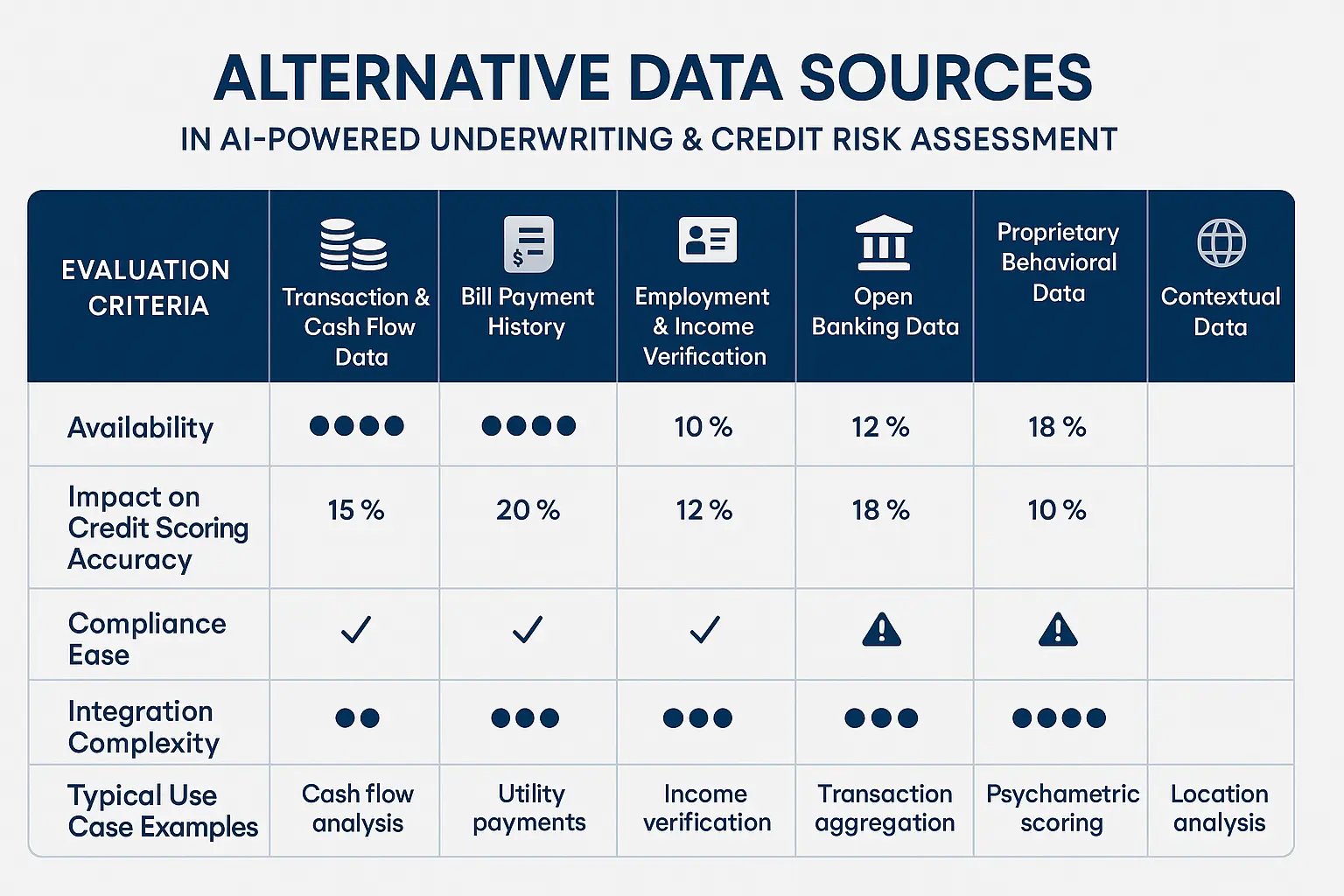
Alternative data is any information not typically found in traditional credit reports. When analyzed by AI, it provides a richer, more current view of an applicant’s financial responsibility. As of 2023, 62% of financial institutions are already using it for risk profiling, and for good reason: it allows lenders to score up to 32% of previously unscorable consumers.
Key alternative data sources include:
- Transaction & Cash Flow Data: Real-time analysis of bank account inflows, outflows, and spending habits offers a clear picture of financial stability.
- Bill Payment History: Consistent payments for utilities, rent, and telecom services are powerful indicators of creditworthiness.
- Employment & Income Verification: AI can instantly verify income and employment data directly from payroll providers, eliminating fraud and manual effort.
- Open Banking Data: With consumer consent, AI can access a holistic view of savings, investments, and other financial accounts to better assess capacity.
- Behavioral Data: How a user interacts with an online application can provide subtle signals about their intent and potential risk.
The Trust Factor: Explainable AI (XAI) for Transparent Credit Decisions
One of the most common concerns for risk managers is the “black box” problem—an AI model that makes a decision without revealing its reasoning. This isn’t just a trust issue; it’s a regulatory minefield. Mandates from the CFPB and other bodies require that lenders provide clear reasons for adverse actions.
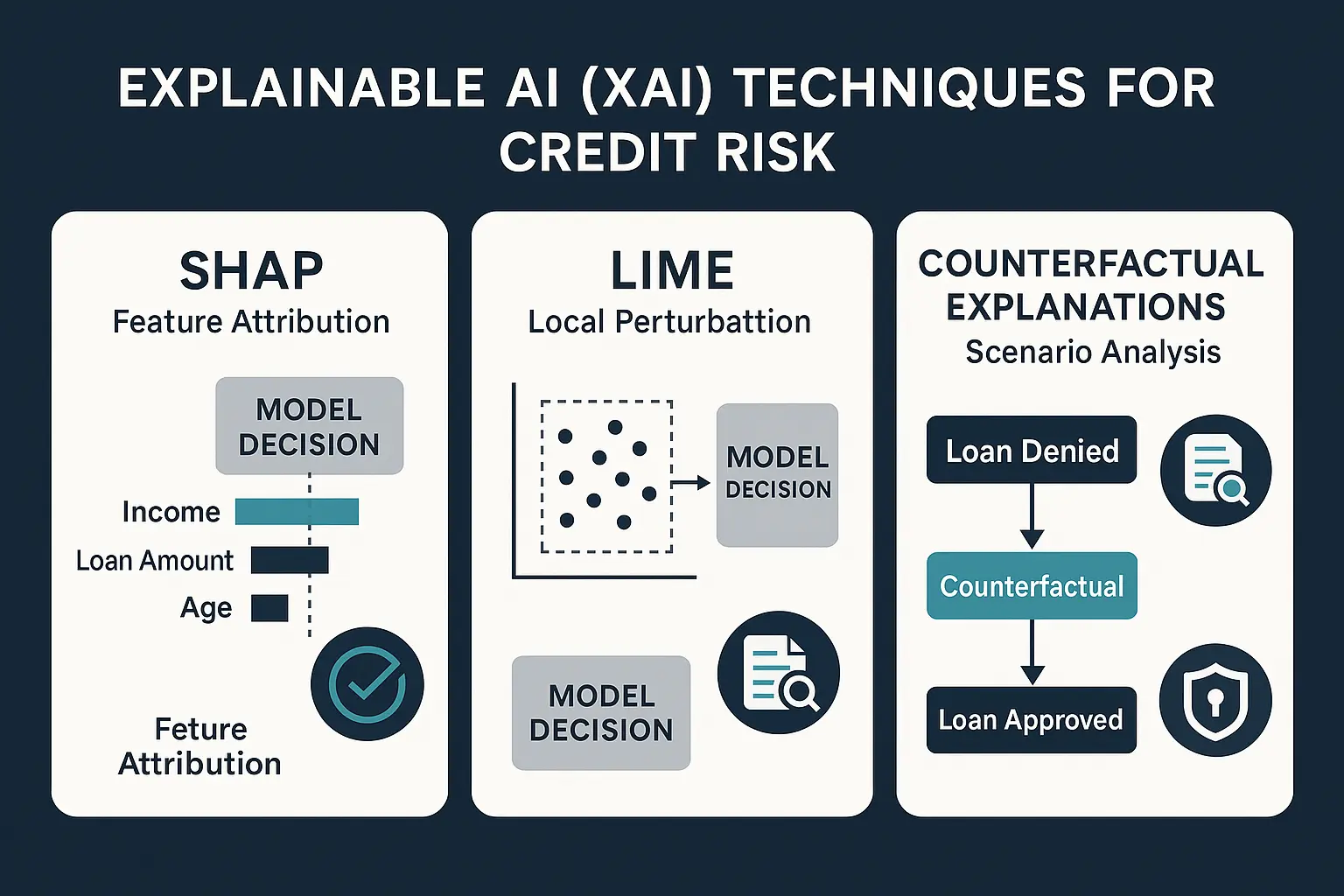
This is where Explainable AI (XAI) becomes non-negotiable. Modern AI underwriting platforms are built on a foundation of transparency, using specific techniques to make every decision auditable and understandable.
Key XAI Techniques for Lending:
- SHAP (SHapley Additive exPlanations): This method assigns an importance value to each variable in a decision. It clearly shows which factors—like a high debt-to-income ratio or a recent job change—contributed most to the final outcome. This is perfect for generating compliant adverse action notices.
- LIME (Local Interpretable Model-agnostic Explanations): LIME explains why a single prediction was made by creating a simpler, localized model around that decision. It helps underwriters understand the reasoning for a specific applicant.
- Counterfactual Explanations: This powerful tool shows applicants what they would need to change to be approved. For example, “Your application would have been approved if your monthly debt payments were $200 lower.” This empowers consumers and builds trust.
By embedding XAI into the workflow, you not only meet regulatory requirements but also build confidence among your underwriters, compliance teams, and customers.
Early Warning Systems: Anomaly Detection and Proactive Default Prediction
AI’s predictive power extends far beyond the initial application. It provides an early warning system for your entire portfolio by constantly monitoring for subtle patterns that signal potential distress.
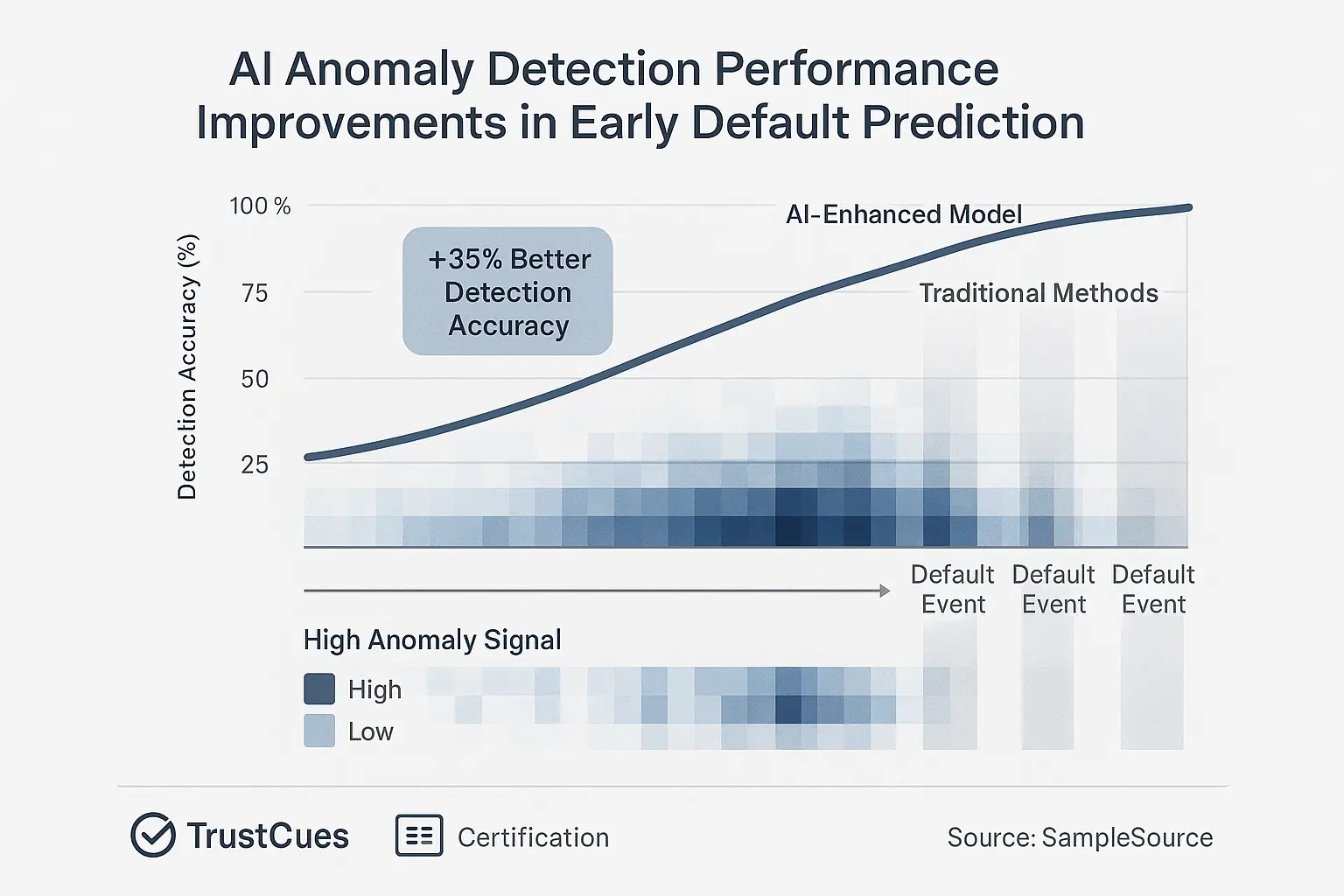
Traditional methods might only catch a default after a payment is missed. AI-powered anomaly detection, however, can identify leading indicators weeks or months in advance. It does this by analyzing behavioral and transactional data for deviations from a borrower’s established patterns, such as:
- Sudden changes in spending behavior.
- Increased reliance on short-term credit.
- Unusual payment timings or amounts.
- Decreased income or account balance volatility.
This isn’t about general fraud detection; it’s about proactively identifying and assisting at-risk, non-fraudulent borrowers before they default. Studies show that AI achieves 35% better detection accuracy in identifying these anomalies, allowing you to offer timely support, restructure loans, and ultimately reduce credit losses. Some platforms have reported loss reductions of up to 73% by leveraging these early warning capabilities.
Implementing AI in Your Lending Ecosystem: A Strategic Playbook
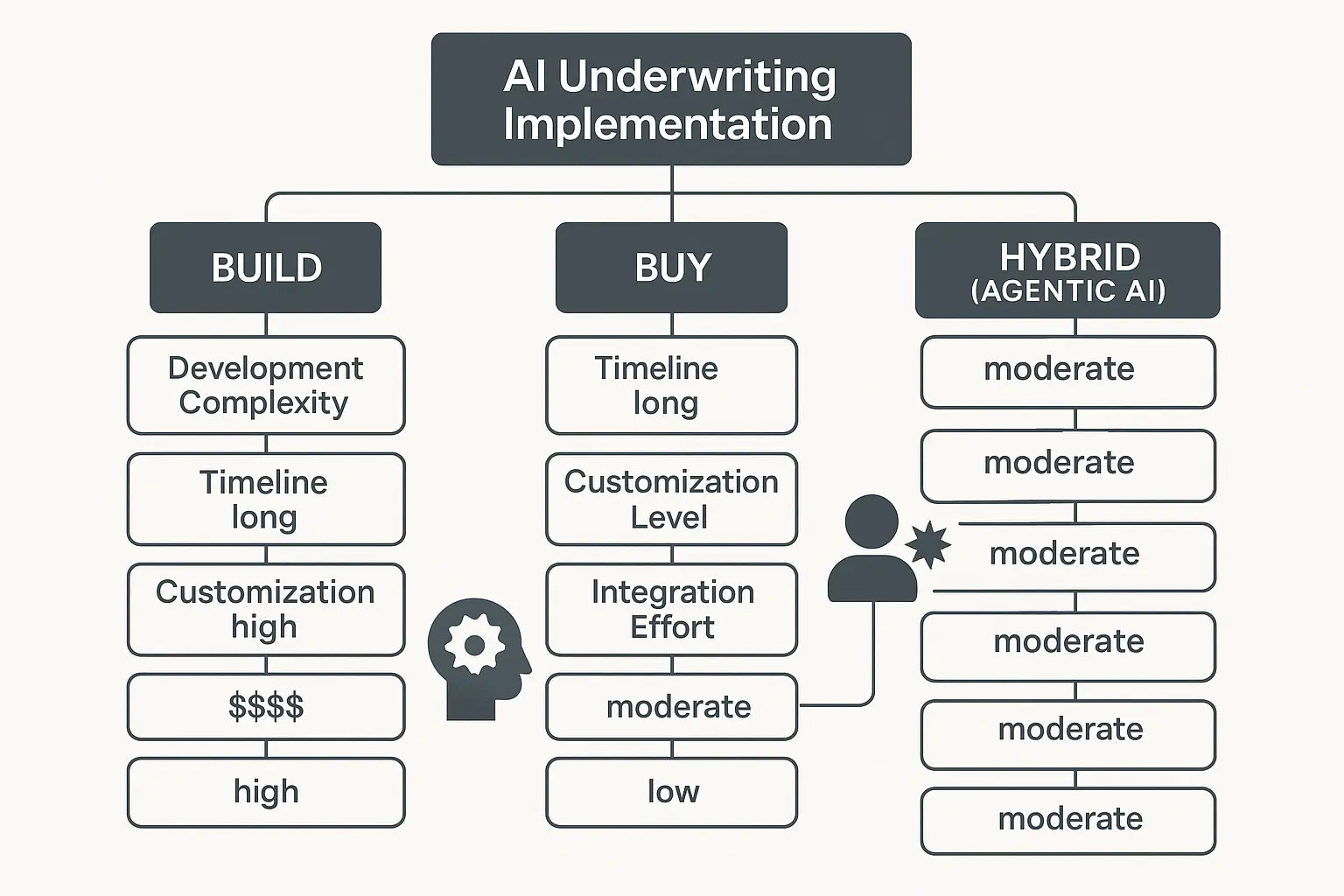
Adopting AI doesn’t have to be a monolithic, multi-year overhaul. The most effective approach balances speed, control, and your institution’s unique needs. You generally have three paths:
- Build: Develop a custom solution in-house. Offers maximum control but requires significant investment in specialized talent, time, and ongoing maintenance.
- Buy: Implement a turnkey, off-the-shelf platform. Fastest time-to-market but may offer limited customization to your specific credit policies.
- Hybrid (Agentic AI): This modern approach combines the best of both worlds. It uses a system of pre-built, intelligent “agents” that handle specific tasks (e.g., data ingestion, income verification, risk modeling). You can assemble these agents like building blocks to create a semi-custom workflow that integrates seamlessly with your existing systems.
The agentic, or hybrid, model is rapidly gaining traction because it allows for a phased rollout. You can start by automating one part of your workflow and expand over time, ensuring a smooth transition and faster ROI. Key to any path is a deep focus on integrating AI with legacy systems, ensuring your new capabilities work in concert with your existing Loan Origination System (LOS), CRM, and core banking platforms.
Frequently Asked Questions (FAQ)
1. How does AI underwriting prevent bias if it learns from historical data?
This is a critical concern. Leading AI platforms address this head-on with advanced adversarial debiasing techniques. The models are explicitly trained to make accurate predictions without relying on protected class attributes (like race or gender) or their proxies. Zest AI, for example, reports lifting approvals by 30% on average across protected classes while keeping risk constant, proving that fairness and accuracy can go hand-in-hand.
2. What is the typical implementation timeline for an AI credit risk model?
This depends on the approach. A full in-house build can take over a year. A turnkey “buy” solution can be live in a few months. The hybrid, modular agentic approach offers the most flexibility, allowing for an initial deployment in as little as 8-12 weeks by focusing on a specific part of the underwriting process first.
3. Our data is spread across multiple legacy systems. How does your solution handle data integration?
Modern AI platforms are built with this reality in mind. They use robust APIs and data connectors designed to integrate with a wide range of systems, from legacy core banking platforms to modern CRMs and third-party data providers. The initial phase of any project involves mapping your data ecosystem to ensure a seamless and secure flow of information.
4. How do you prove the ROI of AI underwriting to stakeholders?
The business case is built on clear, measurable metrics. We typically partner with clients to establish a baseline and then track improvements across key areas:
- Reduced Credit Losses: Measured by lower default rates (up to 73% reduction).
- Increased Approval Rates: Expanding approvals without adding risk (27-44% lift).
- Operational Efficiency: Lowering underwriting costs (up to 50% cuts) and reducing manual review hours.
- Improved Compliance: Quantifying the reduction in compliance-related errors and audit time.
5. Will AI replace our human underwriters?
No, AI augments them. The goal is to automate the repetitive, data-heavy tasks so your underwriters can become strategic risk managers. AI handles the 80% of straightforward applications, freeing your expert team to focus on the 20% of complex, high-value cases that require human judgment, empathy, and experience. It’s a human-AI synergy that elevates the role of the underwriter.
Capitalizing on the AI Underwriting Advantage
The question is no longer if AI will reshape lending, but when you will leverage it to gain a competitive edge.
By moving beyond traditional, static risk models, you can build a more resilient, efficient, and equitable lending operation. AI empowers you to approve more loans safely, reduce losses through proactive monitoring, and deliver the fast, seamless experience modern borrowers expect. The data is clear: institutions that embrace this technology are not just improving their bottom line; they are defining the future of credit.
If you are ready to explore how a tailored, explainable AI strategy can transform your underwriting process, let’s start a conversation.
