
Beyond Automation: How AI Agents Are Reshaping Your Workforce and the Future of Collaboration
You’re seeing it everywhere. Intelligent AI agents are no longer a future concept—they’re a present reality, promising to redefine productivity, innovation, and what it means to work. But navigating this shift feels like trying to chart a course in a storm. You’re caught between the hype of unprecedented efficiency and the genuine anxiety about job displacement, skill gaps, and choosing the right technology.
The real challenge isn’t just adopting AI; it’s mastering the new dynamics of human-AI collaboration. This isn’t about replacing people with programs. It’s about creating a symbiotic workforce where human ingenuity is amplified by the speed and analytical power of intelligent agents. Companies that get this right are poised to unlock immense value, with some analysts predicting the human-AI collaboration market will surge to over $1 trillion by 2035.
This guide is designed to cut through the noise. We’ll provide a clear, data-driven framework for understanding this transformation, upskilling your teams, and making confident decisions that turn the promise of AI into your competitive advantage.
The New Paradigm: From Task Automation to Augmented Intelligence
For years, automation meant offloading repetitive, predictable tasks. AI agents represent a fundamental leap forward. Unlike simple automation tools, AI agents are autonomous, goal-oriented systems that can perceive their environment, make decisions, and take actions to achieve complex objectives. They are moving from being tools we wield to teammates we collaborate with.
This evolution marks the shift from task automation to augmented intelligence. Instead of just doing what they’re told, AI agents act as intelligent assistants, data analysts, and strategic advisors. Research from IDC shows that AI tools can already save workers over 40% of their typical workday. This isn’t just about saving time; it’s about redirecting human talent toward higher-value work that requires creativity, strategic thinking, and emotional intelligence—areas where humans still excel. The goal is to create a seamless partnership that amplifies your team’s existing capabilities, not just replace them.
Decoding Human-AI Collaboration: When and How It Works Best
The most successful AI integrations are built on a deep understanding of complementary strengths. It’s not a competition between human and machine but a strategic partnership that leverages the best of both. As IBM outlines, this synergy is about combining human context with machine optimization.
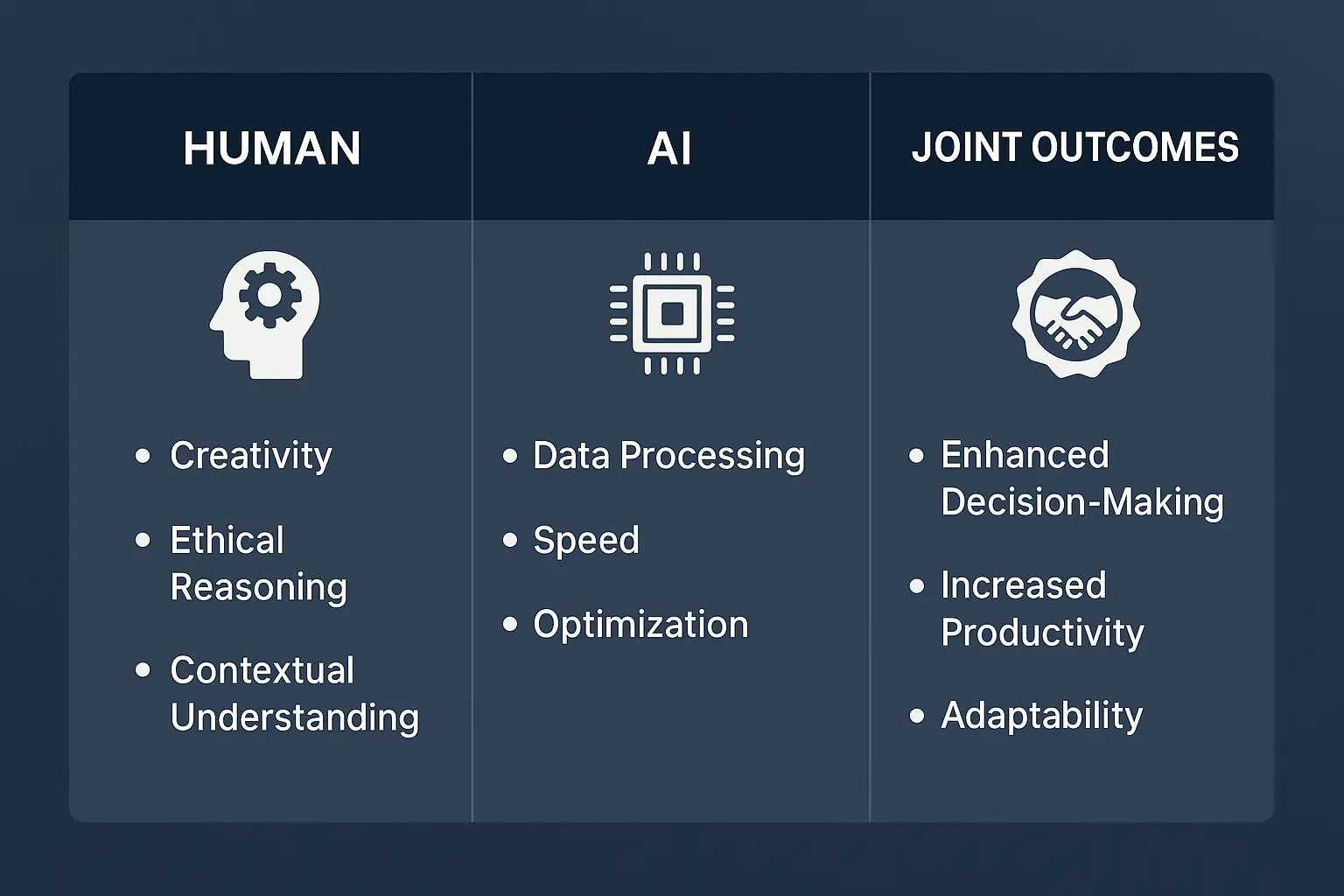
A Partnership of Complementary Strengths
- Human Strengths:
- Contextual Understanding & Nuance: Interpreting unspoken cues, understanding complex social dynamics, and applying common-sense reasoning.
- Creativity & Innovation: Thinking outside the box, generating novel ideas, and developing original strategies.
- Ethical Judgment & Empathy: Making value-based decisions, understanding emotional states, and building relationships.
- AI Agent Strengths:
- Data Processing & Pattern Recognition: Analyzing massive datasets at superhuman speeds to identify trends and anomalies.
- Speed & Optimization: Executing complex calculations and logistical tasks with unparalleled efficiency.
- Endurance & Scalability: Operating 24/7 without fatigue and scaling operations on demand.
However, it’s crucial to move beyond blanket assumptions. Groundbreaking research from MIT Sloan, which analyzed over 100 studies, found that human-AI teams don’t automatically outperform the best human-only or AI-only system. The magic isn’t in just pairing them up; it’s in fundamentally redesigning the work process to leverage their unique strengths at the right moments. For tasks like creative writing, iterative collaboration excels. For others, like spotting fake reviews, a well-trained AI might perform better alone.
Three Models of Collaboration
Your strategy should embrace different types of interaction:
- AI as an Advisor: The agent analyzes data and provides recommendations, but the human makes the final call. (e.g., A marketing tool suggesting campaign adjustments based on real-time data).
- AI as an Augmenter: The agent works alongside the human, handling parts of a task to speed up the workflow. (e.g., An AI coding assistant completing lines of code for a developer).
- AI as a Delegate: The human sets the goal and constraints, and the agent executes the entire task autonomously. (e.g., An agent managing inventory and automatically reordering stock).
Workforce Transformation: Jobs, Skills, and the Agent-Driven Enterprise
The rise of AI agents is undeniably reshaping the job market, but the narrative of mass replacement is overly simplistic. The World Economic Forum projects that while 85 million jobs may be displaced by 2025, 40% of core skills will change, creating new roles and opportunities. The real story is one of transformation.
By 2026, IDC predicts that 40% of roles in G2000 companies will involve direct interaction with AI. This creates an urgent need for new skills—not just technical ones, but uniquely human ones that AI cannot replicate. The anxiety is real; Gallup found nearly 25% of workers worry about their jobs becoming obsolete. The most effective leaders will address this by focusing on skill evolution.
Future-Ready Skills for the Augmented Workforce
- Human-Centric Skills:
- Critical Thinking & Problem Solving: Evaluating AI outputs, identifying biases, and making complex judgments.
- Emotional Intelligence & Communication: Collaborating with diverse teams (including AI) and managing stakeholder relationships.
- Creativity & Adaptability: Innovating on top of AI-generated foundations and quickly learning new workflows.
- AI-Interaction Skills:
- Prompt Engineering: Articulating clear, effective instructions to guide AI agents.
- AI Output Evaluation (Discernment): Critically assessing the quality, accuracy, and ethical implications of AI-generated content or decisions.
- Data Literacy: Understanding the data that powers AI systems to better interpret and challenge their outputs.
Strategic Upskilling Frameworks for the AI Era
The skills gap is one of the biggest threats to AI adoption. Over 90% of enterprises expect to face AI-related skill shortages by 2026, a problem that could cost the economy up to $5.5 trillion. Yet, a BCG study revealed that while 89% of executives know their workforce needs better AI skills, only 6% have started meaningful upskilling.
Closing this gap requires more than a few online courses. It demands a strategic, top-down commitment to building a culture of continuous learning and redesigning how work gets done. Companies with strong reskilling programs already see 15% higher revenue growth, and this jumps to 36% higher when AI is part of the equation, according to the IBM Institute for Business Value.
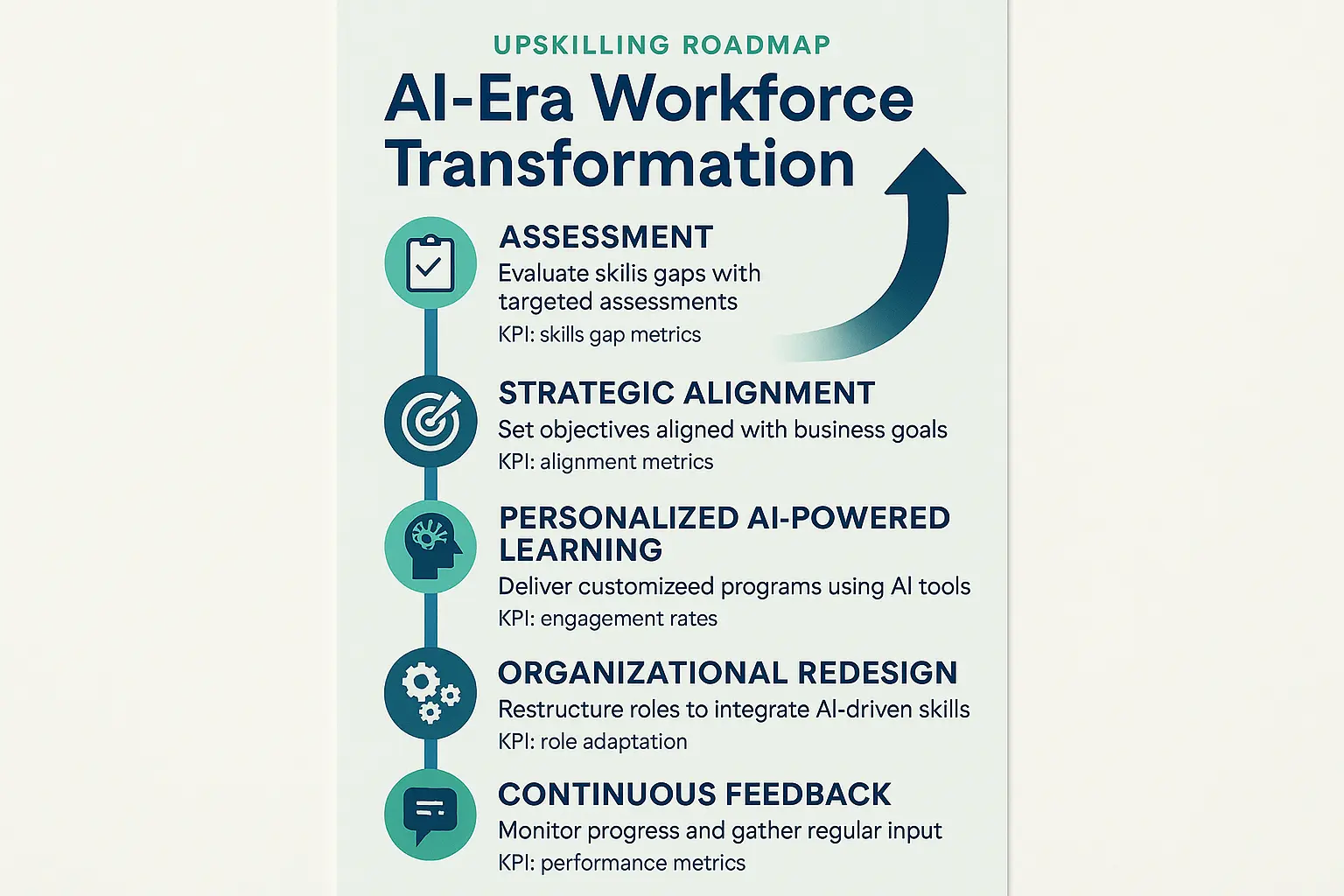
An Actionable Blueprint for Upskilling
- Align & Assess: Start by aligning your AI strategy with your business goals. Use AI-powered tools to conduct a comprehensive skill-gap analysis, identifying the specific capabilities your organization needs to develop. A clear
[AI readiness assessment]()is the critical first step. - Design & Personalize: Move beyond one-size-fits-all training. Leverage AI itself to create personalized learning paths for different roles, delivering on-the-job training, mentorship pairings, and micro-learning modules that fit into the daily workflow.
- Implement & Embed: Integrate learning into your organizational structure. Redefine job roles to officially include AI collaboration. Adjust performance metrics to reward skills like effective prompt engineering and critical AI output evaluation.
- Measure & Iterate: Track progress not just by course completion but by tangible business outcomes. Monitor productivity gains, innovation rates, and employee engagement. Use this data to continuously refine your upskilling programs.
Ensuring Responsible AI: Human Oversight, Ethics, and Trust in Agent Systems
As AI agents become more autonomous, the need for robust human oversight and ethical guardrails becomes paramount. Trust is the cornerstone of successful human-AI collaboration. Research confirms this, with over a third of executives and employees stating that AI systems require human oversight to be trusted.
This goes beyond simply having a “human in the loop.” It requires building a system of governance and cultivating a skill we call “human discernment”—the sophisticated ability for an employee to know when to trust, when to question, and when to override an AI agent’s recommendation. Leaders must implement a [responsible AI deployment framework]() that fosters this trust.
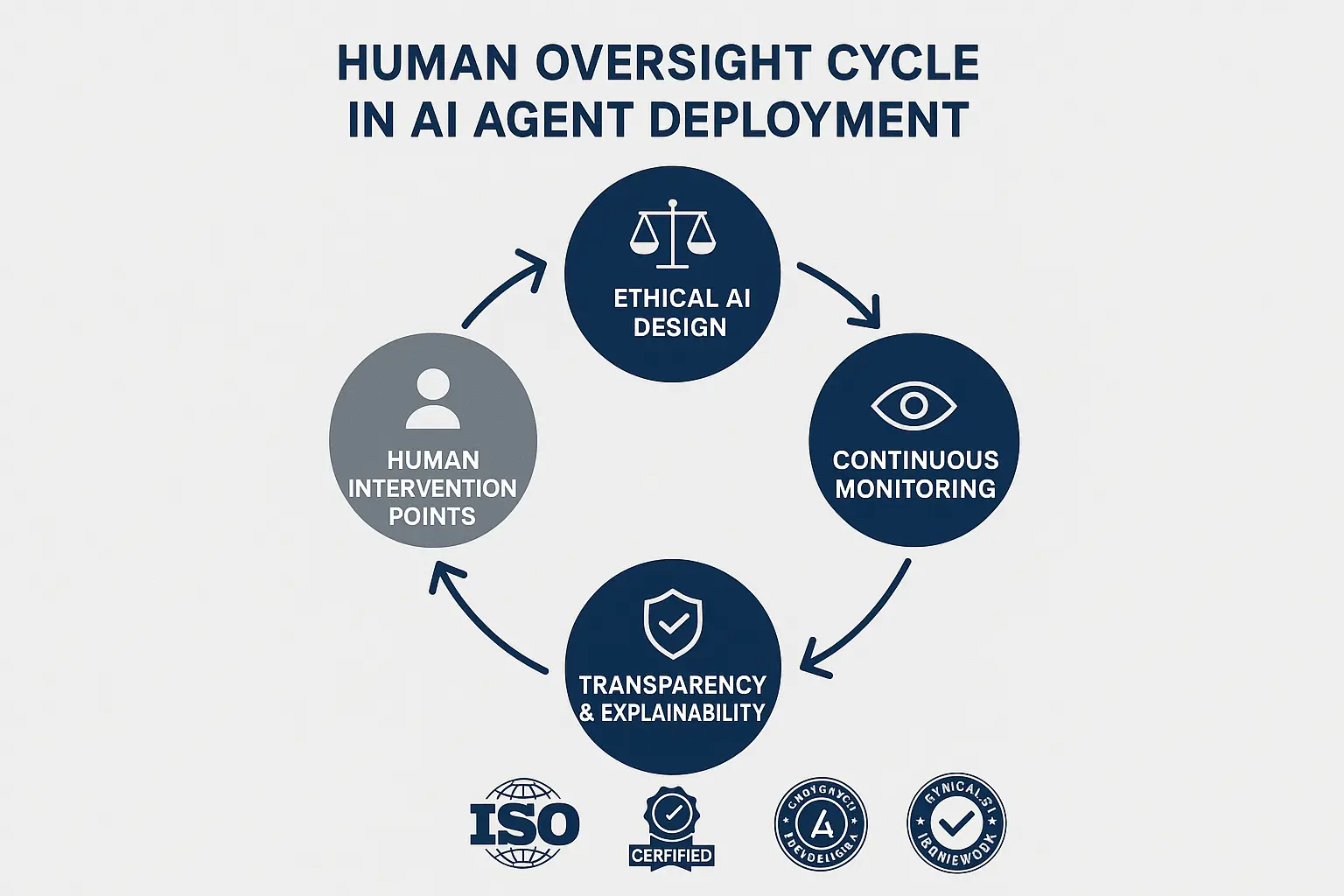
A Framework for Trustworthy AI
- Transparency: Ensure that AI decision-making processes are as explainable as possible. Teams need to understand why an agent made a particular recommendation.
- Fairness: Actively monitor AI systems for biases inherited from training data. Use diverse teams to review and audit AI performance to ensure equitable outcomes.
- Accountability: Establish clear lines of responsibility. Who is accountable when an AI agent makes a mistake? Define roles for oversight, intervention, and remediation.
- Continuous Feedback: Create channels for employees to report issues, flag strange outputs, and provide feedback on agent performance, creating a continuous improvement loop.
Choosing the Right AI Collaboration Tools (MOFU Focus)
With a market flooded with options, selecting the right AI platform is a critical decision. Instead of focusing on flashy features, your evaluation should be grounded in how well a tool facilitates the core principles of effective human-AI collaboration. Look for platforms that are built not just for automation, but for synergy.
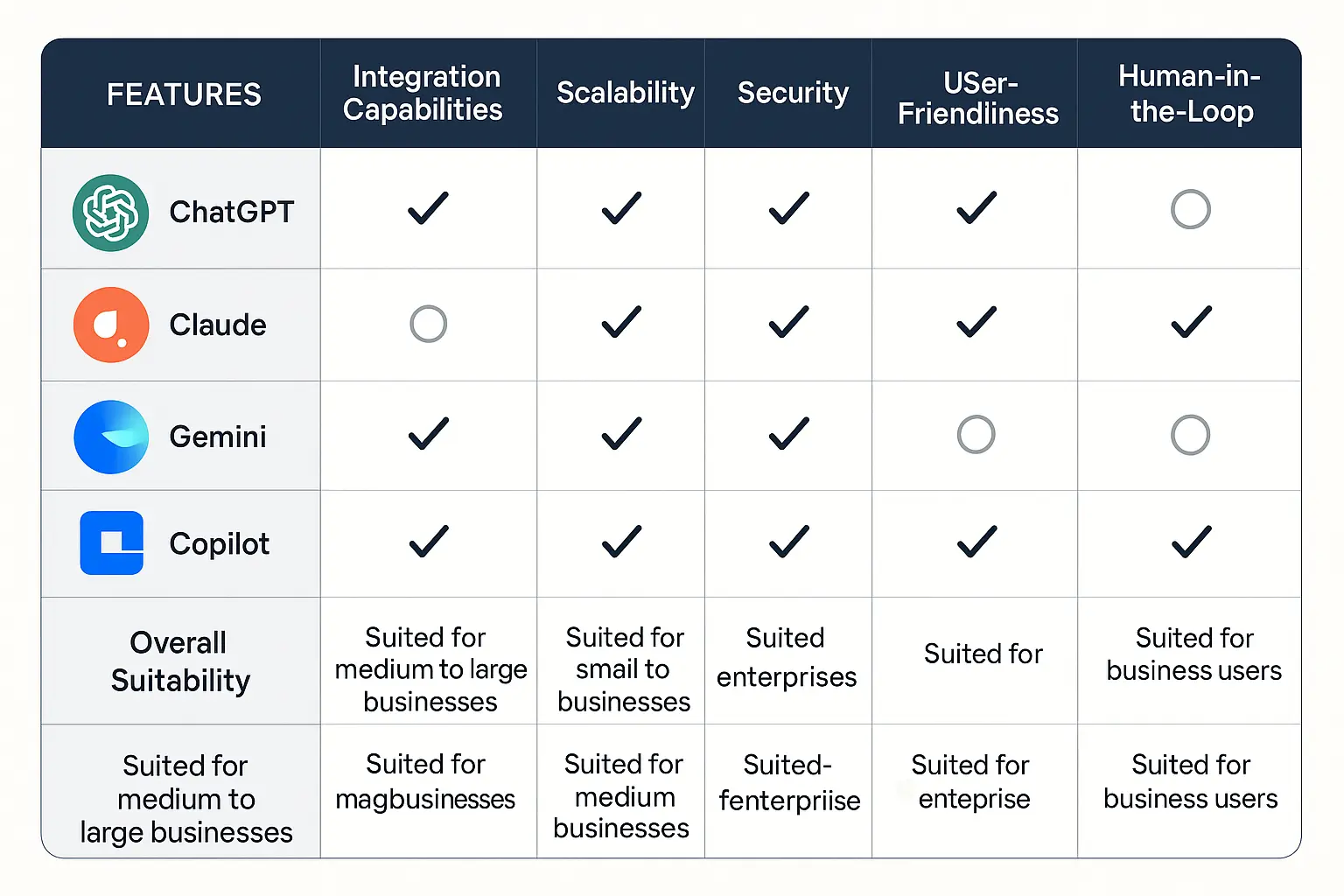
Key Evaluation Criteria for Your Shortlist
- Integration & Orchestration: How easily does the tool integrate with your existing tech stack? Can it orchestrate multiple agents and systems to create a cohesive workflow, acting as an
[AI agent operating system]()? - Human-in-the-Loop Features: Does the platform have intuitive interfaces for human oversight, intervention, and feedback? Can you easily adjust agent autonomy levels?
- Explainability & Transparency: Does the tool provide insight into its decision-making process? Can your team understand why it produced a certain result?
- Scalability & Security: Can the platform grow with your business needs while meeting enterprise-grade security and data privacy standards?
- Customization & Adaptability: Can you fine-tune the agents to align with your specific business logic, brand voice, and ethical guidelines?
Real-World Impact: Case Studies in Action
The theoretical benefits of human-AI collaboration are already translating into tangible business results.
- A major retail giant, as detailed by PwC, deployed AI agents to create a “single source of truth” for inventory, sales, and supply chain data. This allowed human employees to shift from data wrangling to strategic decision-making, optimizing stock levels and improving customer satisfaction.
- At Instacart, gig workers who used an AI-powered feature saw their item-picking rates increase by 5.53%, demonstrating how AI augmentation can directly boost frontline productivity.
- IBM practices what it preaches, using AI internally to analyze skills data and recommend personalized career paths and training for its employees, proactively building the workforce it needs for the future.
Your Path to the Augmented Future
The transition to an AI-augmented workforce is not a distant vision; it’s a strategic imperative for today’s leaders. It requires a thoughtful approach that balances technological adoption with human-centric development. By focusing on redesigning work, championing a culture of continuous learning, and embedding ethical oversight into your systems, you can move beyond simple automation and unlock a new level of collaborative intelligence.
This is your opportunity to build a more efficient, innovative, and resilient organization where both people and technology thrive together.
Frequently Asked Questions
Will AI agents take my team’s jobs?
The data points more toward job transformation than outright replacement. While some repetitive tasks will be automated, this frees up human workers for more strategic roles that require creativity, critical thinking, and empathy. The World Economic Forum notes that while some roles will be displaced, many new ones will be created. The focus should be on upskilling for these new hybrid roles.
Is implementing an AI agent strategy too expensive for a small or medium-sized business?
The cost of AI has decreased significantly. Many solutions are now available through cloud-based, scalable subscription models (SaaS), making them accessible without a massive upfront investment in infrastructure. The key is to start with a well-defined pilot project that addresses a specific business pain point to prove ROI before scaling.
How do we measure the ROI of human-AI collaboration?
ROI can be measured through a combination of quantitative and qualitative metrics.
- Quantitative: Track productivity gains (e.g., tasks completed per hour), cost savings (reduced operational overhead), revenue growth (from new innovations or improved sales), and faster project completion times.
- Qualitative: Measure improvements in employee satisfaction and engagement (as tedious work is reduced), higher quality of work, and enhanced customer satisfaction scores.
How do we get our employees to trust and adopt these new AI tools?
Trust is built through transparency, inclusion, and demonstrated value.
- Be Transparent: Communicate clearly about why the tools are being implemented and how they will help employees, not replace them.
- Involve Them: Include employees in the selection and testing process to give them a sense of ownership.
- Provide Training: Offer robust training that focuses not just on the “how-to” but on developing the skill of “human discernment.”
- Showcase Wins: Highlight early successes where AI agents have made a team’s work easier or more impactful.
