
Beyond Origination: A Lender’s Guide to AI-Driven Loan Portfolio Management
You’ve seen how AI can transform loan origination, but that’s just the opening chapter. The real, sustained value—the difference between a profitable portfolio and a struggling one—is written in the day-to-day management and servicing of those loans. For many mid-market lenders, this post-origination phase remains a landscape of manual processes, reactive decisions, and missed opportunities.
If you’re evaluating how to move beyond basic automation and truly optimize for long-term portfolio health, you’re asking the right questions. This isn’t about replacing your team; it’s about equipping them with the predictive intelligence to act decisively, manage risk proactively, and create value across the entire loan lifecycle.
Why AI is Critical for Modern Loan Portfolio Management
Traditional loan servicing often operates in the rearview mirror. You react to a missed payment, manually review accounts for risk, and offer generic solutions. This approach is not only inefficient but also costly. The AI-powered lending market is projected to skyrocket from $109.73 billion in 2024 to over $2.01 trillion by 2037 for a reason: AI shifts the entire paradigm from reactive problem-solving to proactive value creation.
Instead of waiting for a borrower to show signs of distress, AI-driven systems identify subtle behavioral and financial shifts, allowing you to intervene weeks or even months ahead of a potential delinquency. This forward-looking intelligence is the cornerstone of a resilient and profitable modern loan portfolio.
AI-Driven Predictive Analytics for Proactive Loan Servicing
At its core, AI’s power in portfolio management comes from its ability to analyze vast, complex datasets and identify patterns the human eye would miss. This unlocks a suite of proactive capabilities that directly impact your bottom line and customer relationships.
Predicting Collections & Delinquency
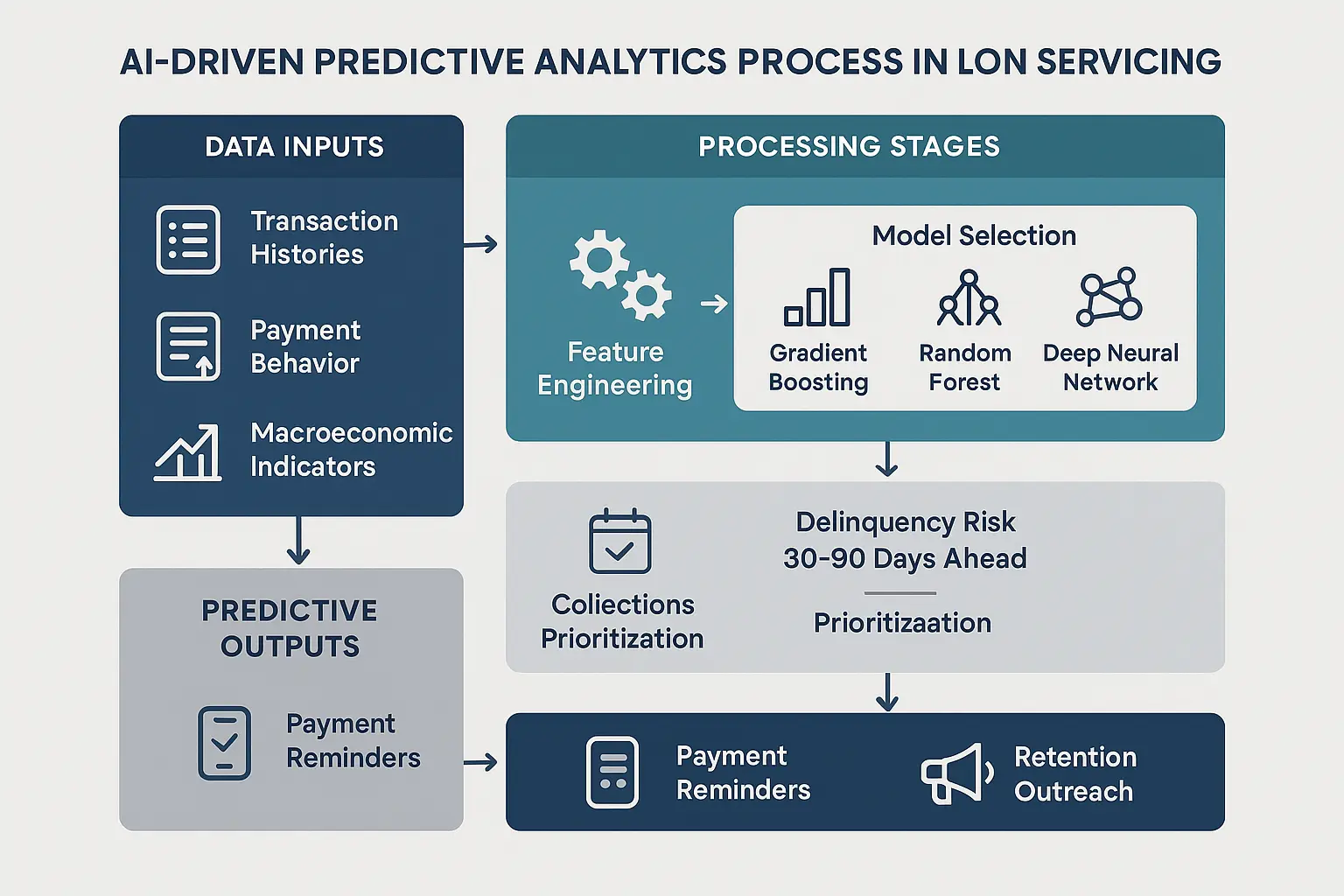
This is where AI delivers its most immediate impact. By analyzing transaction data, payment behavior, income volatility, and even macroeconomic indicators, advanced machine learning models can flag credit deterioration 30 to 90 days before a delinquency occurs. This isn’t a vague warning; it’s a statistically validated forecast. Leading AI deployments have shown the ability to reduce overall credit losses by 15–25% by enabling targeted, early interventions.
Automated Payment Processing & Reconciliation
Beyond prediction, AI and Robotic Process Automation (RPA) streamline the immense back-office workload associated with servicing. This includes automating payment processing, reconciling accounts, and managing routine borrower communications, freeing up your team for high-value tasks. The result is fewer manual errors, lower operational costs, and faster processing cycles.
Proactive Customer Retention Strategies
A customer flagged for high delinquency risk isn’t just a liability; they’re an opportunity to build loyalty. Instead of a one-size-fits-all collections call, AI can trigger personalized outreach. It might suggest offering a temporary forbearance, a flexible payment plan, or a financial counseling resource—all based on that individual borrower’s specific profile and risk factors. This proactive, empathetic approach significantly improves retention and long-term customer value.
Identifying Cross-Selling & Upselling Opportunities
The same data that predicts risk can also identify opportunities for growth. An AI system can analyze a borrower’s financial health, payment history, and life events (gleaned from transactional data) to suggest relevant products. For example, consistent, large payments toward a high-interest auto loan could trigger a pre-qualified offer for a refinancing product, benefiting both the borrower and your institution.
Optimizing Loan Performance: The Technical Deep Dive
While the benefits are clear, decision-makers often get stuck on the “how.” It’s crucial to understand that modern AI is not a “black box.” The most effective systems are built on transparent, proven technologies.
-
Advanced Algorithms in Action: Effective loan default prediction models often use algorithms like XGBoost, Gradient Boosting, and Random Forest. These are “ensemble” methods, meaning they combine the predictions of multiple smaller models to produce a single, highly accurate forecast—often achieving 80-90% accuracy in predicting defaults. For analyzing patterns over time, models like LSTMs (Long Short-Term Memory networks) are exceptionally powerful.
-
Data Integrity is Non-Negotiable: The adage “garbage in, garbage out” has never been more true. A powerful AI system relies on clean, comprehensive data. This includes traditional credit data as well as alternative data sources like utility payments, rental history, and real-time cash flow analysis, which provide a more holistic view of a borrower’s financial stability.
-
Drift Detection & Model Governance: The economy changes, borrower behavior shifts, and data evolves. An AI model that was accurate last year might be less effective today. This is why drift detection and continuous model governance are critical. The system must constantly monitor its own performance, flagging any degradation in accuracy or shifts in data patterns, so models can be retrained and validated to ensure sustained, compliant performance.
Navigating the AI Landscape: Implementation & Ethical Considerations (MOFU Focus)
Adopting AI is as much about strategy and governance as it is about technology. For mid-market lenders evaluating solutions, focusing on these areas is key to reducing risk and ensuring a successful deployment.
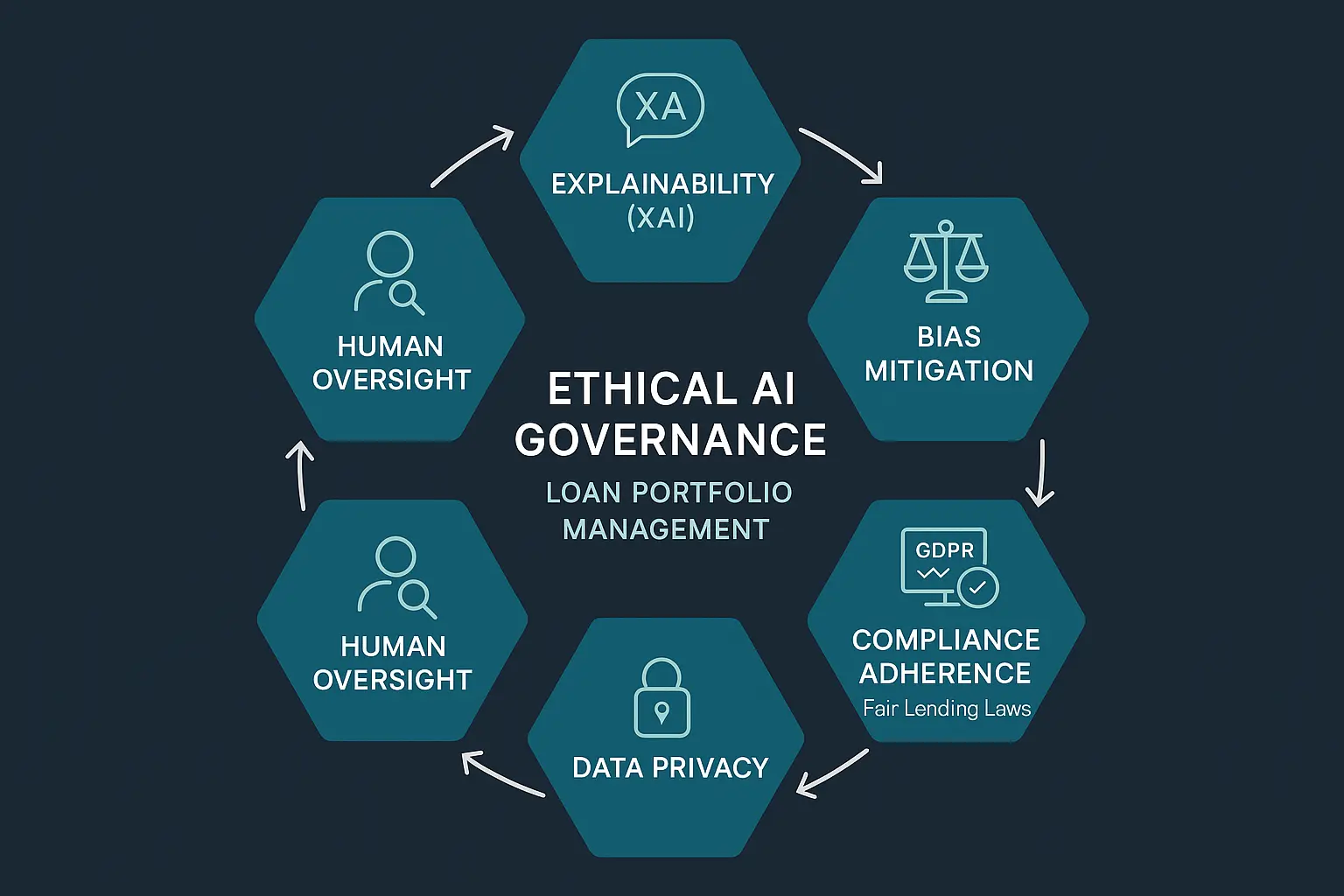
A robust governance framework ensures your AI systems are not only effective but also fair, transparent, and compliant. This involves establishing clear policies for data usage, model validation, bias detection, and human oversight, ensuring that a human expert always has the final say in critical decisions. Building a system grounded in ethical AI frameworks is essential for long-term trust and regulatory adherence.
Integration with Legacy Systems
One of the biggest concerns for lenders is how a new AI solution will integrate with their existing core banking systems. The answer for most modern platforms lies in API-based solutions. This approach allows the AI engine to securely connect with your existing infrastructure, pulling the data it needs and pushing insights back without requiring a complete overhaul of your legacy systems. A phased implementation, starting with a high-impact area like delinquency prediction, can prove value quickly and build momentum for broader adoption.
Quantifiable Impact: Real-World ROI & Case Studies
Beyond the technical details, the decision to invest comes down to measurable returns. The data from early adopters provides a clear picture of the potential impact.
Let’s consider a hypothetical case study for a mid-market lender with a $500 million consumer loan portfolio:
- Before AI: The lender experiences an average annual default rate of 3.5% ($17.5 million in losses) and employs a team of 20 servicing agents focused on manual collections and portfolio reviews.
- After AI Implementation:
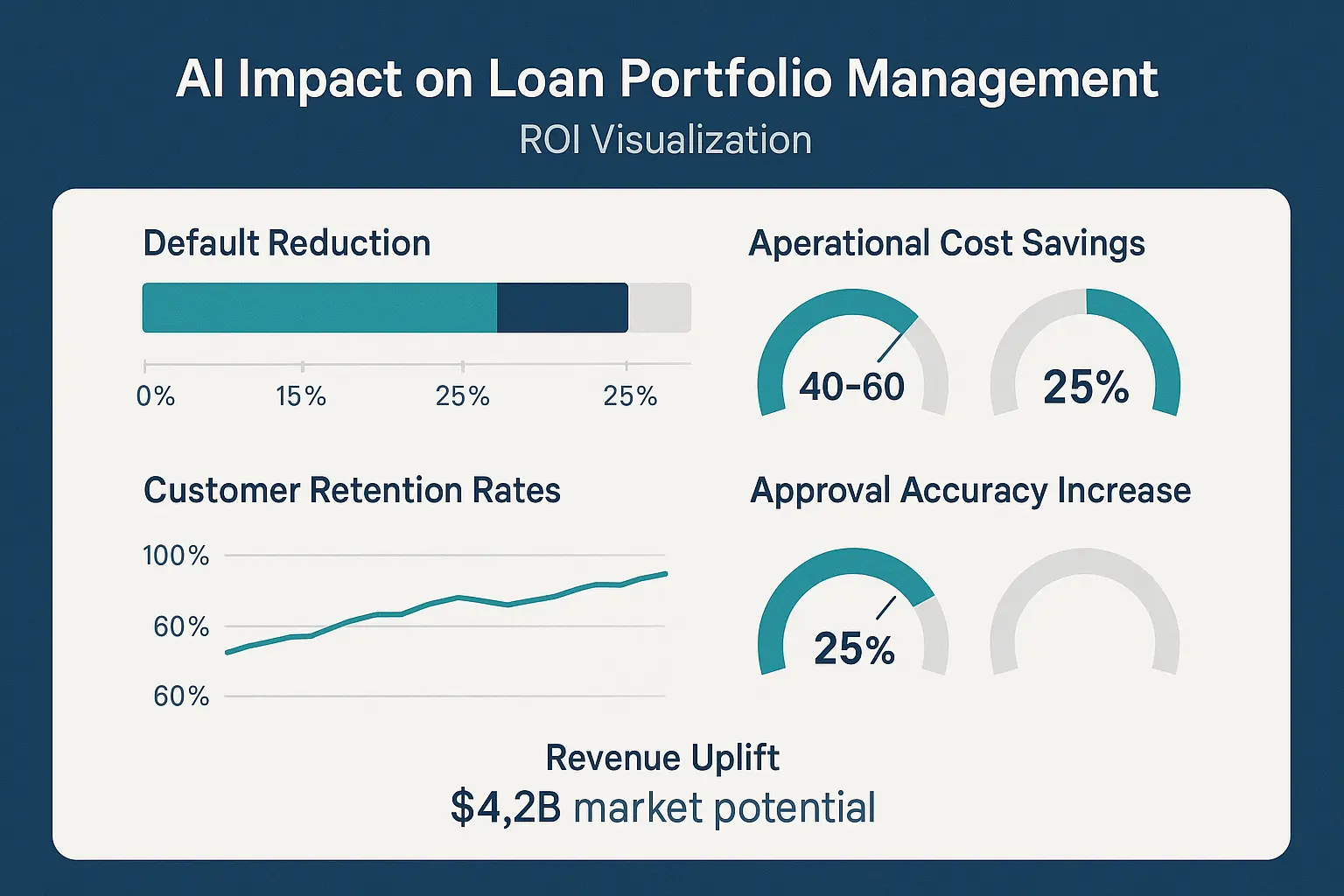
- Reduced Credit Losses: By predicting delinquencies 60 days out, the lender implements proactive intervention strategies. The default rate drops by a conservative 20%, resulting in $3.5 million in annual savings.
- Increased Operational Efficiency: AI automates routine monitoring and communication, cutting the time analysts spend per loan by 40%. This allows the lender to reallocate 8 team members to higher-value activities like complex case resolution and personalized customer outreach, without increasing headcount.
- Improved Approvals & Growth: Insights from the servicing AI feed back into the underwriting models, improving approval accuracy. This allows the lender to safely boost approvals by 18%, capturing new, creditworthy customers and growing the portfolio.
The cumulative effect is a more profitable, efficient, and resilient lending operation.
Choosing Your AI Partner: Evaluation Criteria for Lenders
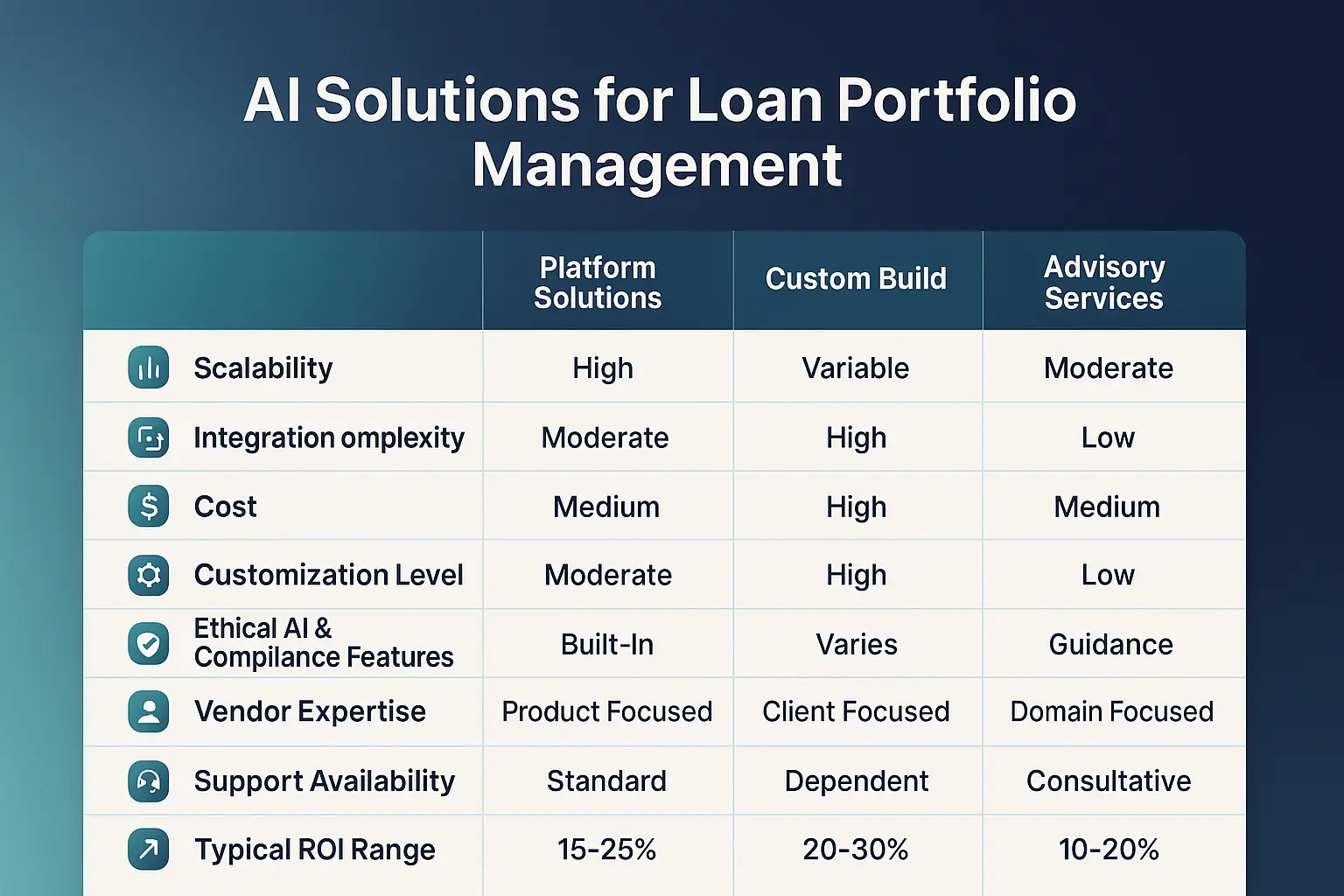
As you evaluate potential solutions, it’s easy to get lost in feature lists. Focus instead on the core capabilities that will determine your long-term success. Your ideal partner should be evaluated on more than just their algorithm.
Here is a framework to help guide your decision:
Look for a partner who understands the unique challenges faced by mid-market lenders and can provide a solution that is not only powerful but also scalable, transparent, and easy to integrate into your existing workflows.
The Future is Agentic: What’s Next in Loan Servicing
The evolution isn’t stopping at predictive analytics. The next frontier is agentic AI, where autonomous AI agents can handle multi-step tasks 24/7. Imagine an AI agent that not only identifies a high-risk borrower but also independently pulls updated data, models several intervention scenarios, drafts a personalized communication, and queues it for human approval. This level of automation will further enhance efficiency and allow your human experts to operate at an even more strategic level.
Your Next Step Toward a Smarter Portfolio
Moving from a reactive to a proactive loan servicing model is the single most impactful step you can take to secure the long-term health and profitability of your portfolio. AI provides the intelligence to make that shift—reducing risk, improving efficiency, and building stronger customer relationships.
The key is to start with a clear understanding of your specific challenges and to choose a partner who can provide a transparent, compliant, and ROI-focused solution.
Frequently Asked Questions
1. Is the goal of AI to replace our loan servicing team?Absolutely not. The goal is to augment your team. AI handles the repetitive, data-intensive tasks of monitoring and prediction, freeing up your skilled professionals to focus on complex decision-making, strategic interventions, and high-touch customer interactions where human judgment is irreplaceable.
2. Our data is spread across multiple legacy systems. How can we implement AI?This is a common challenge. Modern AI platforms are built with integration in mind, using APIs (Application Programming Interfaces) to securely connect to and pull data from various sources, including older core banking systems. The process typically involves a data mapping phase to unify your data without requiring you to replace your existing infrastructure.
3. How do we trust a “black box” AI model with compliance and fair lending?You shouldn’t. That’s why explainable AI (XAI) is a critical requirement. A trustworthy AI solution will not just give you a prediction (e.g., “high risk of default”), but it will also provide the key reasons behind that prediction (e.g., “due to a recent 30% drop in deposit activity and increased credit utilization”). This transparency is essential for regulatory compliance, bias auditing, and building internal trust in the system.
4. What kind of ROI can we realistically expect, and how soon?The ROI comes from several areas: reduced credit losses (15-25%), lower operational costs (analyst time cut by 40-60%), and increased portfolio growth. While the exact timeline varies, many institutions see a measurable impact within the first 6-12 months, particularly in the accuracy of delinquency forecasting and the efficiency of their collections teams.
5. We’re a mid-sized institution. Are these solutions affordable and scalable for us?Yes. The rise of SaaS (Software-as-a-Service) models has made powerful AI accessible to institutions of all sizes. Instead of a massive upfront capital investment, you can subscribe to a platform that scales with your needs. The key is to find a partner who understands the specific resource constraints and business drivers of the mid-market, rather than offering a one-size-fits-all enterprise solution.
