
You’re evaluating how AI can transform your grid operations. You’ve read the high-level reports and seen the impressive market forecasts. But the critical question remains: how do you move from theory to reality? How do you leverage AI not just for better forecasting, but for creating a truly resilient, efficient, and autonomous grid that can withstand the pressures of renewables, extreme weather, and ever-present cyber threats?
This isn’t another surface-level overview. This is a practical guide for grid operators and utility decision-makers. We’ll cut through the noise to provide a clear framework for implementing AI, explore the specific algorithms that deliver results, and address the real-world barriers to adoption—giving you the confidence to make the right strategic decisions.
Executive Summary: The AI Imperative for Modern Grids
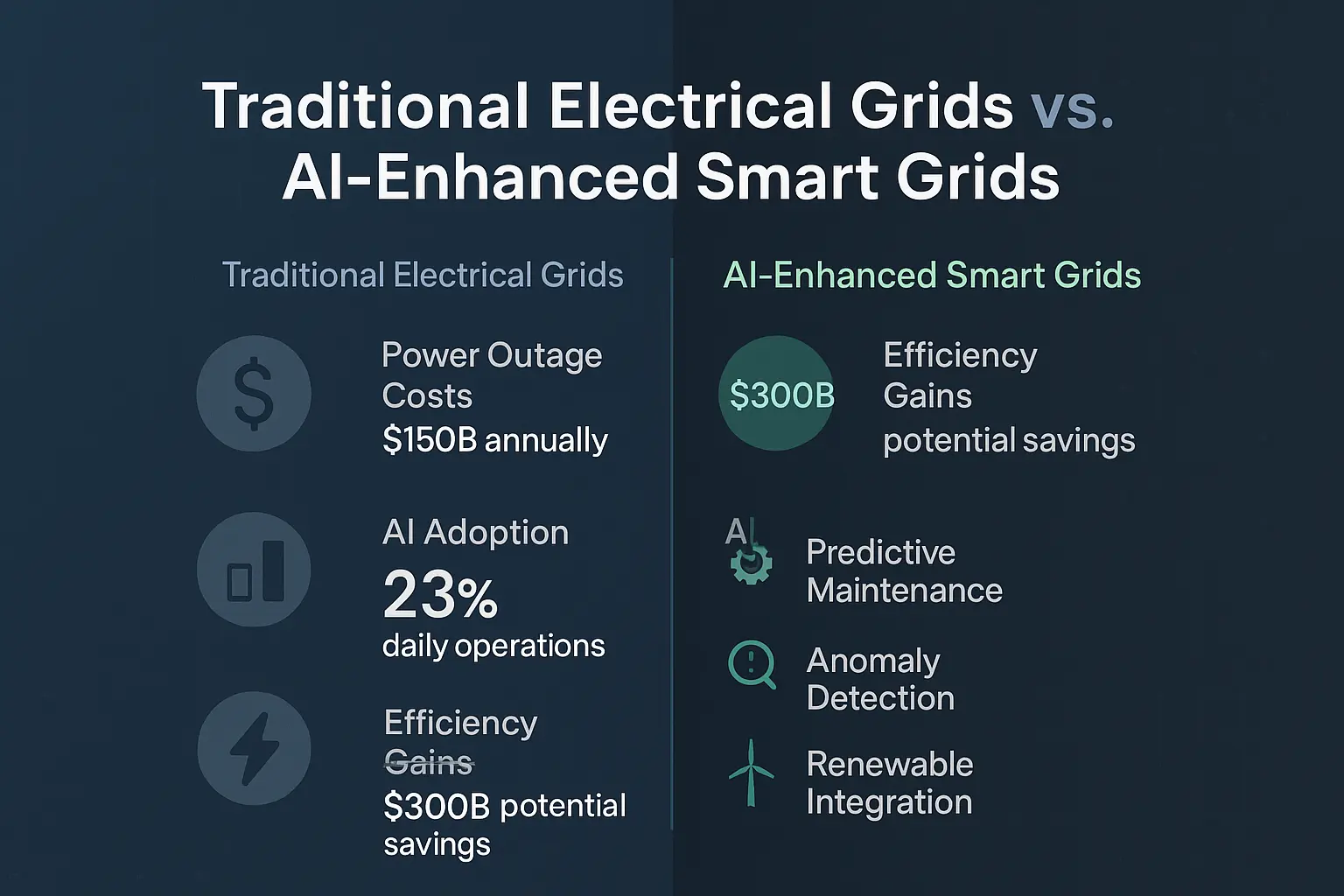
The modern electrical grid is at a critical inflection point. The cost of power outages to the U.S. economy alone is a staggering $150 billion annually, according to the Department of Energy. At the same time, the push for Net Zero requires smart grid investments to more than double by 2030. AI is the linchpin technology that addresses both challenges, unlocking an estimated $300 billion in efficiency gains this decade. It’s no longer a question of if AI will reshape the grid, but how you can harness it to gain a competitive and operational advantage.
The Evolving Grid Landscape: Challenges & Opportunities
Today’s grid wasn’t designed for the demands it now faces. The confluence of aging infrastructure, the volatile nature of renewable energy sources, increasingly severe climate events, and sophisticated cyber threats creates a perfect storm of operational complexity. You’re no longer just managing the flow of electrons; you’re orchestrating a dynamic, multi-directional ecosystem.
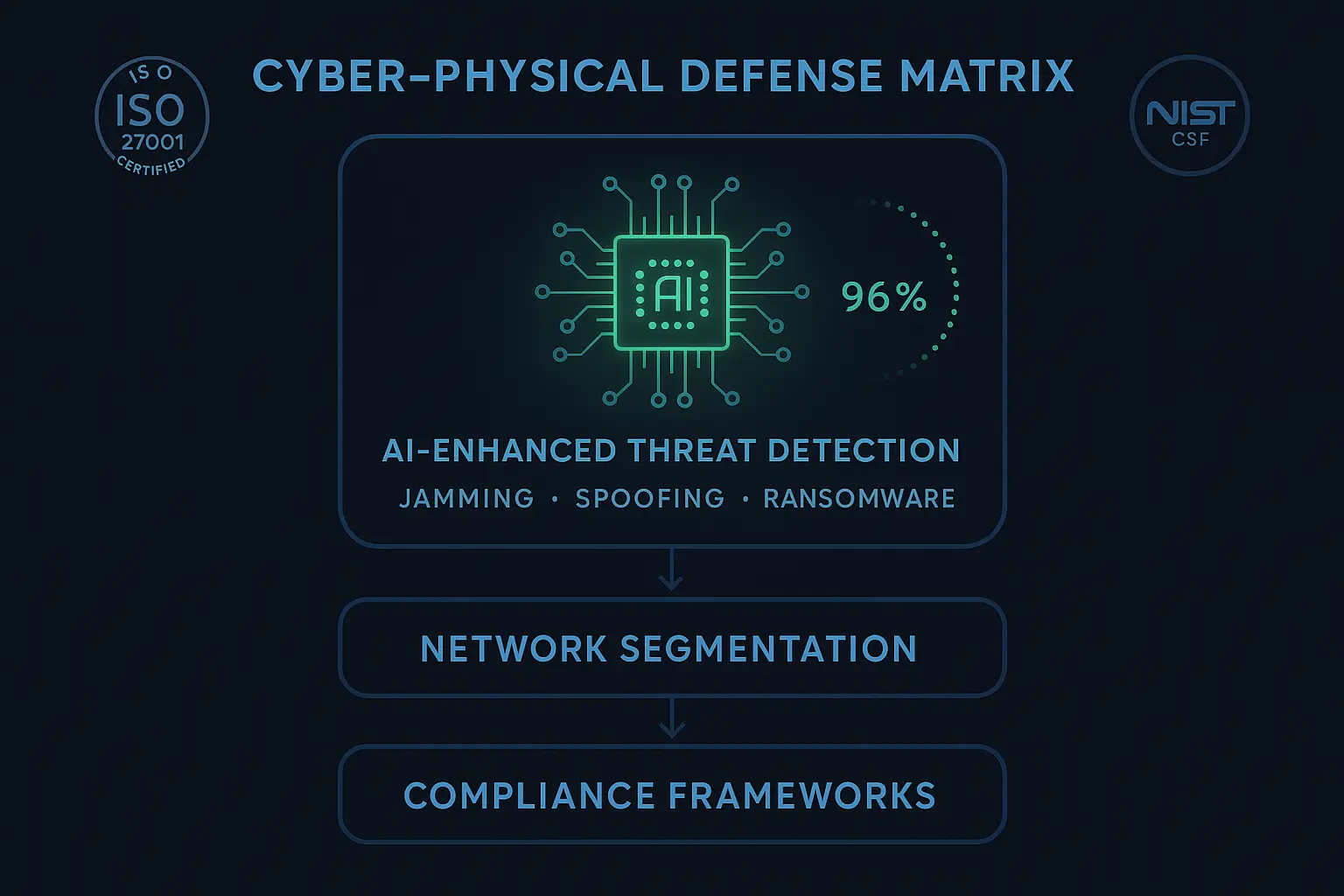
This new reality demands a new class of tools. While traditional systems are reactive, AI-powered solutions are predictive and proactive, turning these immense challenges into opportunities for unprecedented efficiency and stability.
From Prediction to Control: Redefining Grid Management with AI
Many AI discussions stop at forecasting. True grid optimization, however, requires moving from passive prediction to active, real-time control. This means deploying specialized AI that can analyze, decide, and act faster and more accurately than human-led or rules-based systems.
Real-Time Anomaly Detection: Beyond Thresholds with Advanced AI
Traditional SCADA alarms are noisy and often trigger too late. They tell you a threshold has been breached, not that a complex, multi-factor failure is developing. Advanced AI offers a more intelligent approach.
Instead of generic machine learning, leading systems use algorithms like Random Cut Forest (RCF). RCF is exceptionally good at spotting subtle anomalies in high-dimensional data streams—like identifying a unique combination of voltage, frequency, and temperature data that signals an impending transformer failure long before any single metric crosses a red line. Another powerful technique is Physics-Informed Machine Learning (PIML), which embeds the laws of physics into the neural network. This ensures the AI’s predictions are physically plausible, drastically reducing false positives and building operator trust.
Smart Controls for a Dynamic Grid
Integrating intermittent renewables requires constant grid balancing. Traditional Optimal Power Flow (OPF) solvers are often too slow to react to sudden changes in wind or solar output. Research shows that neural networks can solve complex optimization problems 14 to 22 times faster than these legacy methods.
In one study on a 1,300-bus system, a neural network model achieved a cost error of around 1%, outperforming the traditional DC OPF method which had an error rate of over 2%. This speed and accuracy allow for real-time Dynamic Line Rating (DLR) and optimal dispatch, maximizing throughput without compromising stability. You can learn more by exploring [our deep dive into AI for renewable energy integration].
AI-Driven Predictive Maintenance
Effective predictive maintenance goes beyond simple time-based schedules. It involves creating a “digital twin” of your critical assets and using AI to model their health in real-time. By analyzing sensor data, historical performance, and environmental factors, these models can pinpoint which specific components are degrading and predict their remaining useful life, allowing you to shift from costly reactive repairs to targeted, proactive maintenance.
The Cybersecurity-Resilience Nexus: AI as Your First Line of Defense
In a connected grid, operational resilience and cybersecurity are two sides of the same coin. A cyber-attack can trigger a physical outage, and a physical event can create vulnerabilities for attackers to exploit. AI provides a unified defense against these hybrid, cyber-physical threats.
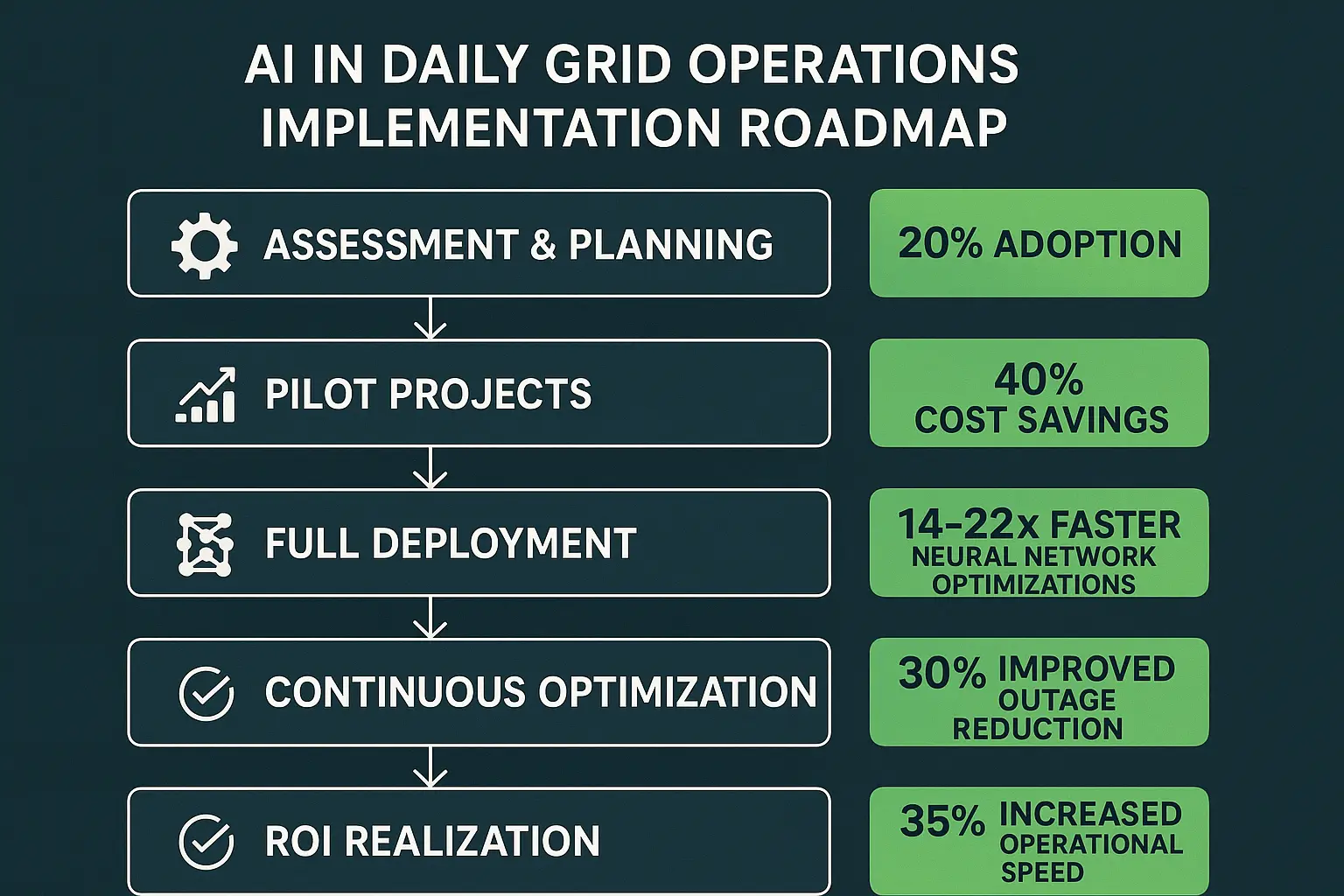
AI-driven systems monitor network traffic and physical sensor data simultaneously. They learn the “normal” behavior of your entire system and can instantly flag deviations that signal sophisticated attacks like man-in-the-middle, GPS spoofing, or coordinated jamming. This proactive threat hunting is a significant leap beyond signature-based firewalls, which can only stop known threats. By adopting [a zero-trust security framework powered by AI], you build a grid that is resilient by design.
Bridging the Gap: Implementing AI in Daily Grid Operations
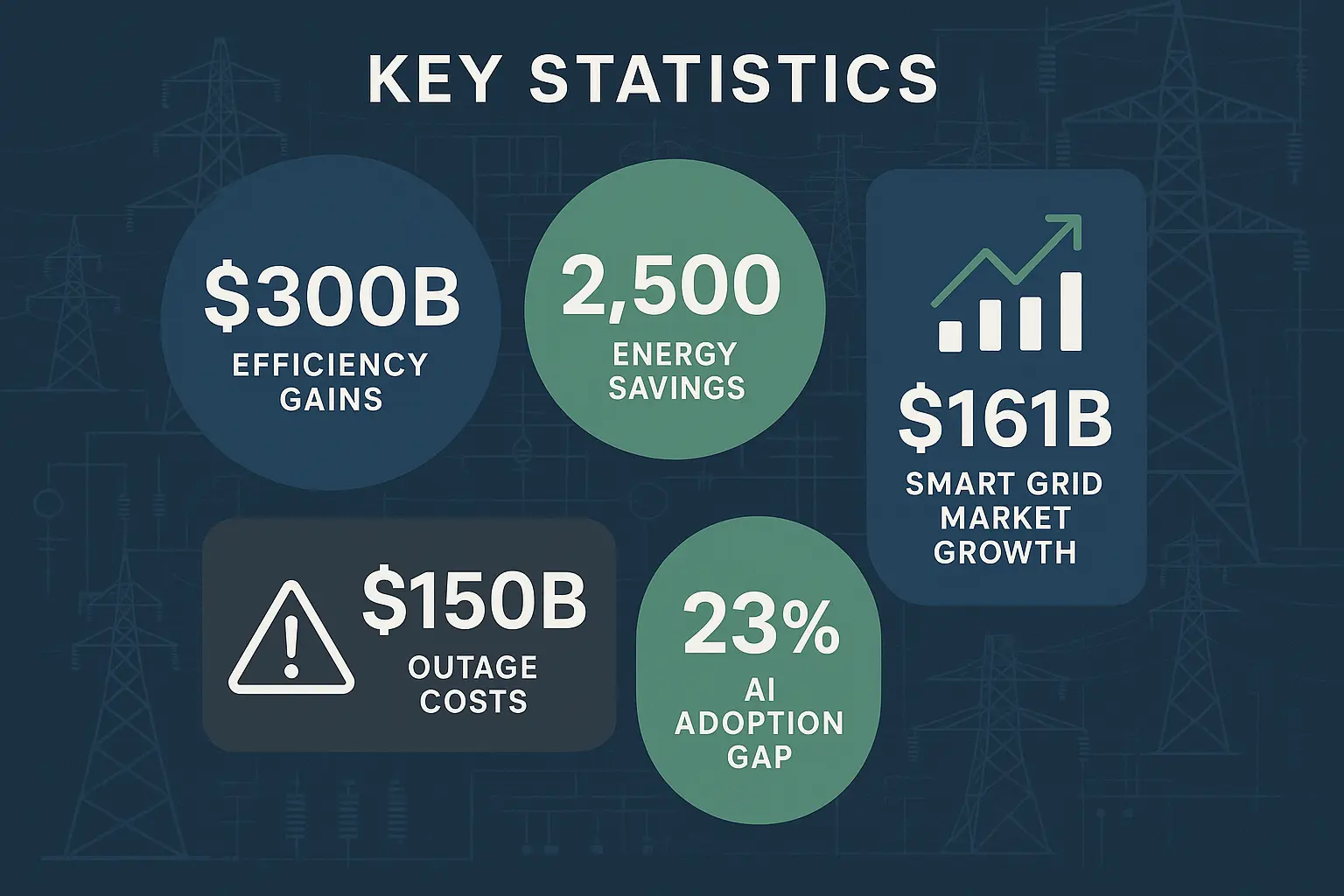
Despite AI’s immense potential, a 2021 IEA survey revealed a critical gap: while over 70% of utilities use AI for long-term asset management, only 23% use it in daily operations like load forecasting. This hesitation stems from valid concerns about complexity, data readiness, and the “black box” nature of some AI.
Overcoming this requires a clear, phased implementation plan that builds trust and delivers value at every step.
A Phased Framework for AI Adoption
- Phase 1: Foundational Data & Asset Health. Start by using AI to cleanse, organize, and analyze your existing data. Deploy AI-driven predictive maintenance on a subset of high-value assets to demonstrate clear ROI through reduced downtime and maintenance costs.
- Phase 2: Predictive Analytics & Forecasting. With a clean data foundation, implement advanced AI models for load, demand, and renewable generation forecasting. This provides immediate operational value and builds confidence in the AI’s predictive capabilities.
- Phase 3: Real-Time Anomaly Detection & Control. Introduce the advanced algorithms discussed earlier (RCF, PIML) to monitor grid behavior in real-time. Begin with an “advisory mode,” where the AI suggests actions for operators to approve, creating a human-in-the-loop system.
- Phase 4: Semi-Autonomous Operations. As trust in the system grows, allow the AI to take automated control over specific, well-defined tasks, such as microgrid balancing or VPP dispatch, freeing up operators to focus on high-level strategic oversight.
The Future of Grid Intelligence: Next-Gen AI & Investment Outlook
The evolution doesn’t stop here. The next frontier is Edge AI, where analytics and decision-making happen locally on devices like smart meters and transformers. This reduces latency to near-zero, enabling truly autonomous grid sections that can isolate themselves from faults and self-heal without waiting for commands from a central control room.
Achieving this future vision aligns directly with global energy goals. With the global smart grid market projected to hit $161.15 billion by 2029, investing in an AI-native infrastructure isn’t just an operational upgrade—it’s a strategic necessity for long-term viability and sustainability.
Frequently Asked Questions (FAQs)
How do we trust a “black box” AI to run our critical infrastructure?
This is a critical concern. The solution is to prioritize “Explainable AI” (XAI). Unlike older neural networks, modern XAI systems don’t just give you an answer; they show you the specific data points and logic they used to reach it. This transparency allows operators to understand the AI’s reasoning, build trust, and maintain ultimate control.
What are the real data requirements to get started with AI?
You likely have more useful data than you think. The key isn’t having “perfect” data, but starting with a clear use case (like predictive maintenance for a specific asset class) and using AI to identify, cleanse, and structure the relevant data sources you already own, such as SCADA history, maintenance logs, and weather data.
How can we justify the ROI for a major AI implementation?
The business case is compelling. Frame the investment against the costs of inaction: the $150 billion annual cost of outages, the financial penalties of grid instability, and the missed revenue from renewable curtailment. Then, model the gains: energy savings of up to 4.5% across the U.S. system, improved asset lifespan, and enhanced operational efficiency. Smart meter AI alone can drive customer savings up to 8.9%, improving satisfaction and regulatory standing.
Is AI-driven grid automation secure from cyber-attacks?
No system is impenetrable, but an AI-powered defense is significantly more robust than a traditional one. AI continuously learns the unique digital and physical signature of your grid. It can detect novel, “zero-day” attacks that bypass conventional firewalls. By combining AI-driven threat detection with robust security protocols like network segmentation, you create a multi-layered defense that is far more resilient to attack.
