
The Definitive Guide to AI-Powered Loan Origination and Lead Management
You’re not just looking for an AI platform. You’re looking for a competitive advantage. You know that the future of lending is intelligent, automated, and data-driven, but the market is crowded with solutions that all promise transformation. The real challenge is cutting through the noise to find a partner that can deliver tangible results—faster approvals, lower risk, and a fundamentally better borrower experience—without disrupting your entire operation.
This isn’t about simply adopting new technology; it’s about making a strategic decision that will define your growth for the next decade. And that requires a clear framework for evaluating your options, understanding the real-world challenges, and asking the right questions.
This guide provides that framework. We’ll move beyond the buzzwords to give you the insights decision-makers need, backed by extensive industry research, to confidently navigate your evaluation journey.
Decoding the Loan Lifecycle: Where AI Makes the Biggest Impact
Artificial intelligence isn’t a single tool; it’s a suite of capabilities that fundamentally redesigns workflows at every stage of the loan origination process. Instead of incremental improvements, AI delivers a step-change in efficiency and intelligence from the very first touchpoint.
Lead Identification & Scoring: Beyond the Credit Score
Traditional lead scoring is often a rearview mirror, relying on limited data points. AI introduces predictive power. By analyzing thousands of variables in real-time—from transactional data to behavioral patterns—AI models can identify high-potential borrowers that legacy systems might overlook. With investment in financial services AI projected to hit nearly $97 billion by 2027, lenders who fail to adopt these advanced models will be competing for a shrinking pool of obvious leads.
AI Lead Scoring Models: Predictive Analytics for High-Potential BorrowersAI moves beyond simple demographic data to build a multi-dimensional view of a potential borrower. It can leverage alternative data sources to more accurately assess intent and capacity, which is particularly crucial for serving thin-file or self-employed applicants. This allows you to focus your resources on leads with the highest probability of converting and funding.
Pre-Qualification & Application Intake
Speed is paramount at the application stage. AI-powered chatbots and intelligent forms can guide applicants through the process 24/7, instantly answering questions, pre-filling known information, and flagging missing documents. This not only improves the borrower experience but also ensures that applications arriving for review are complete and accurate, dramatically reducing manual rework.
Document Collection & Verification
Manual document review is a notorious bottleneck and a major source of operational cost and risk. AI-driven Intelligent Document Processing (IDP) uses optical character recognition (OCR) and natural language processing (NLP) to automatically extract and verify information from pay stubs, bank statements, and tax forms. This capability is a core reason why AI platforms can reduce loan application processing from weeks to mere minutes.
The Unseen Threat: AI’s Role in Detecting Synthetic Identity FraudSophisticated fraud, like synthetic identities, is nearly impossible for the human eye to detect. AI algorithms, however, excel at identifying the subtle, imperceptible patterns that signal fraudulent activity. Much like specialized solutions from Ocrolus focus on document forensics, a comprehensive fraud detection AI module can analyze application data, device information, and network patterns to flag high-risk submissions before they enter your pipeline.
Underwriting & Credit Decisioning
This is where AI delivers its most significant impact. Machine learning models can analyze complex datasets far more accurately than traditional scorecards, leading to better risk assessment. The result is a dramatic improvement in key metrics; lenders using AI see 18-32% higher approval rates while simultaneously reducing bad debt by over 50%.
Explainable AI (XAI) in Lending: Building Trust in Automated DecisionsA common concern is the “black box” nature of AI. Modern platforms, however, are built on the principles of Explainable AI (XAI). This means that for every automated decision, the system can provide a clear, human-readable audit trail explaining the factors that led to that outcome. This isn’t just a feature—it’s a compliance necessity for regulations like the Equal Credit Opportunity Act (ECOA), ensuring every decision is transparent and defensible.
The AI Advantage: Core Benefits for Lenders
Adopting an AI-powered system isn’t just about modernizing your tech stack; it’s about achieving measurable business outcomes that directly impact your bottom line and competitive standing.
-
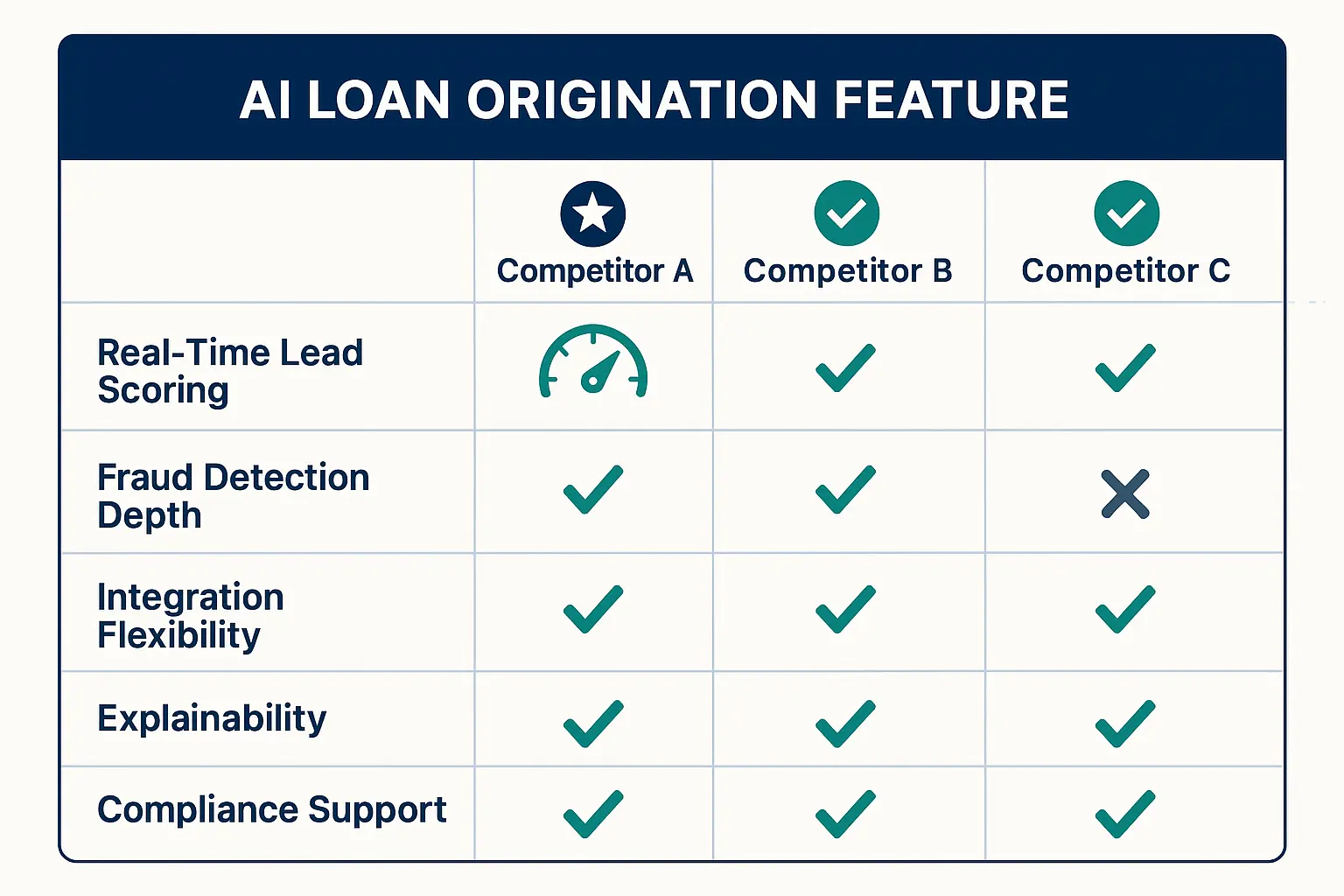
Operational Efficiency & Cost Reduction: Automation of repetitive tasks like data entry, document verification, and initial screening frees up your team to focus on high-value activities. Competitors like TurnKey Lender report up to a 280% boost in operational efficiency, a direct result of reallocating human expertise where it matters most.
-
Accelerated Loan Approval Rates: With real-time data processing, credit decisioning can be 40% faster. This speed translates directly into a better borrower experience and a higher pull-through rate, allowing you to capture more business before applicants look elsewhere.
-
Enhanced Fraud Detection & Risk Management: AI shifts your fraud posture from reactive to proactive. By analyzing data at the point of application, it identifies risks that legacy systems miss, protecting your portfolio from emerging threats and minimizing losses.
-
Improved Borrower Experience: Today’s borrowers expect a fast, seamless digital experience. AI delivers with instant pre-qualifications, personalized communication, and rapid final decisions, building loyalty and driving repeat business.
-
Regulatory Compliance & Auditability: With regulators increasingly scrutinizing the use of AI, having a system with built-in compliance features is critical. Explainable AI and automated documentation generation, a key focus for platforms like Biz2X, provide the audit trails necessary to demonstrate fairness and adherence to standards.
Beyond the Hype: Addressing the Real-world Challenges of AI Implementation
While the benefits are clear, a successful AI adoption hinges on navigating a few critical challenges. A transparent partner won’t just sell you on potential; they’ll help you build a practical roadmap for success.
Integrating AI with Legacy Systems
This is the number one concern for many lenders. In fact, 56% cite integration with legacy systems as their top challenge. A modern AI platform shouldn’t require you to rip and replace your entire core. Instead, it should be built with a flexible, API-first architecture that allows for seamless integration with your existing systems of record, ensuring data flows securely and efficiently.
The Ethical Imperative: Identifying and Mitigating AI Bias in Lending
Trust is the currency of lending. As regulators mandate the use of ESG data and increase their focus on fairness, mitigating AI bias has become a non-negotiable requirement. An ethical AI framework isn’t just about checking a compliance box; it’s about ensuring your models don’t perpetuate historical biases present in training data.
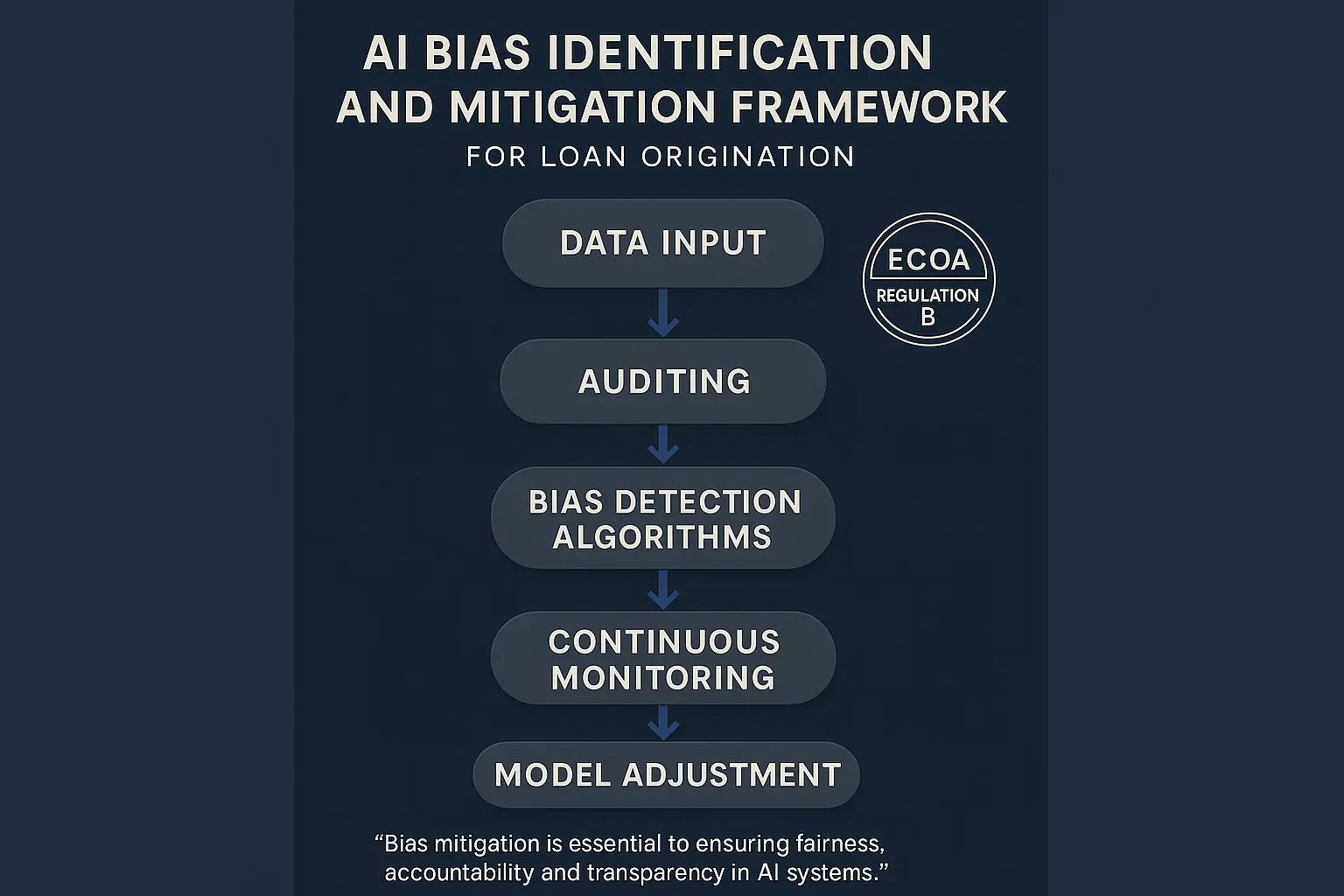
Look for a partner that provides tools for continuous bias detection, model monitoring, and fairness audits. Platforms like Lendfoundry emphasize bias mitigation, and any serious contender must be able to demonstrate a robust methodology for identifying and correcting algorithmic drift that could lead to unfair outcomes.
Data Governance & Model Management
An AI system is only as good as the data it’s trained on. Strong data governance is essential for maintaining model accuracy and performance over time. Your AI partner should provide clear tools for managing data pipelines, monitoring model health, and facilitating model retraining to ensure your system continues to deliver optimal results as market conditions change.
Choosing Your AI Partner: A Feature Comparison & Evaluation Framework
When you’re comparing AI loan origination software, it’s easy to get lost in feature lists. Use this framework to focus on the capabilities that truly drive value and align with your strategic goals.
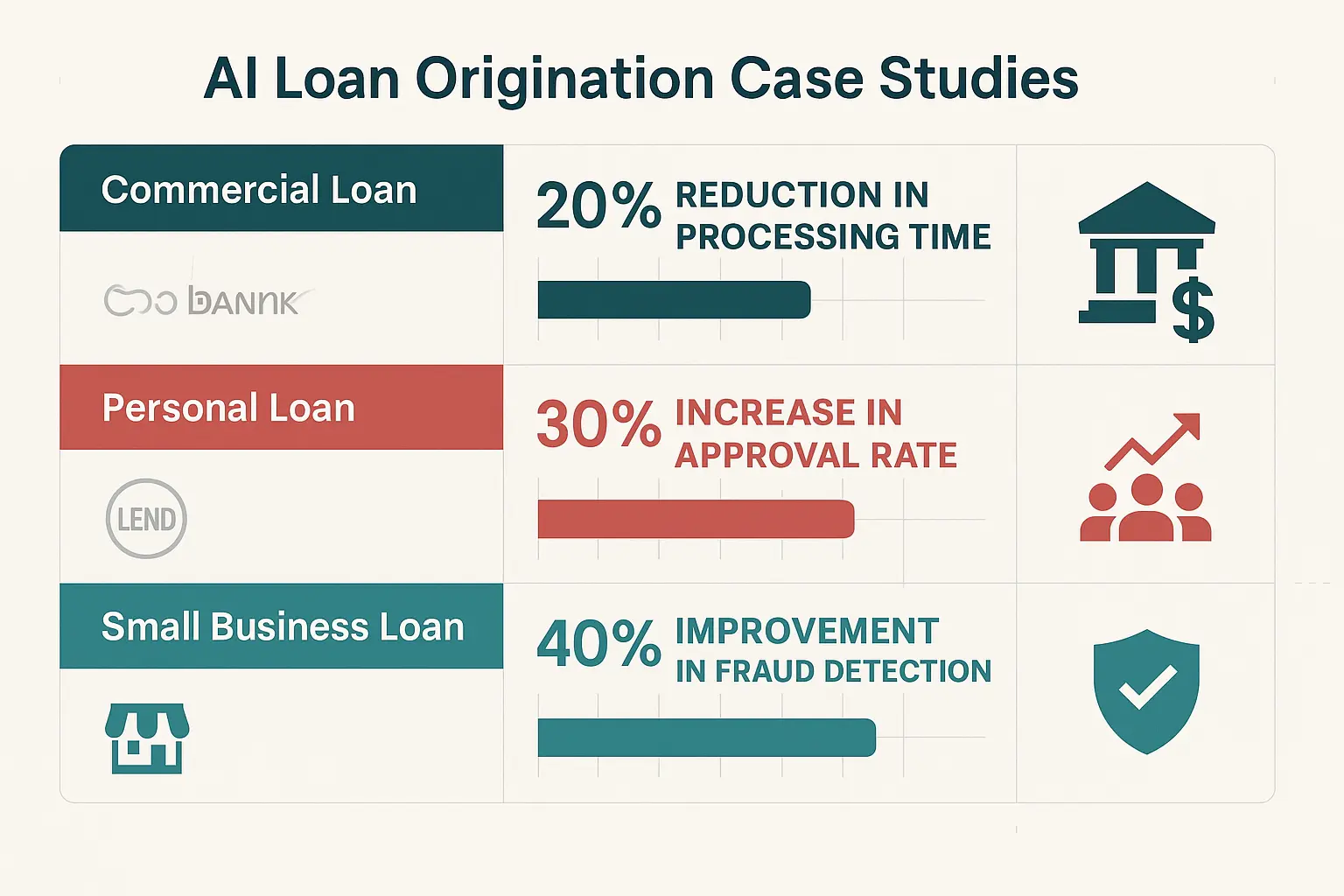
| Capability | What to Look For | Key Questions to Ask Vendors |
|---|---|---|
| Data Integration | Pre-built connectors for standard credit bureaus, bank data aggregators, and core banking systems. Flexible APIs for custom data sources. | Which data sources do you support out-of-the-box? What is the process for integrating our proprietary data or legacy systems? |
| AI Credit & Scoring Models | Support for both traditional and alternative data. Ability to customize models for different loan products. Transparent model explainability (XAI). | How do your AI credit scoring models handle thin-file applicants? Can we see an example of an explainable audit trail for a loan decision? |
| Automation & Workflow | No-code/low-code tools for configuring business rules, decision trees, and communication workflows across the entire deal pipeline. | How much of the origination workflow can our non-technical team configure themselves? Can you automate post-scoring lead nurturing sequences? |
| Fraud Detection | Multi-layered approach including document forensics, synthetic identity detection, and application anomaly detection. Continuous model updates to counter new threats. | How does your system stay updated on emerging fraud tactics? What was your model’s success rate in detecting recent fraud schemes? |
| Compliance & Ethics | Built-in tools for bias detection and mitigation. Automated generation of adverse action notices and compliance documentation. Full audit logs for every action and decision. | What specific tools do you provide to help us meet our fair lending obligations under ECOA and Regulation B? |
| Implementation & Support | A dedicated implementation team with domain expertise in lending. Clear project timelines, training programs, and ongoing technical support. | What does a typical implementation timeline look like for a lender of our size? What kind of ongoing support is included post-launch? |
The Future of Lending: Emerging AI Trends to Watch
The pace of innovation is accelerating. With 81.3% of companies already adopting generative AI, the technology is rapidly moving from a novelty to a core business tool. Forward-thinking lenders are already exploring how these next-generation capabilities can further enhance their operations.
- Generative AI in Lending: GenAI can automatically generate personalized borrower communications, summarize complex financial documents for underwriters, and even draft initial compliance reports, freeing up even more time for strategic work.
- Embedded Finance and Open Banking: AI is the engine that will power the next wave of embedded finance, allowing non-financial companies to offer seamless lending products at the point of need.
- Predictive Loan Servicing: The use of AI doesn’t stop at origination. Predictive models can identify borrowers who may be at future risk of delinquency, allowing for proactive outreach and assistance that reduces defaults and improves portfolio health.
Case Studies: AI in Action (Quantifiable Success Stories)
The most compelling proof of AI’s value comes from real-world results. While high-level statistics are useful, seeing how peers have solved specific challenges provides the confidence needed to move forward.
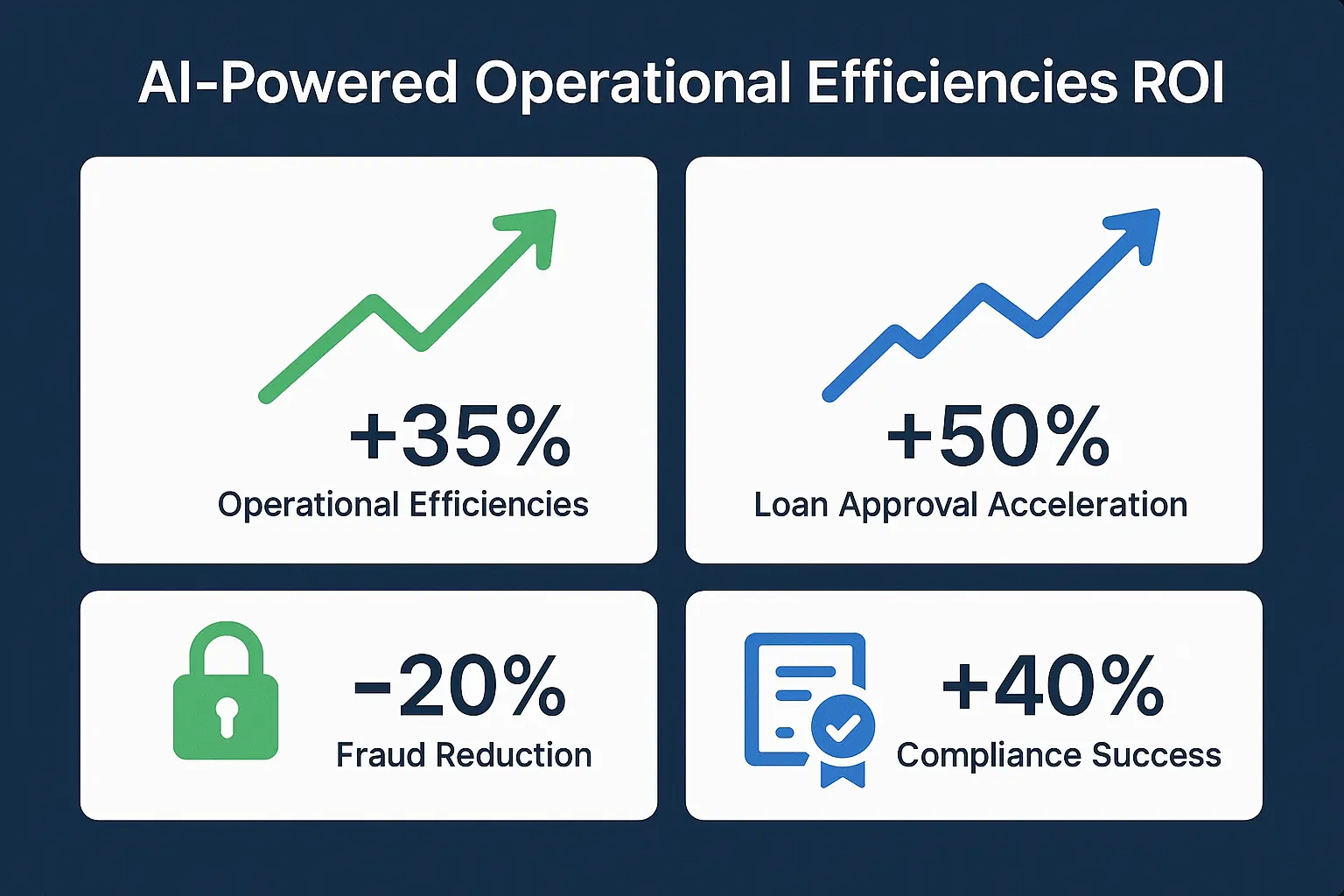
- Commercial Lender Increases Efficiency: By automating document verification and initial underwriting, a mid-sized commercial lender reduced their average time-to-decision for small business loans from 10 days to under 48 hours, capturing a 15% larger share of their local market.
- Credit Union Expands Member Access: A credit union integrated an AI platform that utilized alternative data, allowing them to confidently approve 20% more personal loan applications from members with limited credit history, strengthening community relationships and growing their loan portfolio.
- Fintech Lender Reduces Fraud Losses: After implementing an AI-powered fraud detection module, a digital lender identified and prevented six-figure losses from a sophisticated synthetic identity fraud ring within the first four months, proving the system’s immediate ROI.
Frequently Asked Questions
1. Is implementing an AI system difficult and time-consuming?Modern, cloud-based AI platforms are designed for rapid implementation. While the timeline depends on the complexity of your existing systems, a phased approach focusing on the highest-impact areas (like application intake and automated decisioning) can deliver value in a matter of weeks, not years. The key is a partner with a proven implementation playbook.
2. Will AI replace our underwriters and loan officers?No, AI augments them. It handles the repetitive, time-consuming tasks, allowing your expert team to focus on complex cases, build stronger borrower relationships, and make final strategic decisions. It transforms their roles from data processors to portfolio strategists.
3. How can we trust the decisions made by an AI “black box”?This is a valid concern, which is why Explainable AI (XAI) is essential. Any credible AI lending platform must be able to provide clear, understandable reasons for every recommendation it makes. This transparency is crucial for internal trust, borrower communication, and regulatory compliance.
4. How does AI ensure fairness and avoid bias?Ethical AI platforms use a multi-pronged approach. This includes carefully curating training data, using algorithms designed to promote fairness, and providing continuous monitoring tools that actively search for and flag potential bias in decisioning outcomes. It’s an ongoing process of governance, not a one-time setup.
5. What kind of ROI can we realistically expect?The ROI comes from several areas: lower operational costs from automation, reduced losses from improved fraud detection and risk assessment, and increased revenue from higher approval rates and faster closing times. A strong vendor partner will work with you to build a specific business case based on your loan volume, portfolio type, and current operational metrics.
Your Next Step Towards Intelligent Lending
Choosing an AI partner is one of the most important strategic decisions you will make. By focusing on proven outcomes, demanding transparency, and planning for seamless integration, you can move beyond the hype and implement a solution that delivers a true, sustainable competitive advantage.
If you’re ready to see how a tailored AI-powered loan origination and lead management platform can transform your operations, we invite you to schedule a personalized demo with one of our lending strategists. Let’s build your blueprint for a more efficient, intelligent, and profitable future.
