
Beyond Break-Fix: Optimizing Commercial Asset Lifecycles and CapEx with AI
For commercial property owners and facility managers, the constant cycle of equipment maintenance and replacement feels like an unwinnable battle. You follow a capital plan, but unexpected failures derail budgets and disrupt tenants. The truth is, traditional lifecycle management often leaves money on the table. In fact, buildings without a structured, data-driven approach lose an average of $0.72 per square foot annually due to premature equipment failures and emergency repairs. For a 500,000 sq ft building, that’s a $360,000 yearly drain.
The problem isn’t a lack of effort; it’s a lack of foresight. Calendar-based maintenance and run-to-failure strategies are fundamentally reactive. They can’t account for the unique operational realities of each asset. What if you could shift from reacting to failures to proactively optimizing the entire lifecycle of your most critical equipment? This is where AI moves beyond simple alerts to become a strategic tool for capital planning and asset longevity.
Beyond Break-Fix: Understanding Lifecycle Management & Predictive Maintenance with AI
Asset Lifecycle Management (ALM) is the process of maximizing an asset’s value from acquisition to disposal. Predictive Maintenance (PdM), powered by AI, is the engine that drives modern ALM. Unlike traditional methods that treat all equipment the same, AI-driven PdM provides a dynamic, real-time understanding of asset health.
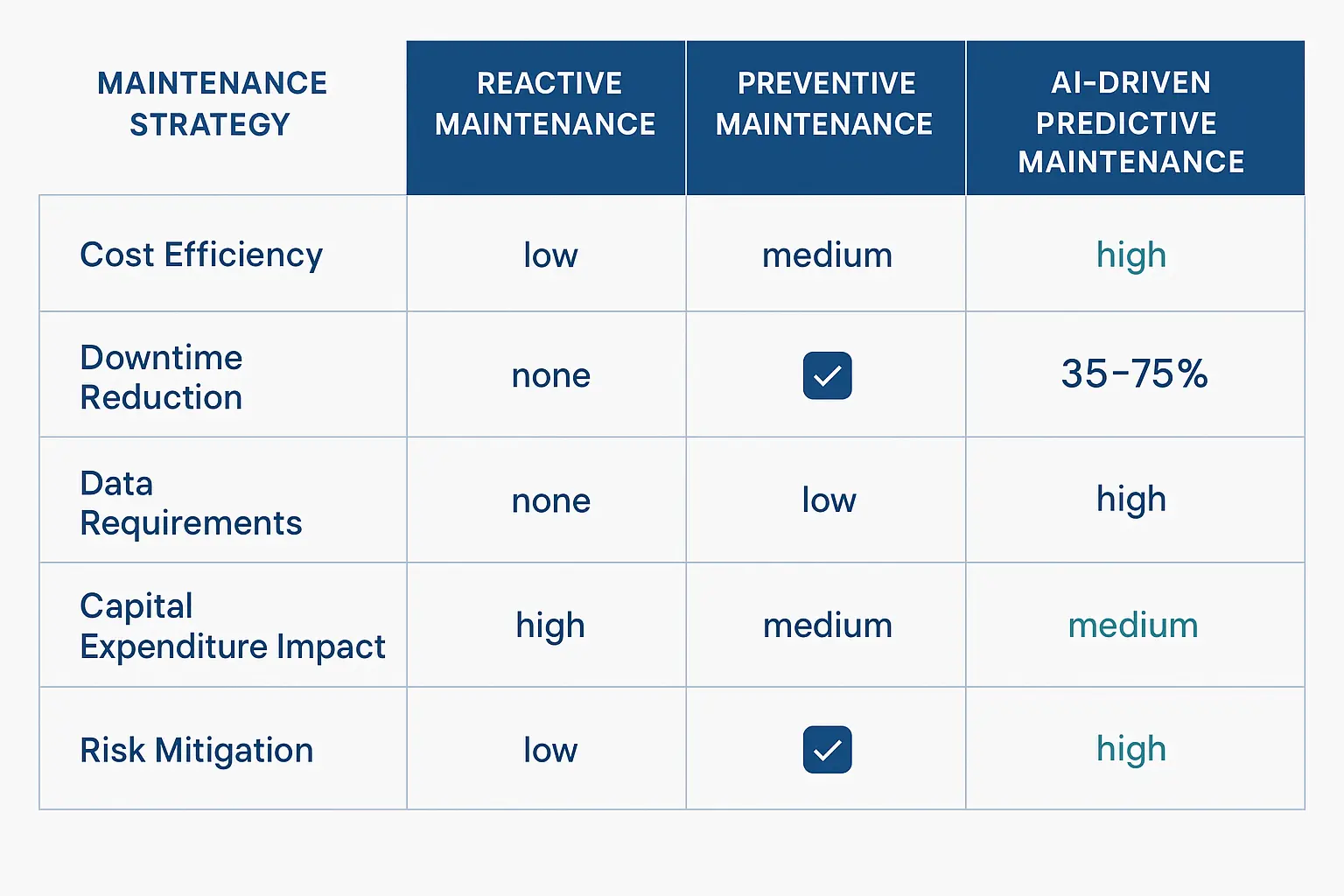
- Reactive Maintenance (Break-Fix): The costliest approach. You fix things after they break, leading to unplanned downtime, expensive emergency repairs, and potential secondary damage.
- Preventive Maintenance (Calendar-Based): An improvement, but inefficient. You perform maintenance on a fixed schedule, regardless of the asset’s actual condition. This leads to over-servicing healthy equipment and completely missing the signs of impending failure in overworked assets.
- Predictive Maintenance (AI-Driven): The strategic evolution. AI analyzes live data streams to identify subtle patterns that precede failures, allowing you to intervene at the optimal moment—not too early, not too late. This data-driven precision is what unlocks true lifecycle optimization.
The AI Advantage: Extending Asset Lifespan and Optimizing Capital Expenditure
The most significant impact of AI isn’t just preventing a single failure; it’s fundamentally changing the economic equation of your building’s assets. Because the operations phase accounts for 60-80% of a building’s total lifecycle costs, even small improvements yield substantial long-term gains.
From Guesswork to Guarantee: AI-Forecasted Remaining Useful Life (RUL)
How do you decide when to replace a 15-year-old chiller? Traditional methods rely on manufacturer guidelines and historical averages, which fail to account for your building’s specific load, climate, and maintenance history. This is why a staggering 73% of commercial building equipment fails before its manufacturer-rated service life.
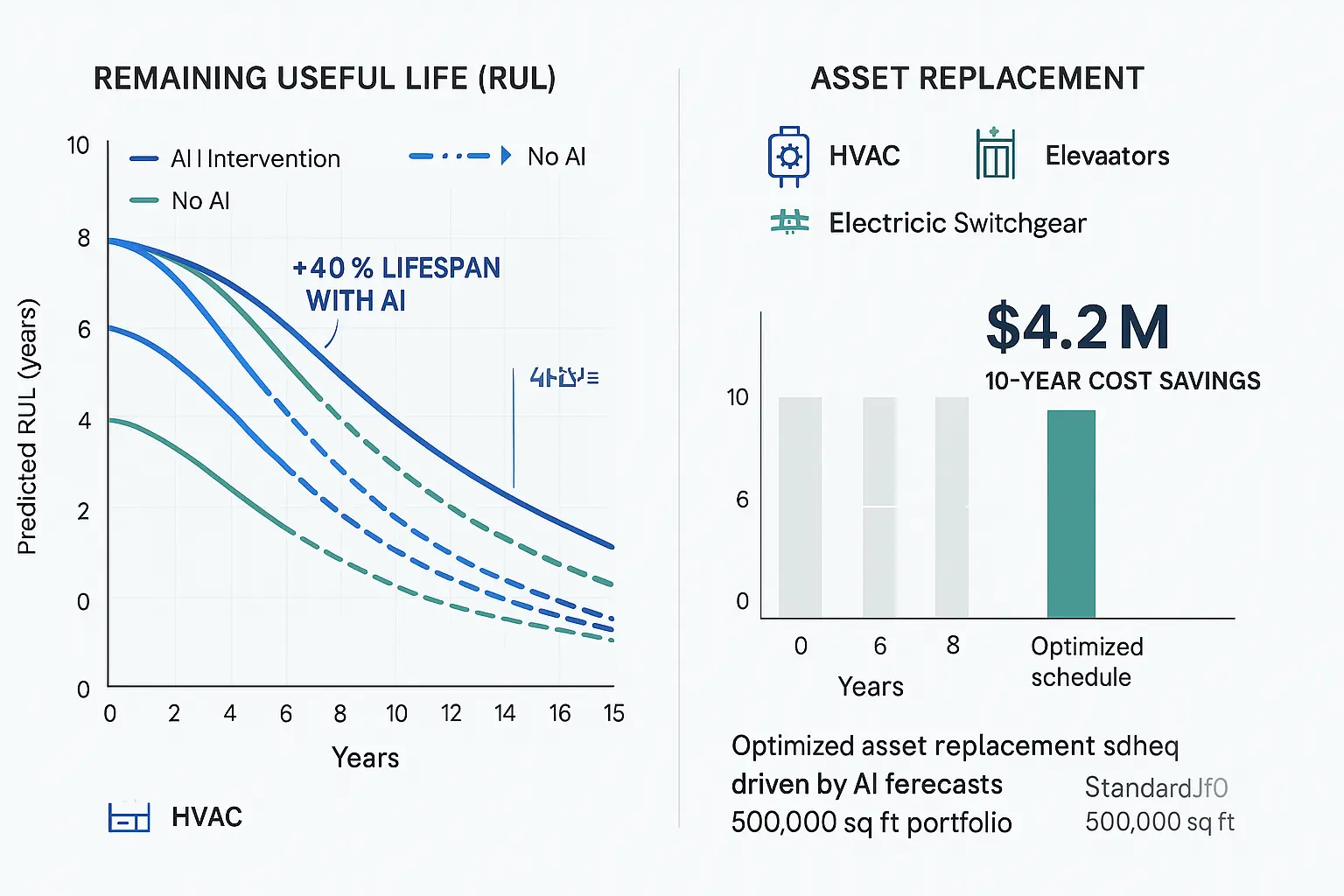
AI models analyze thousands of data points—vibration, temperature, pressure, runtime hours, energy consumption—to accurately forecast the Remaining Useful Life (RUL) for each individual asset. This allows you to safely and confidently extend service life far beyond the calendar estimate. The result? Condition-based lifecycle management has been shown to extend average equipment service life by up to 40%.
Strategic CapEx Planning, Not Reactive Spending
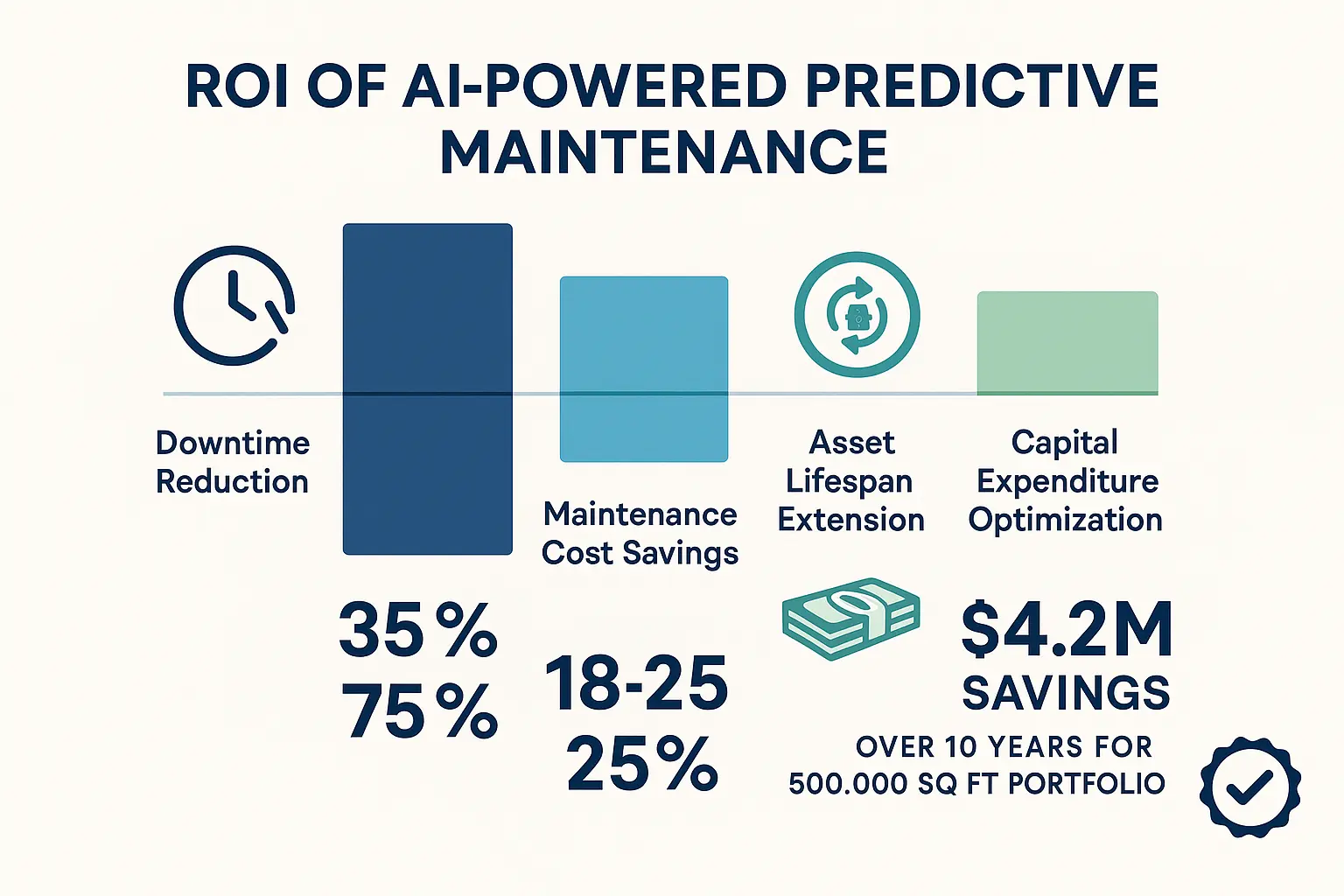
With precise RUL forecasts, capital planning transforms from a reactive annual exercise into a proactive, multi-year strategy. Instead of replacing assets based on age, you can prioritize them based on their actual health score and probability of failure. This intelligent approach to Optimizing Asset Replacement Cycles with AI can generate over $4.2 million in capital savings over ten years for a 500,000 sq ft portfolio by deferring unnecessary replacements and preventing catastrophic failures. You get maximum value from every asset you own.
A Holistic Approach: AI for Comprehensive Building Asset Health Scoring
Effective predictive maintenance isn’t about monitoring a single data point on an isolated machine. It’s about understanding the interconnectedness of your building’s systems. A struggling air handler unit might be a symptom of a problem with a chiller, not the root cause.
This is where AI excels. It synthesizes disparate data sources into a single, unified asset health score. An advanced AI platform will integrate data from:
- Building Management Systems (BMS/BAS): Setpoints, alarms, and operational commands.
- CMMS/Work Order History: Maintenance frequency, parts replaced, and technician notes.
- IoT Sensors: Real-time vibration, thermal, acoustic, and power quality data.
- Energy Meters: Consumption patterns and efficiency metrics.
- External Data: Weather forecasts and utility rate schedules.
By analyzing these inputs together, AI builds a dynamic “digital twin” of your building’s health. This holistic view enables you to move from asset-level fixes to implementing system-wide Predictive Maintenance Strategies for Commercial Building Systems that optimize performance and energy use across your entire portfolio.
Implementing AI-Powered Predictive Maintenance: Overcoming the Technical Hurdles
The promise of AI is compelling, but many decision-makers hesitate, concerned about the practical challenges of implementation. Competitors often gloss over these complexities, but facing them head-on is the only path to a successful deployment.
The most common hurdle is data fragmentation. Your building likely has a mix of equipment from different manufacturers, running on different protocols like BACnet, Modbus, or proprietary systems. An effective AI solution must act as a “data integration decoder,” capable of normalizing this fragmented information.
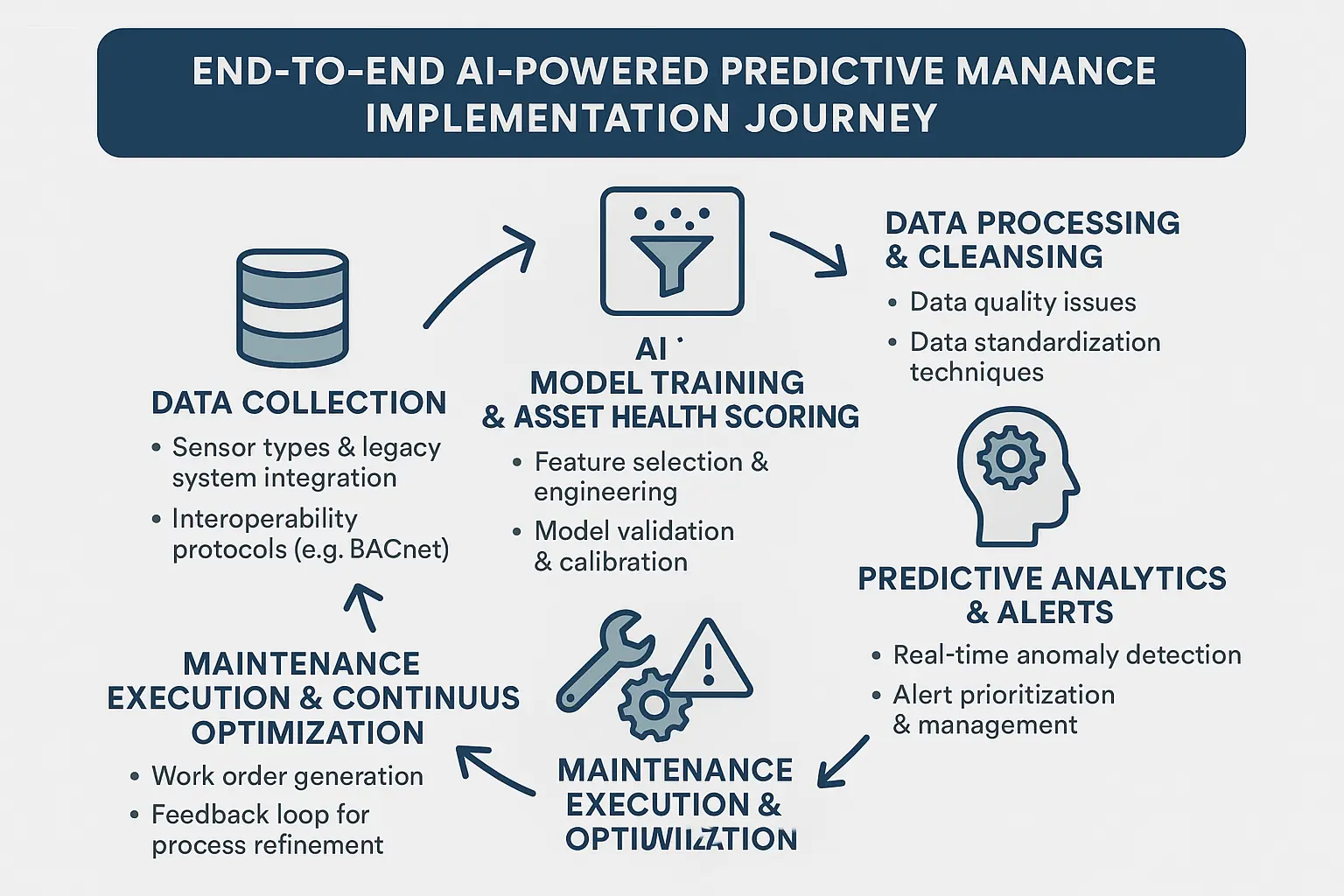
A typical implementation roadmap involves:
- Discovery & Connection: Identify critical assets and connect to existing data sources like the BMS and CMMS.
- Data Ingestion & Standardization: Use an interoperability platform to pull data from various protocols, cleansing and standardizing it for analysis.
- Sensor Deployment (If Needed): Deploy wireless IoT sensors on critical assets that lack native monitoring capabilities.
- AI Model Training: The platform’s AI models begin analyzing the unified data stream, learning the unique operational fingerprint of your equipment.
- Insight Generation: Within weeks, the system starts generating actionable insights, health scores, and failure predictions 30-90 days in advance.
Choosing a partner with deep expertise in building systems and data integration is critical to navigating this process smoothly.
Measuring Success: Quantifying ROI and Strategic Benefits
The business case for AI-driven predictive maintenance is clear and quantifiable. The ROI extends far beyond simple maintenance budgets and touches every aspect of building operations and financial health.
Key performance indicators include:
- Reduced Maintenance Costs: AI-driven strategies typically reduce overall maintenance costs by 18-25% by eliminating unnecessary preventive tasks and minimizing emergency repairs.
- Decreased Downtime: By predicting failures in advance, AI can reduce unplanned equipment downtime by 35-75%, directly impacting tenant satisfaction and operational continuity.
- Optimized CapEx: As discussed, extending asset life by up to 40% has a profound Impact of AI on Commercial Property Capital Expenditure Planning, freeing up capital for other strategic investments.
- Energy Savings: By identifying inefficiently operating equipment (e.g., an HVAC system with a slow refrigerant leak), AI can pinpoint sources of energy waste, contributing to lower utility bills and improved ESG scores.
Beyond the numbers, the strategic benefits include enhanced tenant retention, improved building safety, and the ability to future-proof your asset against evolving market demands.
The Future-Proof Building: AI as a Pillar of Smart Building Strategy
Adopting AI for lifecycle management isn’t just an operational upgrade; it’s a foundational step toward creating a truly smart, responsive, and valuable building. The rich dataset and predictive insights generated by an AI platform become the central nervous system for other smart initiatives, from automated energy optimization to space utilization analytics.
As the commercial real estate landscape becomes more competitive, buildings that leverage data to operate more efficiently, reliably, and sustainably will command higher valuations and attract premier tenants. AI-driven asset management is no longer a futuristic concept—it’s a present-day competitive advantage.
Frequently Asked Questions (FAQs)
1. How much historical data is needed to get started?While more data is always better, modern AI platforms can start delivering value quickly. They often begin by establishing a baseline of normal operation within the first few weeks and can identify anomalies shortly thereafter. Your existing CMMS and BMS data can accelerate this process significantly.
2. Does this work for older buildings and legacy equipment?Absolutely. In fact, older equipment often benefits the most from AI monitoring. By deploying non-invasive wireless IoT sensors (measuring things like vibration and temperature), you can bring legacy assets into your smart ecosystem without costly retrofits. A skilled provider will focus on AI for HVAC Equipment Lifespan Extension and other critical systems regardless of age.
3. Is the system secure?Security is paramount. A reputable AI platform will use end-to-end encryption, secure cloud infrastructure (like AWS or Azure), and adhere to strict data governance protocols to ensure your building’s operational data is always protected.
4. What is the typical implementation timeline?A pilot program on a set of critical assets can often be up and running in 4-6 weeks. This includes connecting to existing systems, deploying any necessary sensors, and beginning the data analysis process. A full building deployment can be phased in over a few months.
5. How is this different from the analytics in my current BMS?A Building Management System is excellent at control and automation based on pre-set rules. It can tell you if a machine is on or off, or if a temperature is outside a setpoint. An AI platform goes much deeper. It analyzes complex patterns across multiple systems over time to tell you why something is happening and what is likely to happen next, providing predictive, not just reactive, insights.
