
You’re facing an undeniable reality: the era of renewable energy is here. Global capacity additions surged by 50% in 2023 alone. But with this growth comes a complex challenge—how do you tame the inherent volatility of solar and wind to deliver reliable, efficient, and profitable power? You’ve likely read the academic papers and seen the high-level sales pitches, but you’re stuck in the middle, evaluating how to actually make AI work for your operations.
This is not another surface-level overview. This is a practical guide for decision-makers and advanced practitioners navigating the middle of their evaluation journey. We’ll bridge the gap between complex AI theory and the real-world operational decisions you need to make, empowering you to move forward with confidence in a market projected to hit USD 117.72 billion by 2033.
Why Standard Forecasting Fails in the New Energy Landscape
Traditional forecasting models, built for predictable, centralized power generation, are breaking under the strain of renewables. They often require years of historical data and struggle to adapt to the dynamic, intermittent nature of solar and wind. This leads to costly errors: grid instability, unnecessary curtailment, and missed revenue opportunities in volatile energy markets.
The core problem is intermittency. When the sun doesn’t shine or the wind doesn’t blow, generation drops. Conversely, when conditions are perfect, you can have a surplus of energy that the grid can’t handle. AI doesn’t just predict these changes; it provides the intelligence to manage them proactively, turning a liability into a strategic asset.
AI-Driven Forecasting: From Simple Predictions to Probabilistic Intelligence
The most significant leap forward AI offers is the move from deterministic forecasting (a single number prediction) to probabilistic forecasting (a range of likely outcomes). This single shift is a game-changer for operational planning and risk management. Instead of just knowing the expected solar output is 100 MW, you understand there’s a 90% chance it will be between 85 MW and 115 MW. This allows for smarter, risk-aware decisions about energy storage, grid services, and market bidding.
The Right AI Model for the Right Horizon
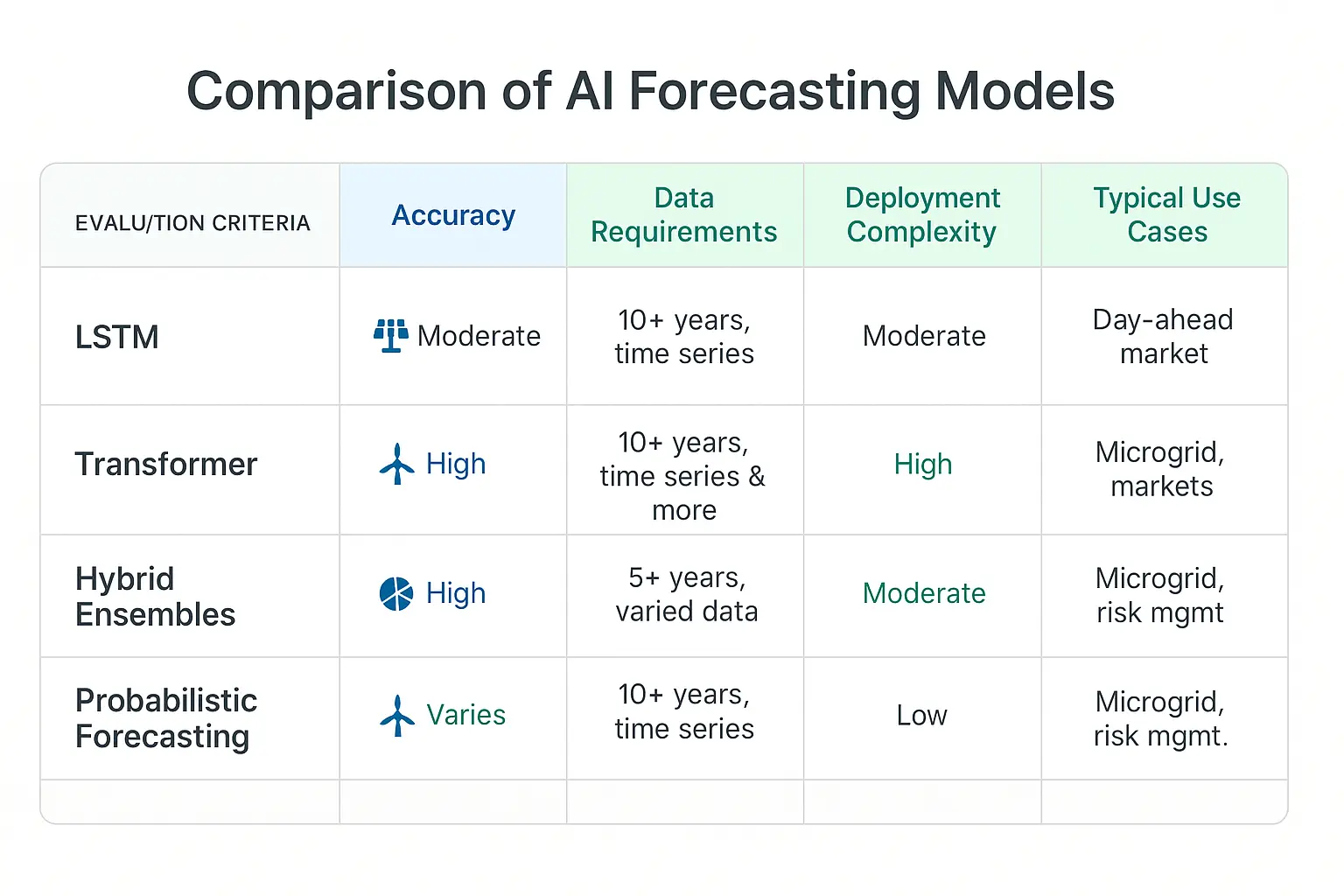
Not all forecasting is the same. The model you use depends entirely on the decision you need to make. Effective AI strategies deploy a portfolio of models tailored to different time horizons:
- Short-Term (Minutes to Hours): Crucial for real-time dispatch and grid stability. Models like LSTMs (Long Short-Term Memory) excel here, capturing complex temporal patterns in weather and generation data for immediate operational adjustments.
- Day-Ahead (24-48 Hours): Essential for bidding into energy markets. Hybrid models that combine physics-based weather predictions with machine learning often provide the accuracy needed to maximize profitability.
- Long-Term (Months to Years): Used for asset planning, maintenance scheduling, and strategic infrastructure investment. AI can analyze decades of climate data to model future generation patterns and inform long-term resilience strategies.
Data: The Fuel for High-Performance AI
An AI model is only as good as the data it’s trained on. While AI can often deliver superior results with just one to two years of data compared to the many years required by traditional models, the quality and variety of that data are paramount. A robust forecasting system integrates multiple sources in real-time:
- Weather Data: High-resolution satellite imagery, hyperlocal numerical weather predictions (NWPs), and ground-level sensor data.
- Telemetry Data: Real-time power output, inverter status, and turbine performance.
- Grid Data: Market prices, grid load, and congestion information.
Breaking down these data silos is the first and most critical step in building a world-class forecasting engine.
Intelligent Integration Strategies: Optimizing Hybrid Renewable Systems
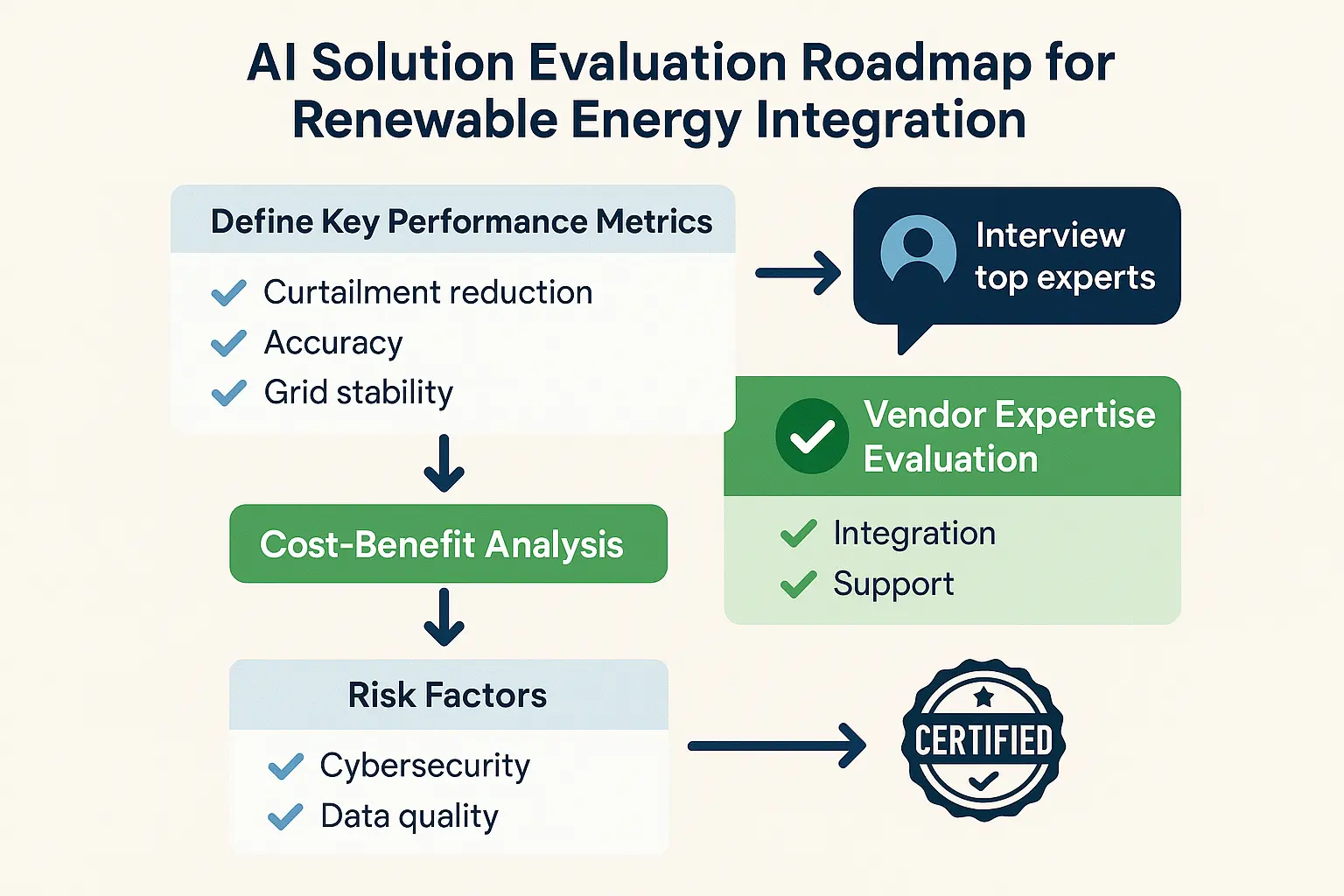
Forecasting is only half the battle. The real value is unlocked when that intelligence is used to orchestrate a diverse portfolio of assets. As organizations increasingly deploy hybrid renewable systems combining solar, wind, and energy storage, AI becomes the essential conductor ensuring every instrument plays in perfect harmony.
The AI-Powered Hybridization Model
An AI-enabled hybridization model moves beyond simple asset management to holistic optimization. It continuously answers complex questions based on economic and grid-based criteria:
- Should I store this excess solar energy in my battery, or sell it to the grid now?
- Given the wind forecast for tonight, how much battery capacity should I reserve?
- Can I use my collective assets to provide ancillary services like frequency regulation for a new revenue stream?
This orchestration reduces energy loss, maximizes the use of every generated kilowatt, and improves overall predictability for grid operators.
Virtual Power Plants (VPPs)
AI is the engine behind Virtual Power Plants, which aggregate geographically distributed resources—like rooftop solar, commercial batteries, and EV chargers—and manage them as a single entity. For operators, VPPs provide a flexible, dispatchable resource that enhances grid stability. For asset owners, they create new revenue opportunities by participating in energy markets previously accessible only to large-scale power plants.
Maximizing Efficiency & Reliability: AI in Action
Beyond forecasting and integration, AI drives tangible improvements in day-to-day operations, directly impacting your bottom line and system reliability.
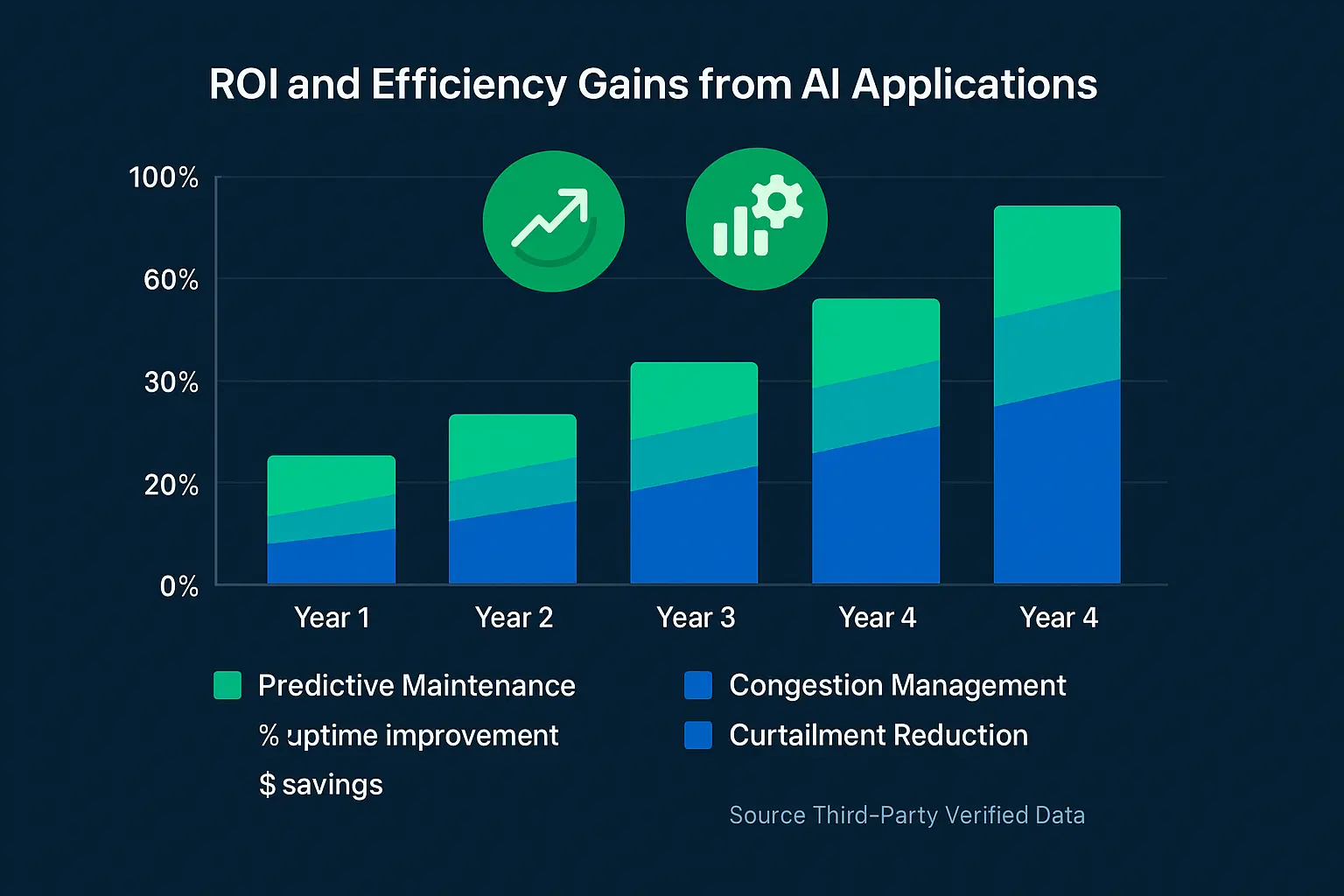
- Predictive Maintenance: By analyzing performance data, weather patterns, and thermal imaging, AI can predict component failures in solar panels and wind turbines before they happen. This shifts maintenance from a reactive, costly process to a proactive, optimized one, minimizing downtime and extending asset life. Learn more about Srinergy AI’s platform for predictive maintenance.
- Curtailment Reduction: AI provides grid operators with the confidence to accept more renewable energy. By accurately forecasting generation and intelligently managing storage, AI helps minimize curtailment—the costly practice of forcing renewables offline due to grid congestion.
- Optimized Energy Storage: The gap between energy generation and available storage remains a critical challenge; storage currently constitutes only ~1% of total U.S. utility-scale capacity. AI optimizes this scarce resource by making intelligent charge/discharge decisions based on market prices, demand forecasts, and renewable generation forecasts, ensuring power is stored and deployed for maximum financial and operational benefit.
Evaluating AI Solutions: Key Metrics and Decision Factors
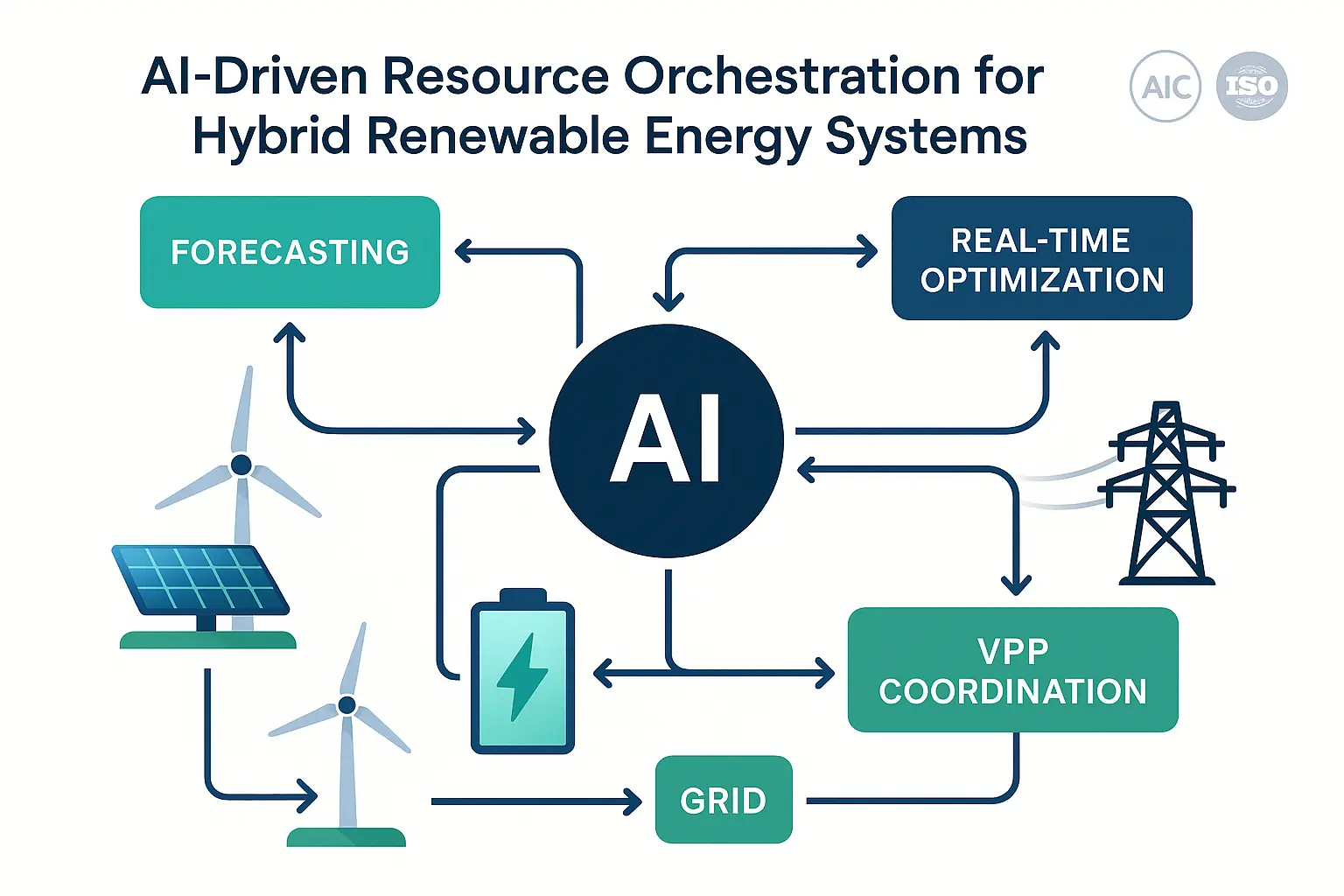
When you’re comparing AI solutions, it’s easy to get lost in technical jargon like RMSE (Root Mean Square Error). But the best model on paper isn’t always the best model for your business. Your evaluation should focus on operational value and the provider’s ability to partner with you effectively.
Moving Beyond Academic Metrics
Instead of focusing solely on statistical accuracy, ask potential vendors how their solution impacts key business metrics:
- Curtailment Reduction Rate: What percentage reduction in curtailed energy can we expect?
- Revenue Uplift: How does improved forecasting translate to increased revenue in our specific energy market?
- Storage Round-Trip Efficiency Gain: How much more effective will our battery assets become?
- O&M Cost Reduction: What is the quantifiable impact of predictive maintenance on our operational budget?
Key Vendor Evaluation Criteria
- Domain Expertise: Do they understand the energy sector, or are they just a generic AI company? Look for a deep understanding of grid physics, market rules, and renewable energy hardware.
- Integration Capability: How easily can their solution integrate with your existing SCADA, EMS, and data historian systems? A seamless integration is non-negotiable.
- Model Transparency and Explainability: Can they explain why the model is making a certain forecast? “Black box” models can be a liability in a high-stakes operational environment.
- Scalability and Support: Will the solution grow with you? What level of support and ongoing model maintenance do they provide?
Frequently Asked Questions
Is AI too expensive and complex for our current operations?
Early-generation AI required massive upfront investment and specialized teams. Today, modern platforms offer SaaS-based models that lower the barrier to entry. The key is to start with a specific, high-value use case—like day-ahead solar forecasting—prove the ROI, and then expand. The cost of not using AI (inaccurate forecasts, inefficient dispatch) is often far greater than the investment.
Our data is messy and spread across different systems. Can AI still work?
This is one of the most common hurdles, but it’s not a dealbreaker. A crucial part of any AI implementation project is data engineering. A good partner will have strategies for integrating disparate data sources (like SCADA, weather APIs, and market feeds), cleaning the data, and filling in gaps to create a high-quality dataset suitable for machine learning.
How does AI handle extreme and unexpected weather events?
This is where AI excels over traditional models. By training on vast datasets that include historical weather anomalies, AI models can identify complex precursor patterns that signal an impending extreme event. Furthermore, they can rapidly re-forecast in real-time as new information becomes available, giving operators precious time to adjust.
How do we ensure the AI model remains accurate over time?
An AI model is not a “set it and forget it” solution. The energy landscape is constantly changing. A robust AI solution includes continuous monitoring and periodic retraining to prevent “model drift” and ensure it adapts to new weather patterns, changes in asset performance, and evolving market dynamics.
Powering a Smarter, Sustainable Future
The transition to renewable energy is not just about installing more solar panels and wind turbines; it’s about integrating them with intelligence. AI provides the critical layer of forecasting, control, and optimization that transforms intermittent resources into firm, reliable, and profitable power.
By moving beyond basic predictions to embrace probabilistic forecasting and intelligent asset orchestration, you can unlock the full potential of your renewable portfolio, enhance grid stability, and lead the charge toward a more sustainable energy future.
Ready to see how AI can transform your renewable energy operations? Explore Srinergy AI’s solutions or download our in-depth whitepaper on optimizing hybrid power systems.
