
You’re standing at a critical intersection. On one side, the promise of a decentralized, efficient, and sustainable energy future powered by smart grids and Distributed Energy Resources (DERs). On the other, a rapidly expanding digital battlefield where a single vulnerability can cascade into a widespread outage. The challenge isn’t just understanding the threats—it’s navigating the complex maze of technologies, standards, and solutions to make a confident, defensible decision.
This isn’t another high-level overview. This is a strategic guide for decision-makers tasked with securing the modern energy ecosystem. We’ll move beyond the headlines to give you the frameworks and deep insights needed to evaluate your posture, understand your adversaries, and build a resilient grid for tomorrow. The global grid cybersecurity market is set to explode to nearly USD 29.7 billion by 2034, and for good reason: the energy sector is the 4th most attacked industry globally, with a staggering 77% of organizations reporting a recent cyber-related outage. The stakes have never been higher.
Understanding the New Energy Battlefield: The Smart Grid & DER Ecosystem
The grid is no longer a one-way street of power flowing from a central plant. It’s a dynamic, interconnected network—a system of systems. This integration of Operational Technology (OT) like SCADA systems with Information Technology (IT) networks, combined with millions of new grid-edge devices, creates unprecedented efficiency and an exponentially larger attack surface.
Here’s a quick breakdown of the key components you’re defending:
- Supervisory Control and Data Acquisition (SCADA): The traditional brain of industrial control, used for monitoring and controlling large-scale grid operations.
- Advanced Metering Infrastructure (AMI): The network of smart meters, communication networks, and data management systems that enables two-way communication between utilities and customers.
- Intelligent Electronic Devices (IEDs): Devices like protective relays and controllers that automate grid functions, making real-time decisions.
- Distributed Energy Resources (DERs): The rapidly growing fleet of solar panels, wind turbines, battery storage systems, and EV chargers that both consume and generate power, creating complex, bidirectional energy flows.
Every new solar inverter, smart meter, and EV charging station is a potential entry point for an attacker. Securing this ecosystem isn’t just about protecting individual devices; it’s about securing the constant flow of data between them.
The Evolving Threat Landscape: An Anatomy of Grid Cyberattacks
To build an effective defense, you must first understand your adversary’s playbook. Threat actors—from nation-states to sophisticated cybercriminals—are no longer just targeting IT systems for data theft. They are actively targeting the OT environment to cause physical disruption. Nearly one-third of utilities have reported six or more intrusions in the past year alone.
Let’s dissect their primary attack vectors, framed by the classic cybersecurity CIA triad: Confidentiality, Integrity, and Availability.
Availability Attacks: The Power Cut
The goal here is simple: shut things down. These attacks aim to deny, disrupt, or degrade grid services.
- Denial-of-Service (DoS/DDoS): Overwhelming communication networks or control systems with junk traffic, making them unavailable for legitimate commands.
- ICS Malware: Purpose-built malware like Stuxnet or Industroyer/CRASHOVERRIDE, designed specifically to manipulate industrial controllers and cause physical damage or outages.
- Jamming: Using radio interference to block wireless communications essential for AMI and DER coordination.
Confidentiality Attacks: The Reconnaissance Mission
Before a major attack, adversaries often conduct surveillance to map your network and steal credentials.
- Man-in-the-Middle (MITM): Intercepting communications between two points (e.g., a utility and a substation) to eavesdrop or alter data in transit.
- Spoofing: Impersonating a legitimate device or user to gain unauthorized access to the network.
- Eavesdropping & Sniffing: Passively monitoring network traffic to capture sensitive operational data or credentials.
Integrity Attacks: The Manipulation
Perhaps the most insidious, these attacks alter data to make operators lose trust in their own systems, tricking them into taking incorrect actions or causing automated systems to behave dangerously.
- False Data Injection (FDI): The quintessential integrity attack. An adversary injects malicious data into sensor readings (e.g., power load, voltage) to mislead state estimation algorithms. This can trick operators into thinking the grid is stable when it’s on the verge of collapse, or vice versa.
- Time Synchronization Attacks: By disrupting the precise timing signals (often from GPS) that modern grid devices rely on, attackers can desynchronize operations, leading to instability and cascading failures.
- Meter Tampering: Remotely altering smart meter data to commit energy theft or, more alarmingly, to mask larger grid manipulation efforts.
Illustrative Case Studies
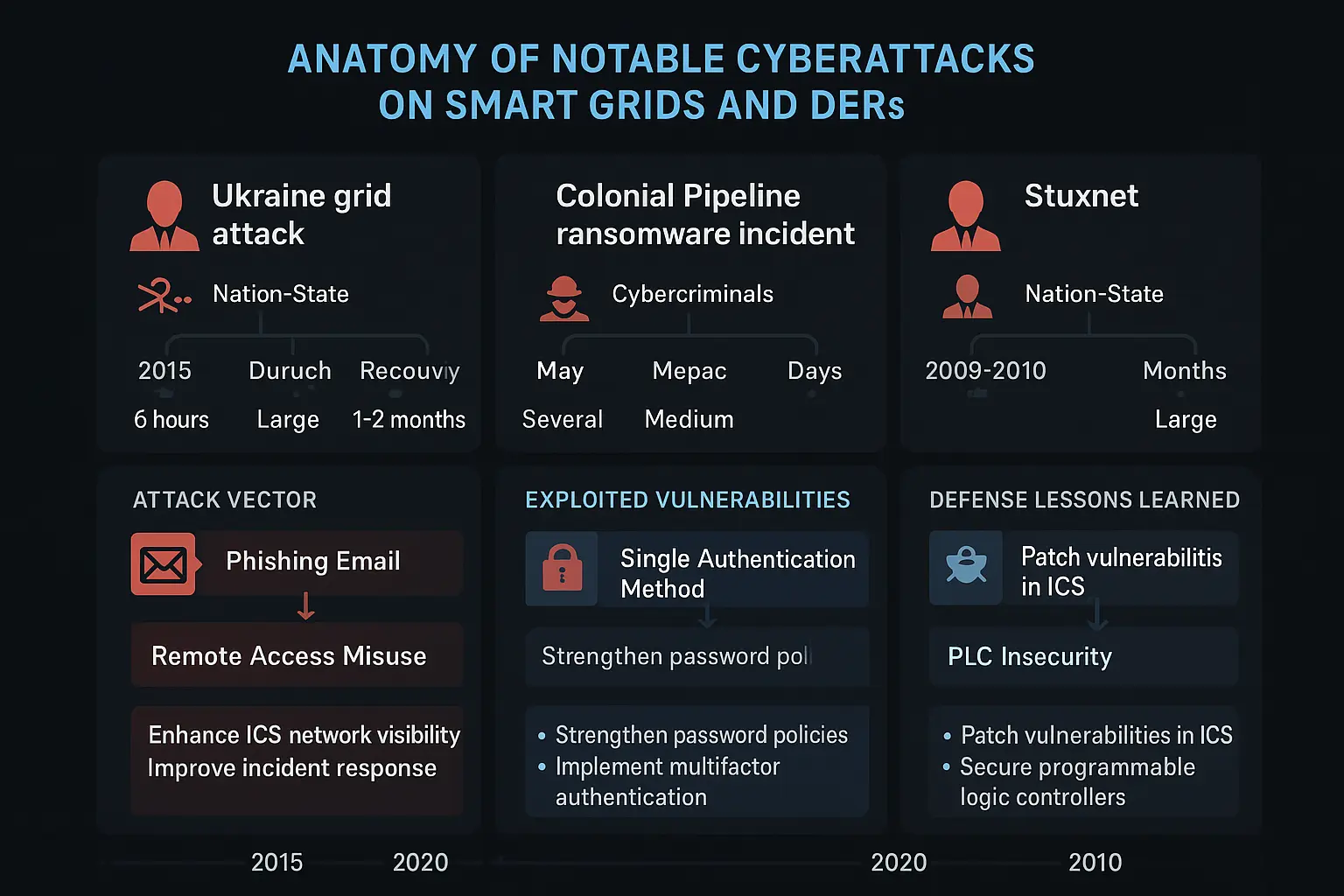
Theoretical attacks are one thing; real-world incidents show the impact. The 2015 and 2016 attacks on Ukraine’s power grid were a watershed moment, demonstrating how adversaries could move from IT networks into the OT environment to remotely operate circuit breakers and plunge hundreds of thousands of people into darkness. These weren’t simple hacks; they were meticulously planned campaigns involving spear-phishing, credential theft, and custom malware.
A Compliance Compass: Navigating Regulatory Frameworks & Industry Standards
Navigating the web of cybersecurity standards is a primary challenge for any grid operator or DER owner. Compliance isn’t just a box to check; it’s a foundational framework for building a robust security program.
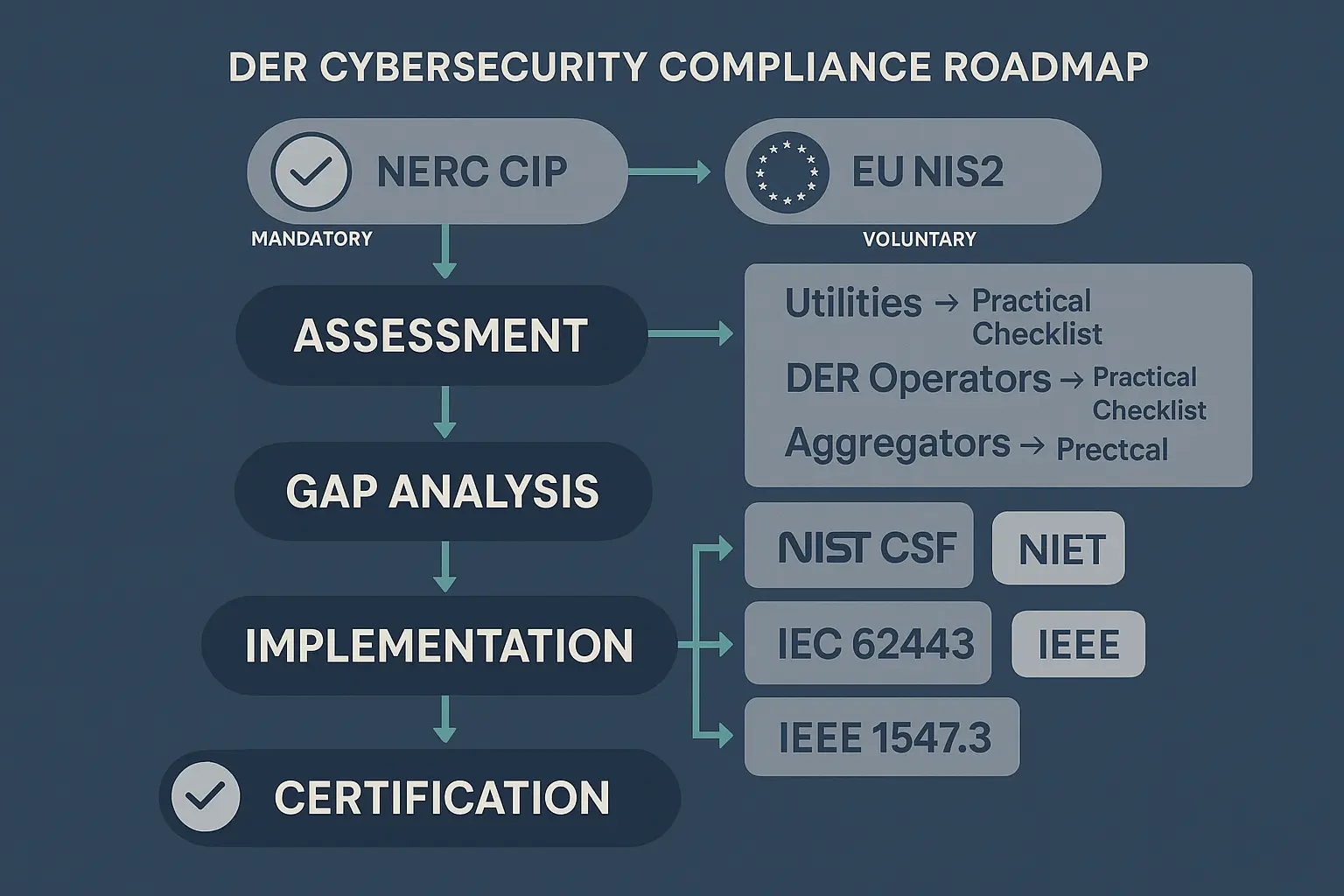
Here are the key standards you need to have on your radar:
- NERC CIP (North American Electric Reliability Corporation Critical Infrastructure Protection): A set of mandatory requirements for identifying and protecting critical assets that could impact the bulk electric system. If you operate in North America, NERC CIP is not optional.
- NIST Cybersecurity Framework (CSF): A voluntary framework that provides a high-level, strategic view of cybersecurity risk management through five core functions: Identify, Protect, Detect, Respond, and Recover. It’s the gold standard for creating a comprehensive security program.
- IEEE 1547.3: A crucial standard providing a guide for cybersecurity for DERs interconnected with electric power systems. It offers specific controls and best practices for securing the communications and interfaces of these devices.
- IEC 62443: A series of standards that provide a detailed framework for the cybersecurity of Industrial Automation and Control Systems (IACS), which is directly applicable to the OT side of the smart grid.
- EU NIS2 Directive: The European Union’s updated directive on the security of network and information systems, which imposes stricter cybersecurity risk management and reporting obligations on essential entities, including the energy sector.
An actionable approach starts with identifying which standards are mandatory for your operations and using voluntary frameworks like the NIST CSF to structure your entire program. A robust security strategy helps you achieve and maintain compliance while focusing on genuine risk reduction.
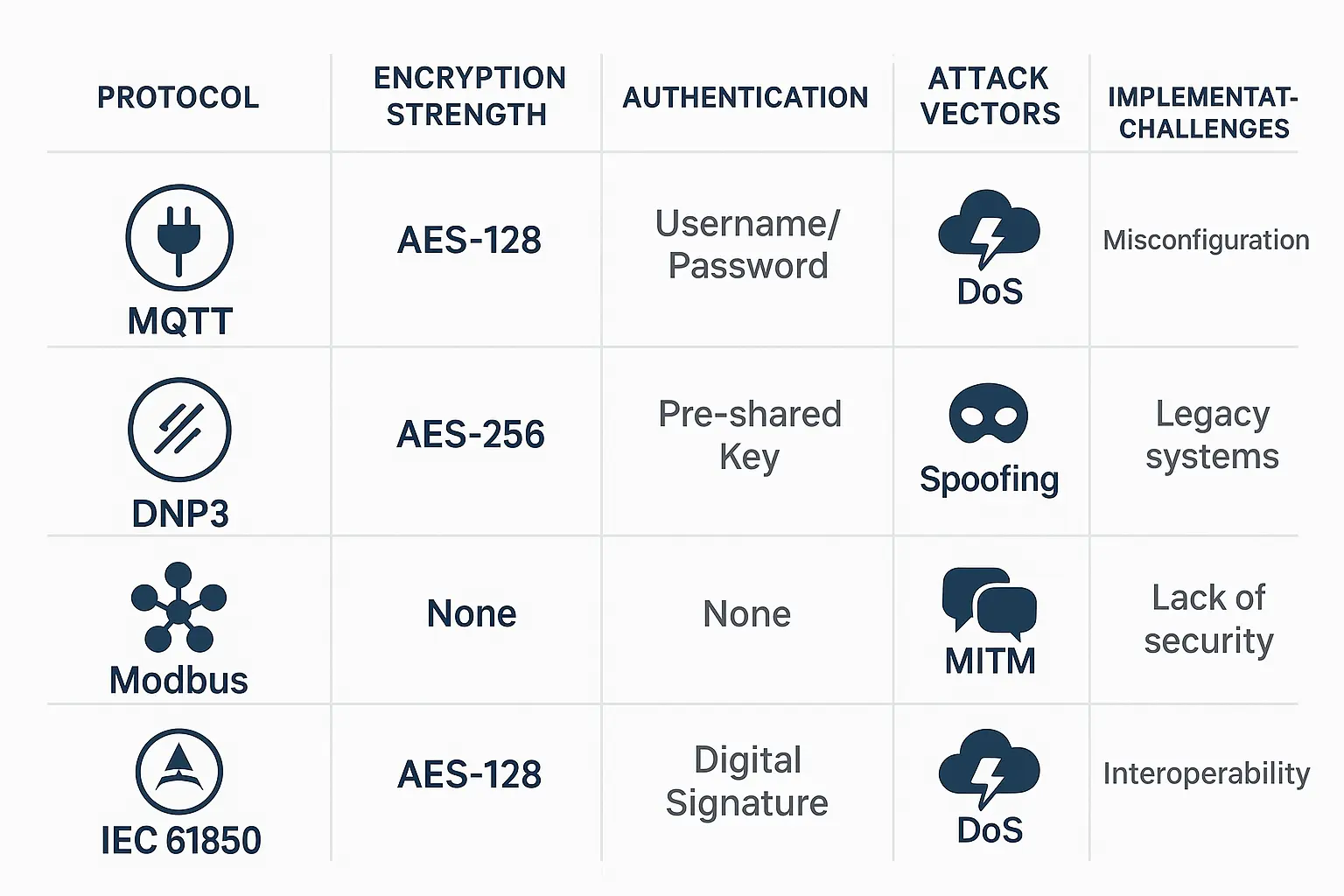
Navigating Protocol Security: Detailed comparison of cybersecurity features in IEC 61850, DNP3, SunSpec Modbus, IEEE 2030.5, OpenADR 2.0
The communication protocols used between devices are the highways for data—and for attacks. Legacy protocols like Modbus were designed for isolated networks and often lack basic security features like authentication or encryption. Modern protocols have improved, but implementation matters. Your choice of technology and vendors must include a deep dive into how they secure these foundational protocols.
Advanced Defense Strategies: Building a Resilient, Future-Proof Grid
Reacting to threats is a losing game. A modern defense strategy is proactive, multi-layered, and assumes that a breach is not a matter of if, but when.
Foundational Defense-in-Depth
- Network Segmentation: The single most important principle. Create strict separations between your IT and OT networks. An attacker who compromises an email server should have no path to your SCADA system.
- Continuous Monitoring with OT-Aware IDS/IPS: You cannot defend what you cannot see. Deploying Intrusion Detection and Prevention Systems that understand OT protocols (like DNP3 and IEC 61850) is non-negotiable for identifying anomalous behavior.
- Strong Access Control: Enforce principles of least privilege and use Multi-Factor Authentication (MFA) everywhere possible, especially for remote access to critical systems.
The Double-Edged Sword of Emerging Technologies
New technologies offer powerful defensive capabilities, but they also introduce new complexities and attack surfaces. A critical evaluation is essential.
- AI/ML for Threat Detection: AI can analyze vast amounts of data to detect subtle patterns indicative of a sophisticated attack, far beyond human capability. The Risk: Attackers can also use AI to craft more evasive malware or launch AI-powered swarm attacks. Furthermore, the AI models themselves must be secured from data poisoning or manipulation.
- Digital Twins for Resilience Testing: Creating a virtual replica of your grid allows you to safely test for vulnerabilities and simulate attack scenarios without impacting live operations. The Risk: A compromised digital twin could provide an adversary with a perfect roadmap of your infrastructure or be used to feed false information to operators.
- Blockchain for Secure Transactions: Blockchain can provide a secure, decentralized, and tamper-proof ledger for energy transactions and device identity management. The Risk: Scalability in a high-transaction grid environment remains a challenge, and poorly implemented smart contracts can introduce new vulnerabilities.
Making the Right Call: Your Framework for Evaluating DER Cybersecurity
As you evaluate solutions, move beyond feature lists. Focus on outcomes and alignment with your operational reality. Here’s a framework to guide your decision-making.
Evaluating Cybersecurity Solutions for DERs
Ask potential partners and vendors these critical questions:
- OT Fluency: Does your solution natively understand the industrial protocols we use, or is it a repurposed IT security tool?
- Passive vs. Active: Is your monitoring solution entirely passive, ensuring it never disrupts sensitive OT operations?
- Integration & Scalability: How does your solution integrate with our existing SIEM, SCADA, and other systems? How does it scale from a few substations to thousands of DER endpoints?
- Compliance Reporting: Can you provide automated reporting to help us meet our NERC CIP, NIST, or other regulatory requirements?
- Lifecycle Support: What does your support look like for the entire lifecycle, from deployment and tuning to incident response?
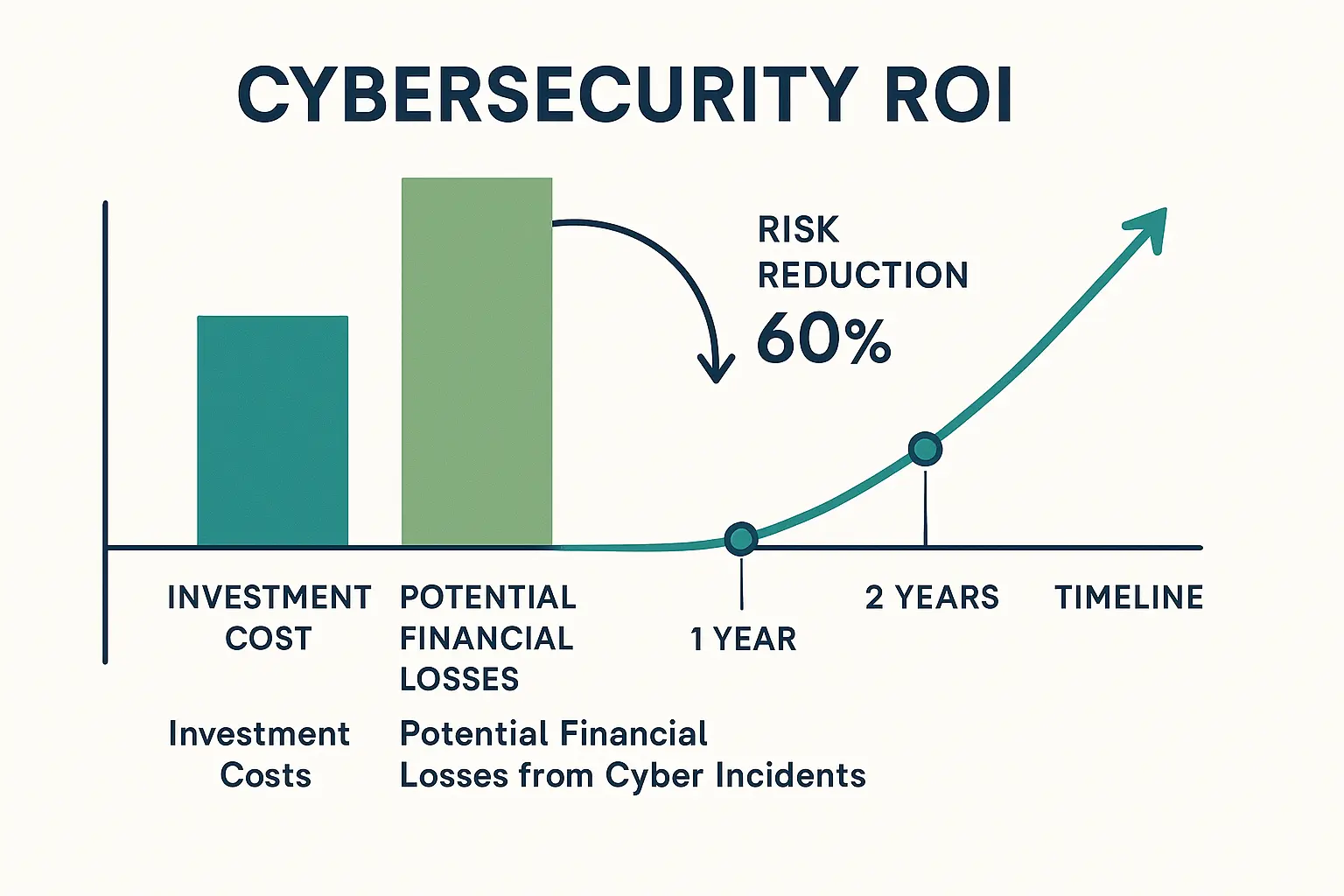
Investing in robust cybersecurity isn’t a cost center; it’s an investment in operational uptime, regulatory compliance, and brand reputation. The cost of a single major outage—in fines, recovery, and lost trust—can dwarf the investment in a proactive defense.
Frequently Asked Questions (FAQ)
How do we secure legacy OT equipment that can’t be patched?
This is a critical challenge. The answer lies in compensating controls. You can’t change the endpoint, so you must protect the environment around it. This includes aggressive network segmentation to “wrap” the legacy asset in a secure zone, deploying an OT-aware intrusion detection system to monitor all traffic to and from the device, and strictly controlling all access.
We are a smaller utility/DER operator. How can we afford a sophisticated cybersecurity program?
Start with the fundamentals, which often have the highest ROI. The NIST Cybersecurity Framework is designed to be scalable. Begin with a thorough risk assessment to identify your most critical assets. Focus on foundational controls like network segmentation, access control, and developing a solid incident response plan. Many advanced monitoring solutions are now available as a service, reducing the upfront capital investment.
How do we address the cybersecurity skills gap?
The global shortage of 3.4 million cybersecurity professionals is real, especially in the niche field of OT security. This is where partnerships are critical. Look for solutions providers that offer not just technology but also managed services, including 24/7 monitoring and access to OT security experts who can act as an extension of your team. Investing in training for your existing IT and OT staff is also crucial for building a security-first culture.
What is the single most important first step we should take?
Gain visibility. You cannot protect what you cannot see. The first step is always to conduct a comprehensive asset inventory and network mapping exercise to understand exactly what is on your network, who it’s communicating with, and what its vulnerabilities are. A passive, OT-aware network monitoring tool is the fastest and safest way to achieve this foundational visibility.
Secure Your Grid, Secure the Future
The transition to a smart, decentralized energy grid is irreversible. So are the cyber threats that come with it. Building a secure and resilient infrastructure requires moving beyond a reactive, compliance-driven mindset to a proactive, risk-based approach. It demands deep visibility into your operational environment, a multi-layered defense strategy, and a trusted partner who understands the unique physics of the power grid.
The path forward begins with a clear understanding of your specific risks and vulnerabilities. If you’re ready to move from uncertainty to a confident security posture, it’s time for a deeper conversation.
Speak with a Grid Security Expert to schedule a personalized assessment of your OT environment.
