
You’ve seen the demos and read the brochures. Every vendor claims their system is “smart,” but you’re looking for something more. You’re evaluating how to turn one of your largest operational expenses—your commercial HVAC system—into a strategic asset that actively reduces costs, enhances occupant well-being, and advances your sustainability goals. The challenge isn’t a lack of options, but a lack of clarity on which strategies deliver real, quantifiable results.
This guide cuts through the noise. It’s a framework for decision-makers looking beyond basic automation to understand the advanced, AI-driven strategies that define truly intelligent HVAC optimization. We’ll explore the core methods, quantify their impact, and give you the tools to evaluate which path is right for your portfolio.
From Automated Timers to Intelligent Ecosystems
For decades, commercial HVAC control meant programmable thermostats and a Building Automation System (BAS) running on fixed schedules. It was an improvement, but fundamentally reactive. The system didn’t know a holiday was coming, that a heatwave was forecast, or that the west-facing conference rooms would be empty all afternoon.
The shift to intelligent optimization is powered by the convergence of IoT sensors, cloud computing, and artificial intelligence. Instead of following rigid rules, modern systems learn, predict, and adapt in real-time. They transform building data into actionable insights, moving from a “set and forget” model to a “sense and respond” ecosystem that continuously seeks peak efficiency.
Core Intelligent HVAC Optimization Strategies Explained
Understanding the primary optimization strategies is the first step in evaluating potential solutions. While they can be deployed individually, their true power is unlocked when integrated into a cohesive platform. Most commercial buildings see an overall energy reduction between 10-30%, with some retrofits achieving savings as high as 50%.
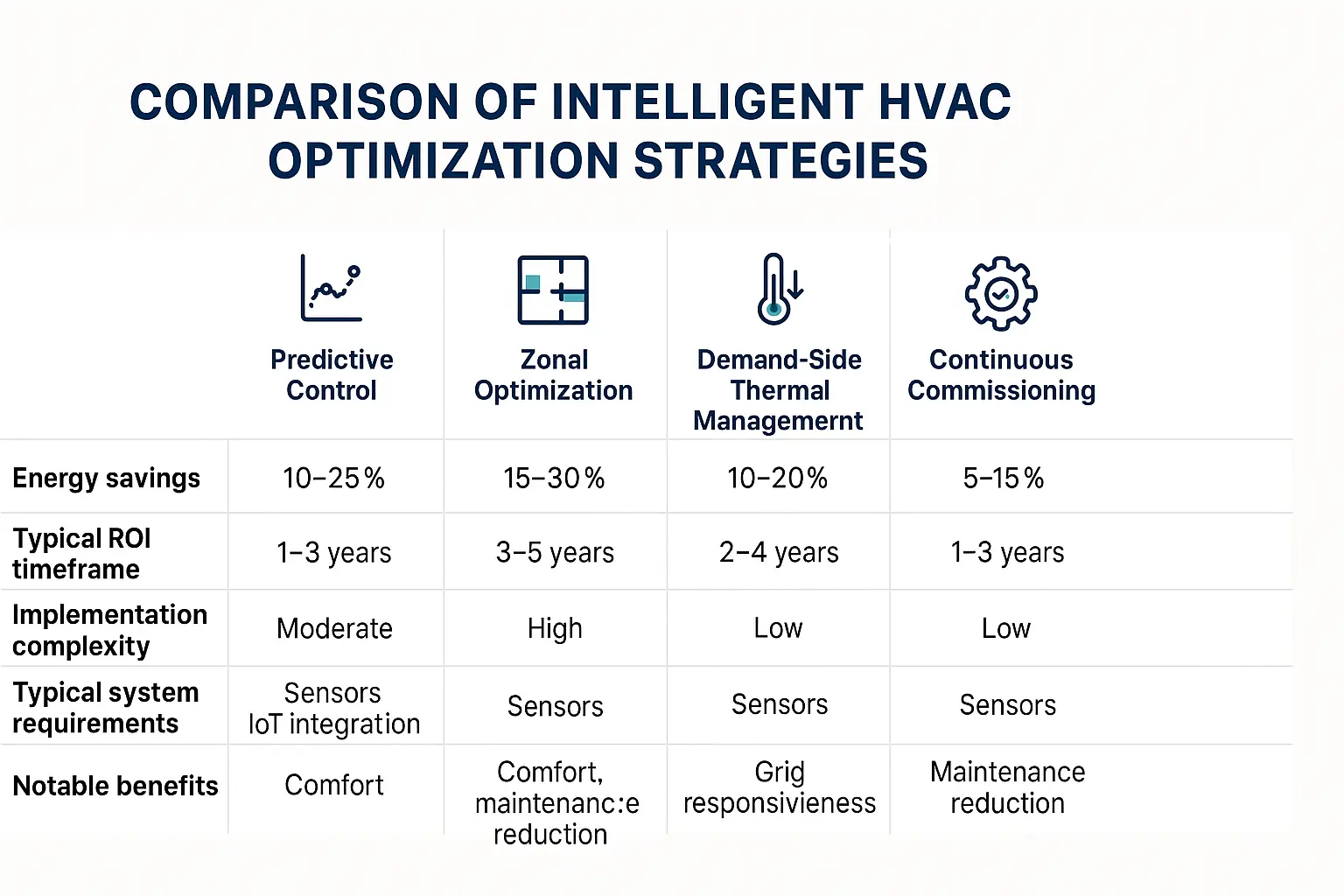
1. Predictive Control (MPC)
Predictive control, often using Model Predictive Control (MPC), is the brains of a modern system. It uses AI to build a dynamic “digital twin” of your building’s thermal behavior. By continuously analyzing data—like historical performance, weather forecasts, occupancy patterns, and energy prices—it can predict future conditions and make proactive adjustments. Instead of waiting for a room to get too hot, it starts pre-cooling the space an hour beforehand in the most energy-efficient way possible. Research from institutions like Lawrence Berkeley National Laboratory highlights its effectiveness in managing building demand.
- Quantifiable Impact: Reduces energy waste by eliminating unnecessary heating and cooling cycles, contributing significantly to overall building efficiency.
- Key Consideration: The effectiveness of MPC depends on the quality of its data inputs and the accuracy of its predictive models.
2. Zonal Optimization
One-size-fits-all climate control is a major source of energy waste and occupant complaints. Zonal optimization divides a building into smaller microclimates, each with its own sensors and controls. This allows the HVAC system to heat or cool areas based on specific needs, such as occupancy, time of day, or solar gain on a particular facade. Research shows that implementing effective HVAC zoning can reduce energy use by around 33% by stopping the system from conditioning empty spaces.
- Quantifiable Impact: Drastically cuts energy consumption by heating and cooling only occupied areas, while simultaneously improving personalized comfort.
- Key Consideration: Requires a robust network of sensors and dampers to manage airflow and temperature across multiple zones effectively.
3. Demand-Side Thermal Management
This strategy focuses on managing not just how much energy you use, but when you use it. Demand-side management uses the building’s inherent thermal mass as a sort of battery. For example, an AI platform can pre-cool the building during off-peak hours when electricity is cheaper, then let the temperature drift up slightly during peak hours to shed electrical load. This helps stabilize the grid and can lead to significant cost savings on utility bills that have demand charges.
- Quantifiable Impact: Reduces peak demand charges and supports grid stability, turning your building into a grid-interactive asset.
- Key Consideration: Success depends on accurate energy price forecasting and a deep understanding of the building’s thermal properties.
4. Continuous Commissioning (MBCx)
Commissioning isn’t a one-time event; it’s an ongoing process. Continuous Commissioning, or Monitoring-Based Commissioning (MBCx), uses AI to constantly analyze performance data and identify operational drift. It flags issues like faulty sensors, degraded control sequences, or leaking valves that would otherwise go unnoticed for months, silently wasting energy. Buildings undergoing this process can sustain peak performance and reduce energy use by up to 15%.
- Quantifiable Impact: Ensures long-term efficiency, extends equipment life, and prevents the gradual degradation of HVAC performance.
- Key Consideration: Requires a platform capable of not just flagging faults, but providing actionable insights to diagnose and correct them.
The Engine Behind the Efficiency: AI’s Role Across the Spectrum
Artificial intelligence is the thread that connects and enhances all these strategies. It’s the engine that processes vast amounts of data to find patterns and make decisions that are impossible for humans or rule-based systems to replicate.
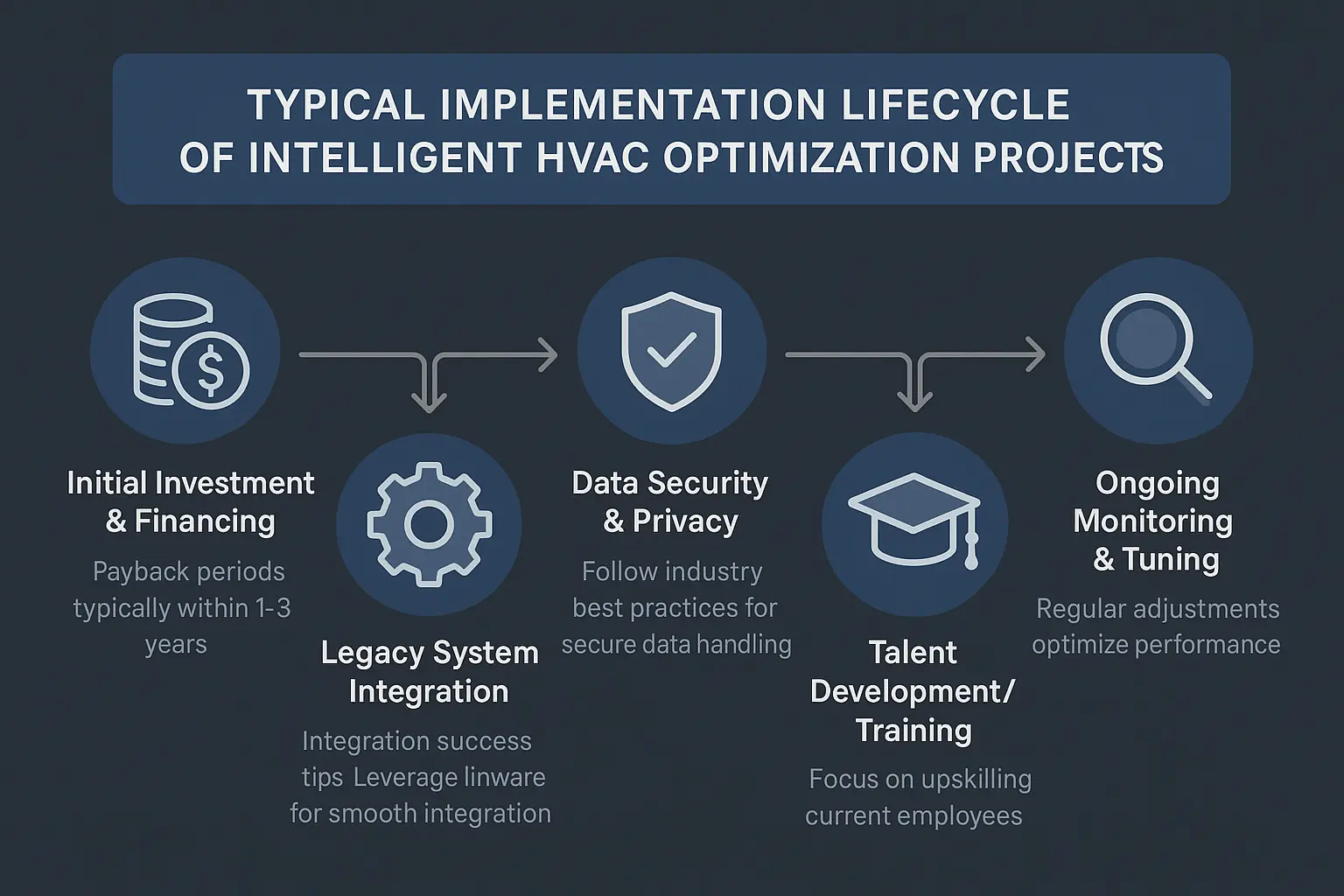
AI-Driven Predictive Maintenance
Instead of waiting for a critical component to fail, AI analyzes operational data—vibration, temperature, pressure—to predict failures before they happen. For example, a failing compressor can burn 20-40% more energy before it breaks down completely. Predictive maintenance flags this anomaly early, allowing for scheduled, low-cost repairs instead of expensive emergency replacements and downtime. This proactive approach can extend HVAC equipment life by 5-10 years and reduce service calls by approximately 15%.
AI-Powered Chiller Plant Optimization
Chiller plants are often the single largest energy consumer in a commercial building. AI-driven platforms can deliver exceptional savings here by continuously optimizing complex variables like condenser water temperature, flow rates, and sequencing. By making thousands of micro-adjustments in real-time, these systems ensure the entire plant operates at its absolute lowest possible energy draw, often yielding energy savings of 10-30% for the chiller plant alone. Understanding the nuances of AI-driven chiller plant optimization is key for facilities with significant cooling loads.
Navigating Implementation: A Realistic Guide to Challenges and Solutions
Adopting an intelligent HVAC platform is a significant decision. Acknowledging and planning for potential challenges is crucial for a smooth transition and achieving the expected ROI, which is typically realized within 1.5 to 3 years.
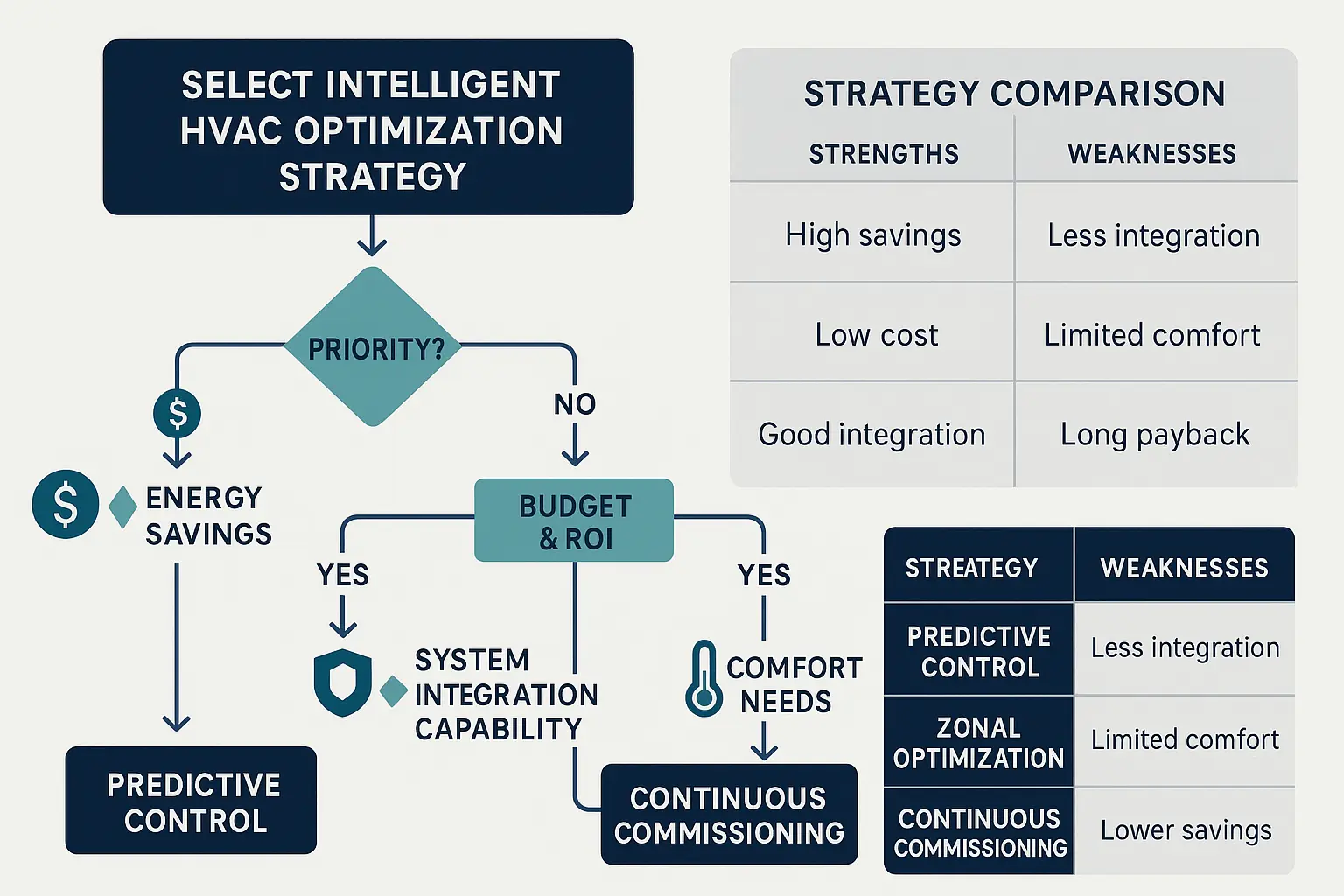
Challenge 1: Initial Investment
Solution: Frame the investment in terms of total cost of ownership and ROI. A payback period of 1.5 to 3 years, driven by energy savings and reduced maintenance, is highly compelling. Explore utility rebates and incentives, which can significantly offset the initial capital outlay. Some vendors also offer pilot programs or performance-based contracts that reduce upfront risk.
Challenge 2: Legacy System Integration
Solution: This is a primary concern for most facility managers. The key is to prioritize platforms built on open protocols like BACnet and Modbus. Ask potential vendors about their experience integrating with your specific BAS brand (e.g., Johnson Controls, Siemens, Trane). Vendor-agnostic gateway devices can also bridge communication gaps between older, proprietary equipment and modern cloud platforms.
Challenge 3: Data Security
Solution: When data is sent to the cloud, security is paramount. Vet your vendor’s security protocols thoroughly. Look for end-to-end encryption, regular security audits, and compliance with standards like SOC 2. For highly sensitive environments, consider solutions that leverage edge computing, where most data is processed locally before select insights are sent to the cloud.
Challenge 4: The Talent Gap
Solution: An intelligent system shouldn’t require your team to become data scientists. The best platforms translate complex data into clear, actionable recommendations. Choose a solution provider that offers comprehensive training and ongoing support. The goal is to empower your existing team, not replace them, by automating routine analysis and freeing them to focus on high-value strategic tasks.
Choosing Your Path: An Evaluation Framework for Your Building Portfolio
With a clear understanding of the strategies and challenges, you can now build an evaluation framework. The right solution depends on your portfolio’s specific characteristics, goals, and existing infrastructure.
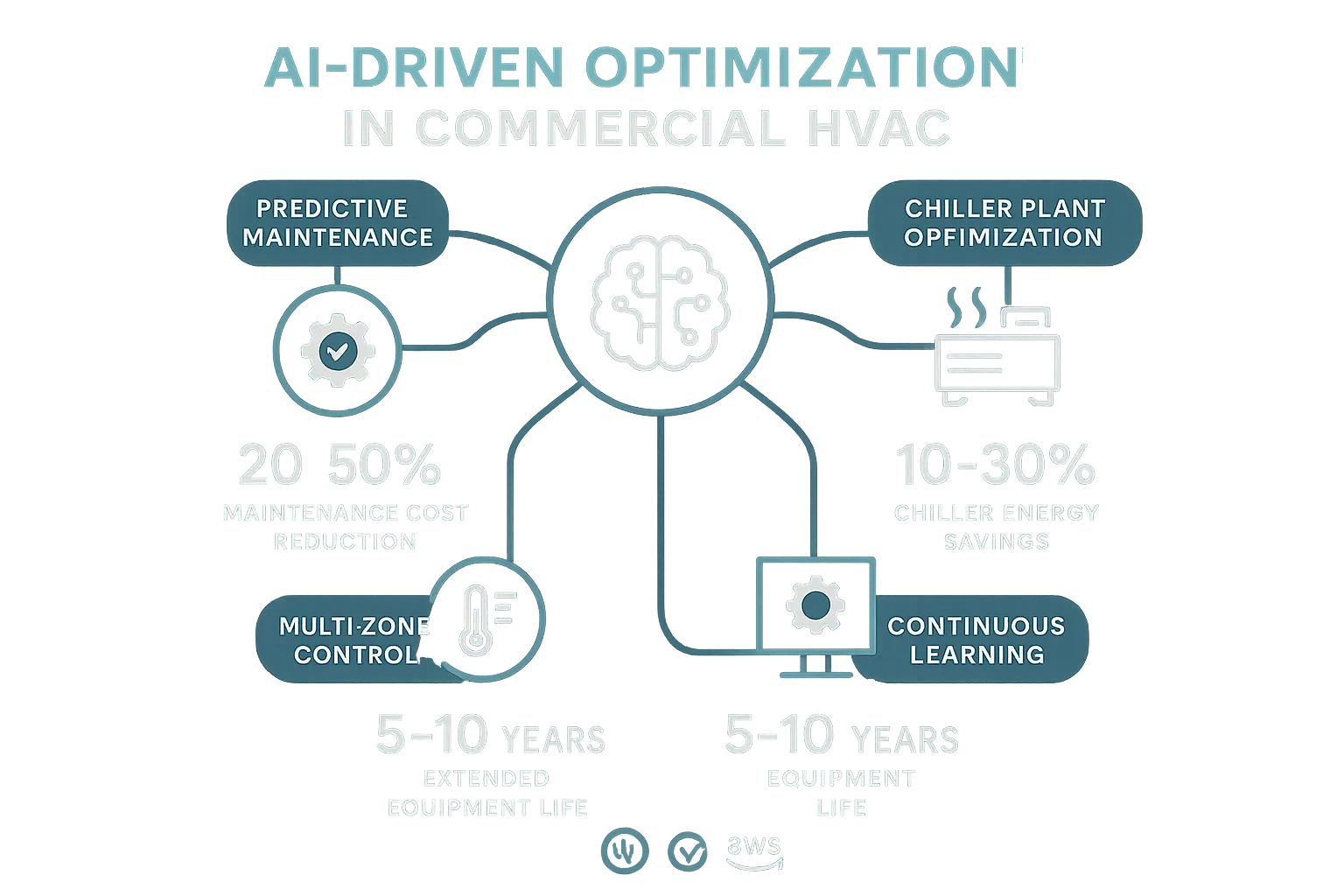
Use these questions to guide your internal discussions and vendor interviews:
- Goal Alignment: Is our primary goal energy cost reduction, occupant comfort improvement, or meeting ESG mandates? (This will determine which strategies to prioritize).
- System Scalability: Will this solution scale across our entire portfolio, accommodating buildings of different ages, sizes, and uses?
- Data Transparency: Can we access and own our building’s data? How intuitive is the user interface for our facility team?
- Model Sophistication: Does the platform use generic physics-based models, or does its AI learn the unique behavior of our specific building? (This is a key differentiator for advanced predictive control for multi-zone HVAC).
- Vendor Support: What level of ongoing support, training, and strategic advice does the vendor provide after installation? Is it a partnership or just a product sale?
- Proof of Performance: Can the vendor provide detailed case studies with verifiable data from buildings similar to ours? Do they offer a pilot program to prove their system’s value?
The Future of Intelligent HVAC: From Cost Center to Strategic Asset
The evolution doesn’t stop here. The next wave of intelligent buildings will leverage technologies like digital twins for even more precise simulations, integrate with real-time occupancy data for hyper-personalized microclimates, and interact dynamically with the electrical grid to support a decarbonized energy future.
Investing in an AI-driven HVAC optimization platform today is not just about capturing immediate energy savings. It’s about future-proofing your assets and laying the foundation for a truly smart, responsive, and sustainable building portfolio.
Frequently Asked Questions (FAQ)
What’s the difference between a “smart” BAS and an “intelligent” HVAC platform?A smart BAS typically automates pre-programmed schedules and rules. An intelligent platform uses AI to learn, predict, and continuously optimize performance in real-time, going far beyond static rules to find efficiencies a BAS would miss.
Can these systems integrate with my existing Building Automation System (BAS)?Yes, the leading intelligent optimization platforms are designed to sit on top of your existing BAS. They ingest data from your current system and send back optimized commands, enhancing your existing infrastructure rather than requiring a full “rip and replace.”
Is my building’s operational data secure in the cloud?Reputable providers use robust cybersecurity measures, including end-to-end data encryption and compliance with industry-standard security protocols. Always ask a potential vendor to detail their security architecture.
How much does an intelligent HVAC system cost?Pricing models vary, but they are often structured as a Software-as-a-Service (SaaS) subscription. The cost typically depends on the size of the building and the scope of services. The key financial metric to focus on is ROI, which is consistently reported to be between 1.5 and 3 years.
