
Beyond ‘Smart’ Grids: Why Multi-Agent Systems are the Future of Energy Coordination
You’re evaluating microgrid solutions, and every provider promises “intelligent controls” and “smart optimization.” But after a few conversations, you’ve likely noticed these terms are often just buzzwords. They describe the destination—an efficient, resilient grid—but offer no map of how to get there. This lack of transparency leaves a critical question unanswered: What is the actual technology driving these results, and is it robust enough for the future?
The truth is, traditional centralized control systems are struggling to keep up. The explosive growth of Distributed Energy Resources (DERs)—from solar panels and batteries to EV charging stations—has created a grid that is complex, dynamic, and unpredictable. Adding to this pressure, the demand from AI data centers alone is projected to more than double by 2028, straining our legacy infrastructure to its breaking point.
To manage this new energy landscape, you don’t just need a “smarter” grid. You need a fundamentally different approach. You need a system with distributed intelligence built in at the core. That system is a Multi-Agent System (MAS).
From Central Command to Collaborative Intelligence: What is a Multi-Agent System?
Instead of a single, central controller trying to manage everything, a Multi-Agent System is a team of autonomous software “agents.” Each agent is a smart, decision-making entity representing a specific physical asset—a solar array, a battery bank, a generator, or even a building’s HVAC system.
These agents don’t wait for top-down commands. They communicate, negotiate, and coordinate directly with each other to achieve the best outcomes for the entire system. Think of it as the difference between a single, overworked air traffic controller trying to manage a thousand planes (centralized control) versus a system where the planes themselves can communicate to optimize flight paths and avoid collisions autonomously (distributed control).
This collaborative, decentralized approach is purpose-built for the inherent nature of modern DERs, making it more resilient, efficient, and scalable than any centralized alternative.
MAS Solves Key DER Coordination Challenges
Competitors often list the benefits of microgrids—resilience, cost savings, sustainability. But a Multi-Agent System is the specific enabling technology that delivers these benefits on a whole new level, directly addressing the most difficult DER coordination challenges.
### Resilience Through Radical Decentralization
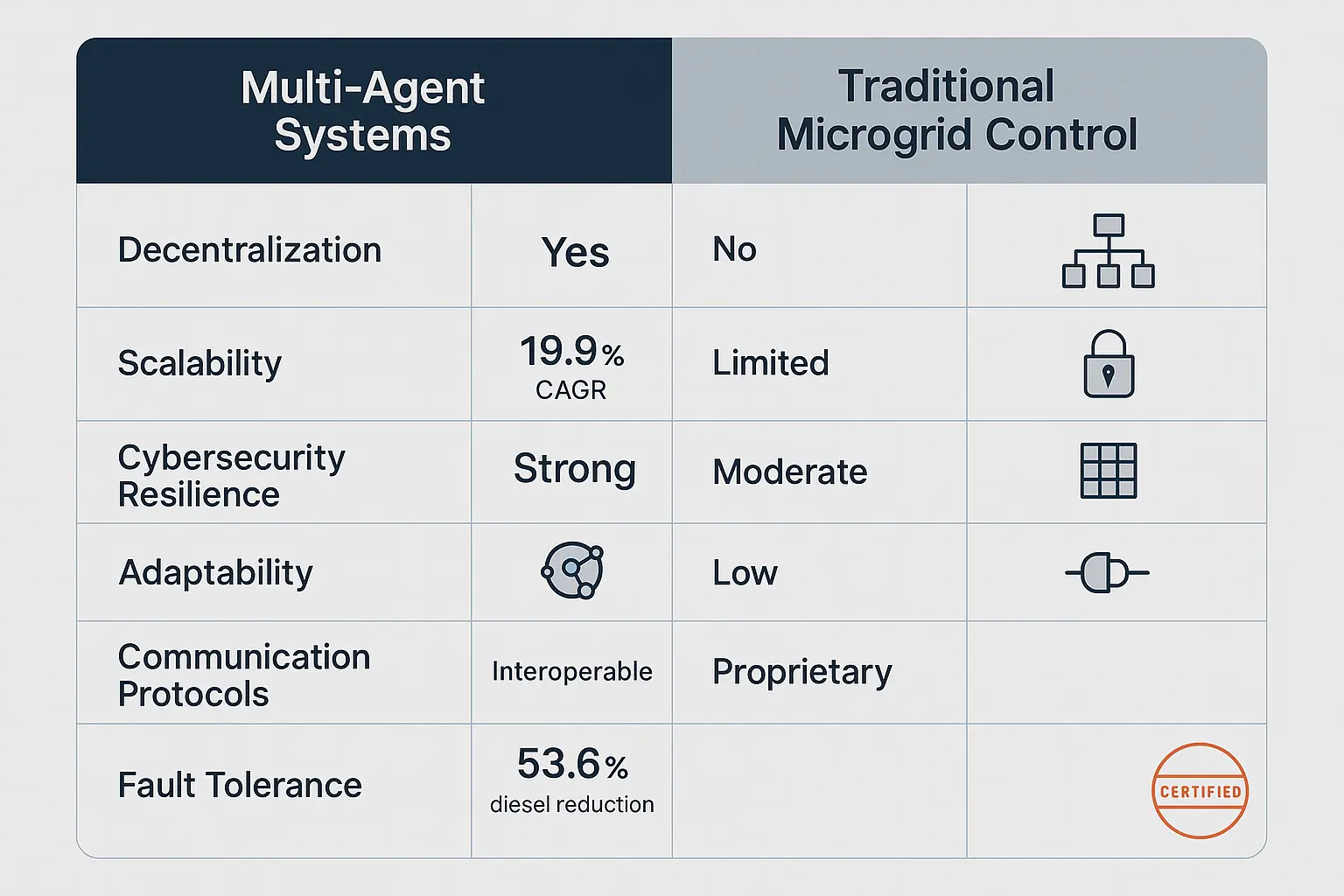
A centralized controller is a single point of failure. If it goes down, the entire network is at risk. In an MAS, intelligence is distributed. If one agent or asset fails, the rest of the team adapts and continues operating, maintaining grid stability and ensuring autonomous islanding capabilities that are truly fault-tolerant. This is how you build a system that can withstand natural disasters and cyber threats.
### Efficiency Through Real-Time Negotiation
How do you get the best price for your excess solar power or decide the most cost-effective time to charge your battery fleet? MAS agents use sophisticated negotiation strategies, like auctions and game theory, to make these decisions in real-time. They can factor in weather forecasts, utility prices, and internal demand to continuously optimize resource allocation, leading to proven, dramatic cost savings. For instance, MAS implementations have demonstrated a 53.6% reduction in diesel consumption over 92 days in a real-world microgrid.
### Seamless Integration of Renewables
The intermittency of solar and wind is a primary challenge for grid stability. MAS agents can react instantly to a cloud passing over a solar array or a sudden drop in wind speed. They coordinate to ramp up a battery or slightly curtail a non-critical load, smoothing out fluctuations and maximizing the use of available renewable energy without human intervention.
### Scalability by Design
As the global installed capacity of DERs, which surpassed 320 GW in 2023, continues to grow, your energy system must be able to expand effortlessly. With MAS, adding a new asset is like adding a new player to the team. A new agent is initialized, introduces itself to the network, and immediately begins coordinating. This “plug-and-play” capability makes the system inherently flexible and future-proof.
The ‘How’: Under the Hood of MAS for Energy
Understanding the mechanics of MAS demonstrates why it’s a superior paradigm. While competitors keep their “intelligence” in a black box, a transparent look at the architecture builds confidence.
### Decentralized Control vs. Central Controllers
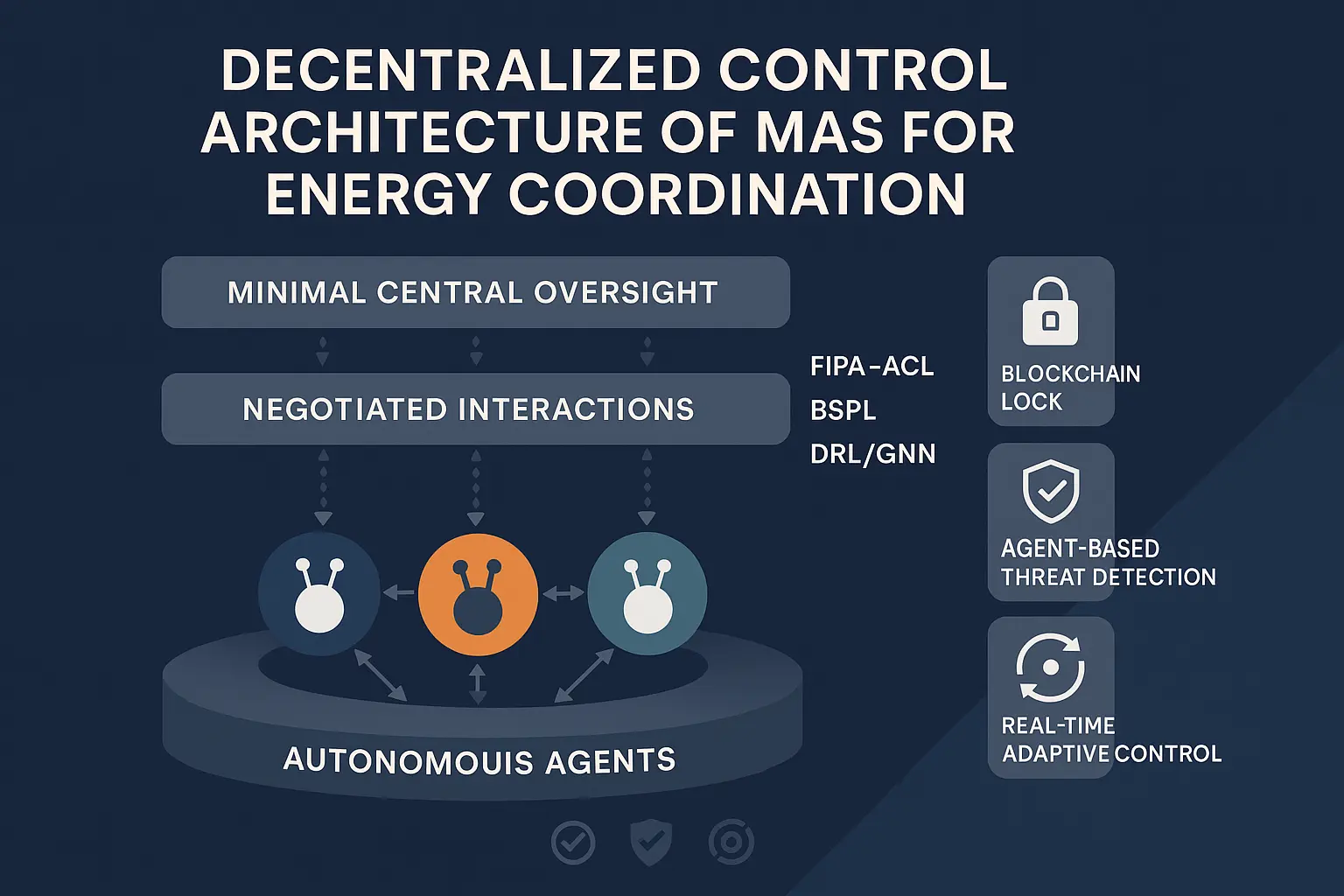
A traditional Microgrid Central Controller (MGCC) is a bottleneck. All data must flow to it, and all decisions flow from it. An MAS architecture distributes this logic. Agents communicate peer-to-peer, sharing only the data they need to make local decisions that support global goals. This reduces network traffic, increases response speed, and eliminates the central bottleneck.
### Robust Communication and Coordination
For agents to collaborate effectively, they need a shared language. This is where standardized [Communication Protocols for Energy Agents] come in. These protocols (like FIPA-ACL or BSPL) define how agents can make requests, propose actions, and reach agreements. This structured communication allows for complex negotiations, ensuring the grid operates as a cohesive, optimized whole.
### Enhanced Cybersecurity
By its very nature, a distributed system is harder to attack than a centralized one. There is no single server to target for a catastrophic takedown. The MAS architecture provides defense-in-depth. Furthermore, advanced implementations can integrate blockchain for secure, tamper-proof transaction logs between agents or use agent-based models to detect and isolate threats, creating a truly resilient framework for [Security and Robustness of MAS in Energy Systems].
Real-World Impact & Case for MAS
The shift toward MAS-controlled energy systems isn’t just a theoretical advantage; it’s a market imperative reflected in massive industry growth. The global microgrid market is projected to skyrocket from around $13.58 billion in 2025 to as high as $406.23 billion by 2035, a staggering growth rate driven by the need for the advanced capabilities that only MAS can provide.
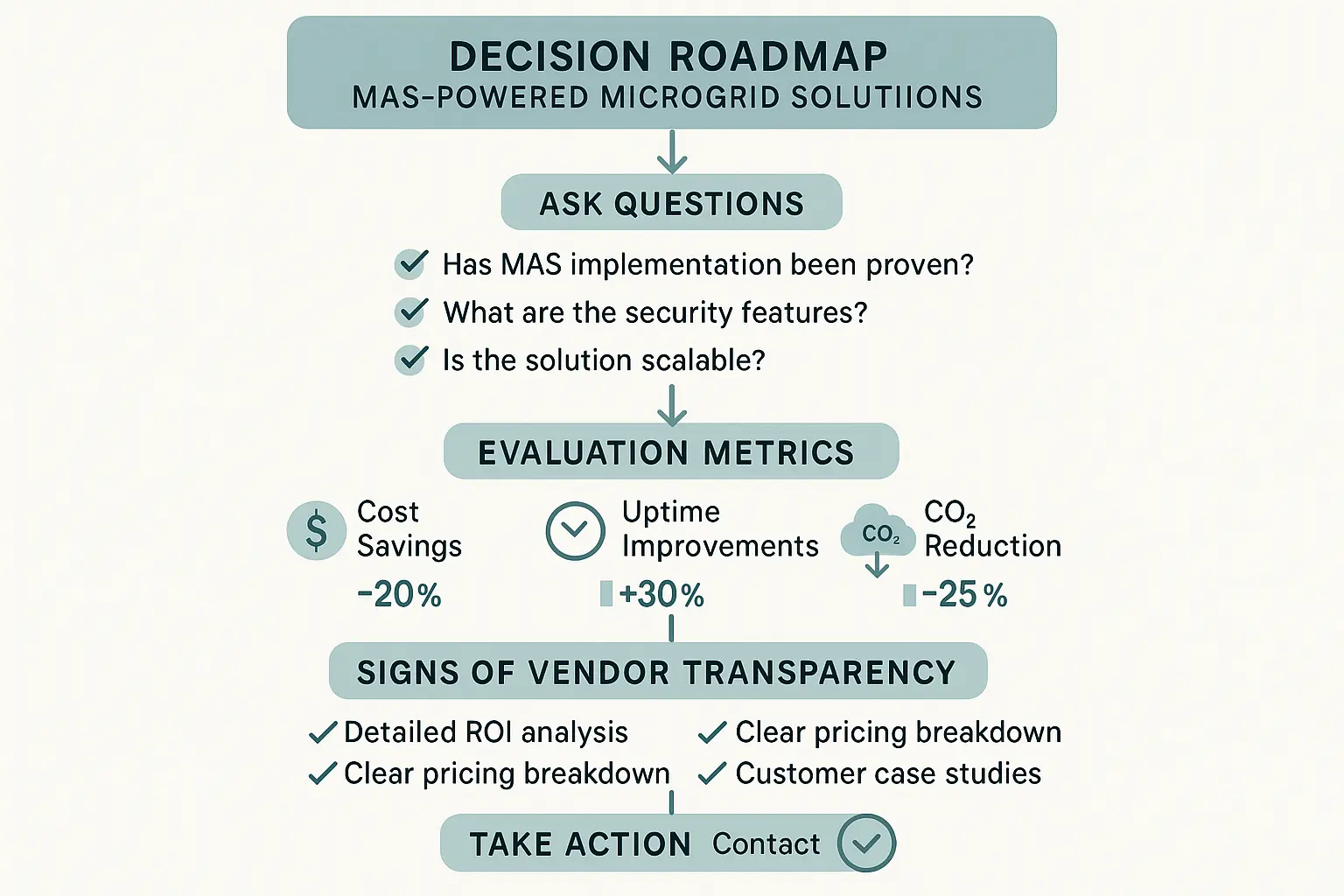
Investing in an MAS-powered solution isn’t just about solving today’s problems. It’s about future-proofing your energy infrastructure for the demands of tomorrow, including Vehicle-to-Grid (V2G) integration, dynamic energy markets, and the continued expansion of distributed resources. It’s the foundational technology for building truly autonomous and resilient energy systems.
Choosing an MAS-Powered Microgrid Solution (MOFU Evaluation Criteria)
As you evaluate potential partners, you need to look past the marketing slogans and assess the core technology. Arm yourself with the right questions to ensure you’re investing in a genuinely intelligent and future-proof solution.
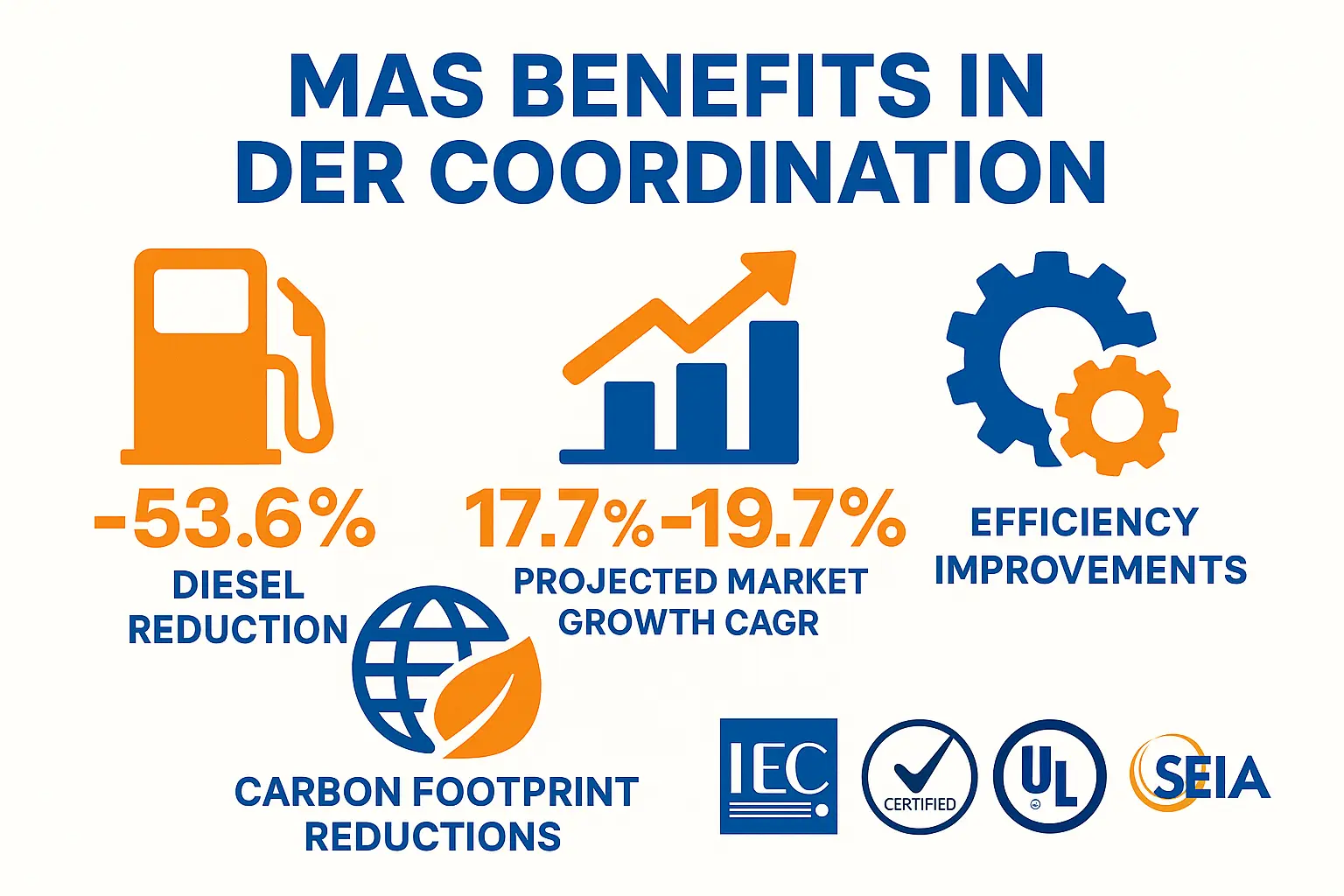
- Ask “How?”: When a vendor claims “AI-powered optimization,” ask them to explain the control architecture. Are they using a true Multi-Agent System, or is it a traditional centralized controller with an optimization algorithm layered on top?
- Inquire About Agent Autonomy: How much decision-making power do the individual agents have? Can they negotiate and operate autonomously if communication with a central hub is lost? This is a key indicator of true decentralization and resilience.
- Evaluate Scalability: How does the system accommodate new assets? Ask about the process for integrating new solar arrays, batteries, or EV chargers. The answer should be simple and seamless, not a complex reprogramming of a central controller.
- Discuss Communication Protocols: A mature MAS solution will have a robust and well-defined communication protocol. Ask about the standards they use to ensure reliable and secure inter-agent coordination.
- Request Proven Results: Go beyond hypothetical benefits. Ask for case studies or data that demonstrate tangible outcomes, such as reduced energy costs, improved uptime, or increased renewable energy utilization, backed by the MAS technology.
Frequently Asked Questions (FAQ)
### Is Multi-Agent System technology proven or just academic?
While MAS has deep roots in academic research (from institutions like Carnegie Mellon and IEEE), it is a mature and commercially proven technology. The real-world results, such as the 53.6% diesel reduction, demonstrate its practical effectiveness. It is the bridge between cutting-edge AI research and deployable, high-performance energy solutions.
### How does MAS differ from a standard Microgrid Central Controller (MGCC)?
An MGCC is a single brain for the whole system, creating a single point of failure and a communication bottleneck. An MAS is a distributed nervous system. Intelligence resides in the agents across the network, making it more resilient, responsive, and scalable than any centralized architecture.
### Is an MAS more complex to implement and manage?
From the user’s perspective, a well-designed MAS is actually simpler. The system’s inherent autonomy handles the moment-to-moment complexity of DER coordination, presenting the operator with high-level insights and control. The “plug-and-play” nature also simplifies expansion compared to reconfiguring a monolithic central controller.
### Is a decentralized system secure?
A decentralized system is inherently more secure. It lacks a single, high-value target for cyberattacks. Spreading intelligence and control across multiple agents means that compromising one agent does not compromise the entire grid. Advanced MAS can also incorporate features like blockchain to create an even more secure and auditable system.
The Future is Autonomous, Not Just ‘Smart’
The era of vague promises about “smart” technology is over. To meet the demands of a complex, distributed energy future, you need a solution built on a foundation of true, distributed intelligence. Multi-Agent Systems provide the architectural superiority, resilience, and adaptive control that traditional systems simply cannot match.
By choosing a solution powered by MAS, you’re not just buying a microgrid controller. You are investing in an autonomous, self-healing, and continuously optimizing energy ecosystem that is ready for the challenges of today and the opportunities of tomorrow.
Ready to move beyond the buzzwords? [Consult with our experts] to learn how a Multi-Agent System can form the intelligent core of your energy strategy.
