
Measuring & Maximizing the ROI of AI Agents: A CFO’s Guide
You’ve seen the demos and read the headlines. The promise of AI agents—autonomous systems that can reason, learn, and act—is transformative. Yet, when it comes to the budget meeting, a critical question hangs in the air: “What’s the actual return on this investment?” You’re not alone in asking. While 88% of companies report that AI increases revenue, a staggering 75% are seeing low-to-zero gains on their investment.
This gap between potential and profit is the central challenge for leaders today. You’re not just buying software; you’re investing in a new way of operating, and the old ROI formulas don’t quite fit. You need a framework that moves beyond simple cost savings to capture the full spectrum of value—from immediate productivity gains to long-term strategic advantages.
This guide provides that framework. We’ll walk you through a clear, multi-faceted methodology for measuring and maximizing the ROI of your AI agent deployments, transforming your investment from a line item into a powerful engine for growth.
The AI ROI Paradox: Why Smart Investments Yield Elusive Returns
Many organizations are caught in what Deloitte calls the “paradox of rising investment and elusive returns.” They pour resources into AI, yet struggle to see tangible results. Research from the IBM Institute for Business Value shows only 25% of AI initiatives deliver their expected ROI, and some studies suggest as many as 95% of pilots fail to scale.
Why is this so common? The primary hurdles aren’t just technical; they’re organizational.
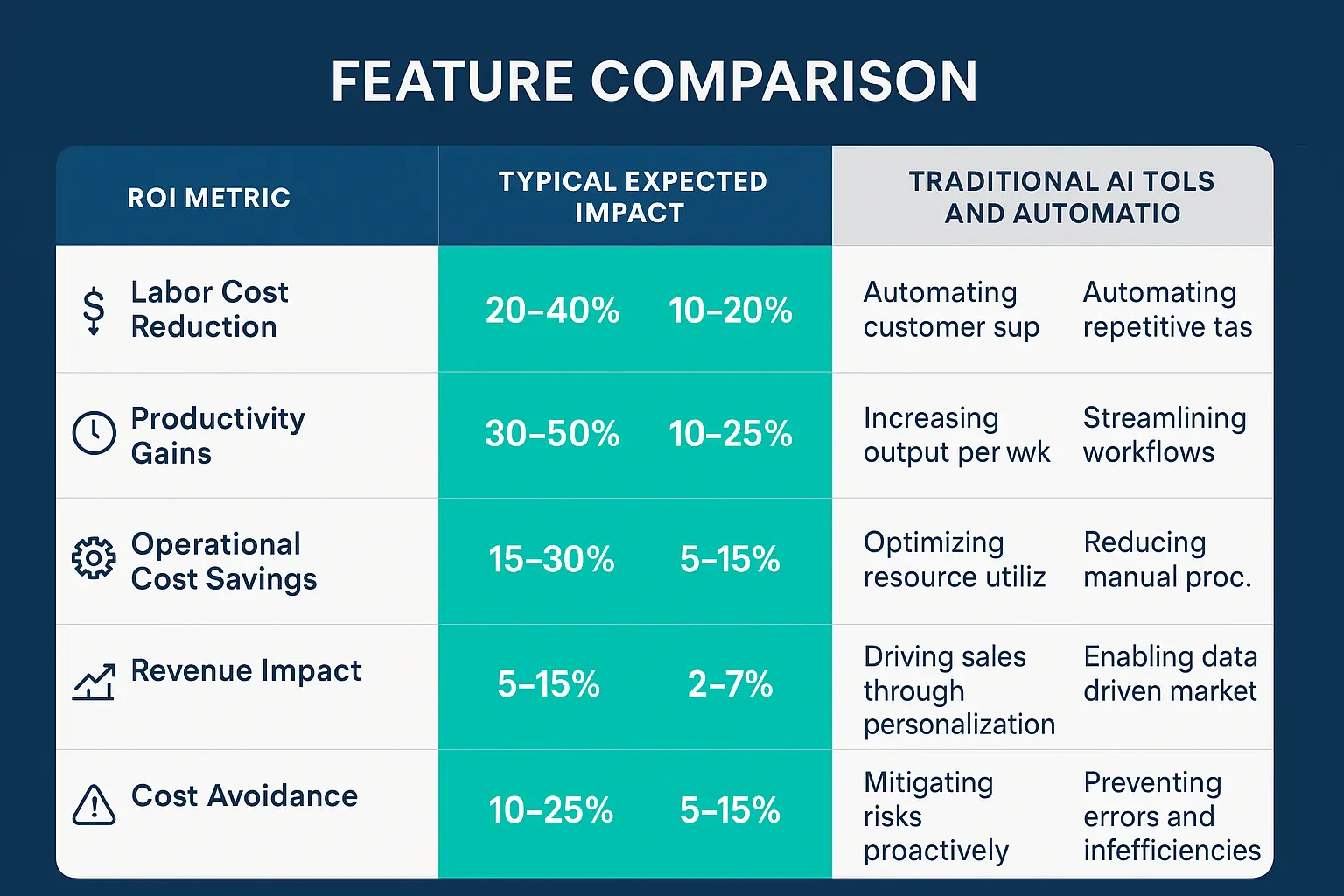
AI agents, however, are fundamentally different from traditional AI or automation. They don’t just follow pre-programmed rules; they learn, adapt, and take initiative. This unique capability means their ROI timeline and composition are also different. While Deloitte found that 15% of generative AI users see significant ROI in the first year, only 10% do for agentic AI. The real value of AI agents isn’t just a one-time efficiency gain—it’s a compounding asset that grows smarter and more valuable over time. Measuring this requires a more sophisticated approach.
Beyond the Hype: A Holistic Framework for Measuring True AI Agent ROI
To accurately assess the value of AI agents, we need to move beyond a simple cost-benefit analysis. A holistic ROI framework accounts for tangible gains, strategic intangible benefits, and the total cost of ownership.
The foundational equation is simple:ROI = (Total Value Generated - Total Investment) / Total Investment × 100%
The complexity lies in accurately defining and quantifying “Total Value” and “Total Investment.” Let’s break it down.
Phase 1: Define Your North Star & Establish Precision Baselines
Before you can measure improvement, you must know your starting point. Vague goals lead to vague results. The most successful AI initiatives begin with clear, measurable business objectives.
- Set Specific Goals: Are you trying to reduce customer service response times by 50%? Or perhaps you need to accelerate your financial closing process by 30%? Define the specific problem you’re solving.
- Establish Precision Baselines: This is non-negotiable. Gather at least three to six months of historical data for the process you’re targeting. For example, if you’re deploying AI agents for customer service, you need to know your average handling time, first-contact resolution rate, and CSAT scores before the agent is live. This data is your benchmark for success.
Phase 2: Quantify the Tangible Gains of Autonomous Agents
These are the direct, measurable financial benefits that AI agents deliver. They are the easiest to track and typically form the core of your initial business case.
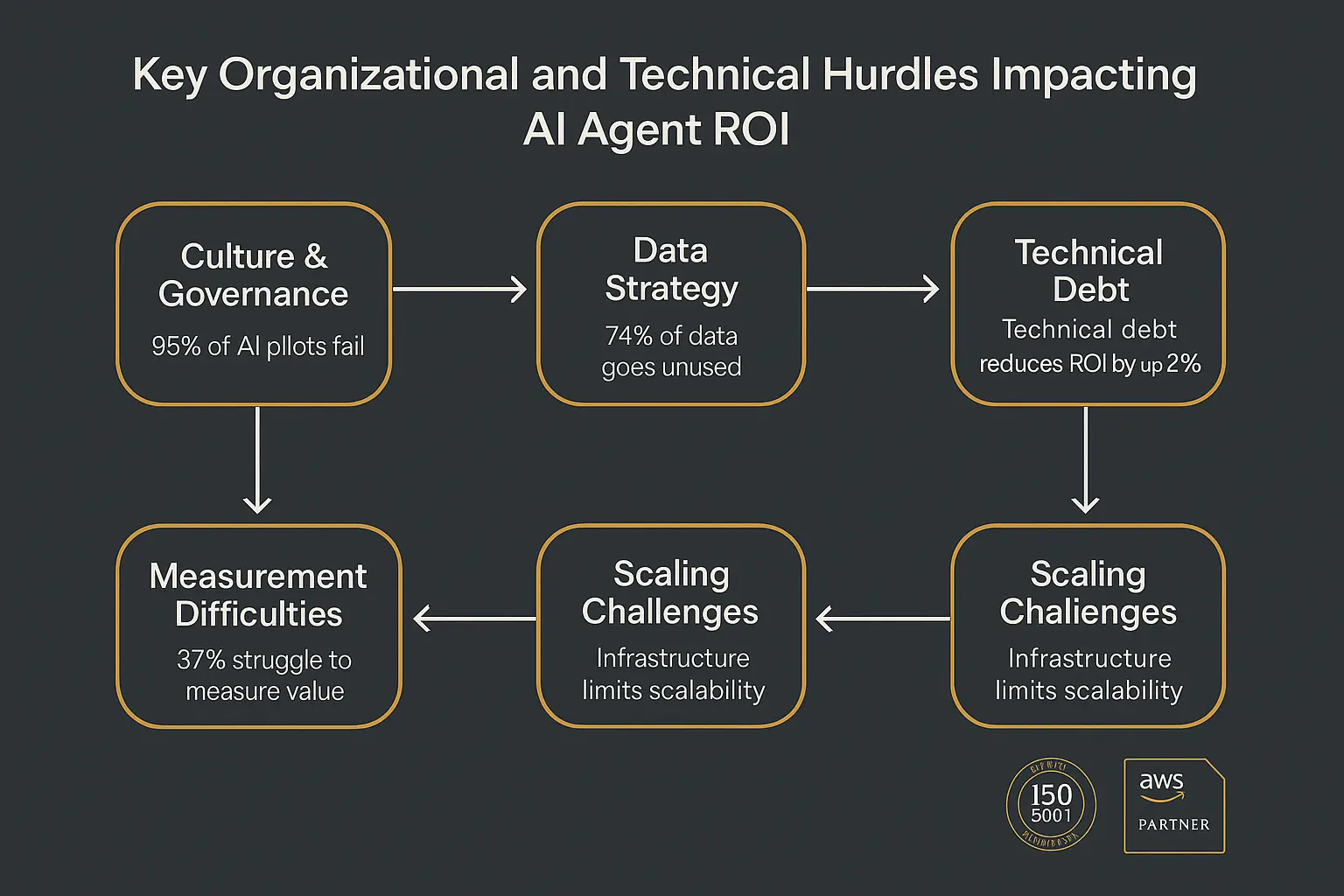
- Labor Cost Reduction: Calculate the hours your team saves by automating tasks. This isn’t about replacing people, but reallocating their time to higher-value strategic work. (Hours Saved per Week x 52 Weeks x Average Employee Hourly Cost).
- Productivity & Throughput Gains: Measure the increase in work completed. How many more invoices are processed? How many more support tickets are resolved? This directly impacts your operational capacity without increasing headcount.
- Revenue Impact: Track how agents contribute to top-line growth. This could be through identifying upsell opportunities, increasing lead conversion rates, or enabling faster product development cycles that get you to market ahead of the competition.
- Cost Avoidance: Quantify the costs you no longer have to incur. This includes reduced hiring needs for repetitive roles, lower fees from compliance errors, or savings on outsourced services.
Phase 3: Valuing the Intangible—The Strategic ROI That Defines Leaders
Intangible benefits are often the most powerful drivers of long-term value, yet they are the hardest to quantify. A recent study found that 61% of CFOs are now using broader evaluations that combine hard savings with these strategic benefits.
- Enhanced Customer Experience (CX): Link agent performance to key CX metrics. For instance, you can attribute a portion of your reduction in customer churn to faster, 24/7 support provided by AI agents. A 5% increase in customer retention can increase profitability by 25% to 95%.
- Improved Employee Satisfaction: When AI agents handle tedious, repetitive tasks, your team is free to focus on creative, strategic work. This boosts morale and retention. You can quantify this by tracking employee turnover rates and associating a cost with recruiting and training replacements.
- Innovation and Agility: How much faster can you test a new market strategy or launch a new service with AI agents handling the operational load? This strategic agility is a powerful competitive advantage that can be valued by modeling the potential revenue from new opportunities.
- Risk Reduction: AI agents perform tasks with machinelike consistency, drastically reducing the risk of human error in areas like compliance and data entry. Quantify this by analyzing the historical cost of such errors.
Phase 4: Understanding the Full Picture with Total Cost of Ownership (TCO)
Your investment isn’t just the license fee. A credible ROI calculation must include the Total Cost of Ownership (TCO). Be sure to account for:
- Initial Costs: Software licenses, implementation and integration services, and initial data preparation.
- Ongoing Costs: Maintenance, cloud hosting fees, human oversight, and continuous training of the AI models.
- Hidden Costs: Don’t forget change management, employee training, and the cost of addressing any pre-existing technical debt. As IBM research notes, paying down technical debt can improve AI ROI by up to 29%.
The Agentic Advantage: How Compounding Value Changes the ROI Equation
The most significant difference with AI agents is their ability to learn and improve over time. A traditional automation script performs the same way on day one as it does on day 365. An AI agent, however, gets smarter, more efficient, and more capable with every interaction.
This creates a compounding effect on your ROI. Initial returns might be a modest 20-30% improvement in efficiency. But as the agent learns the nuances of your business, optimizes its own workflows, and starts identifying new opportunities, that return can scale to 10X or more over 12-18 months.
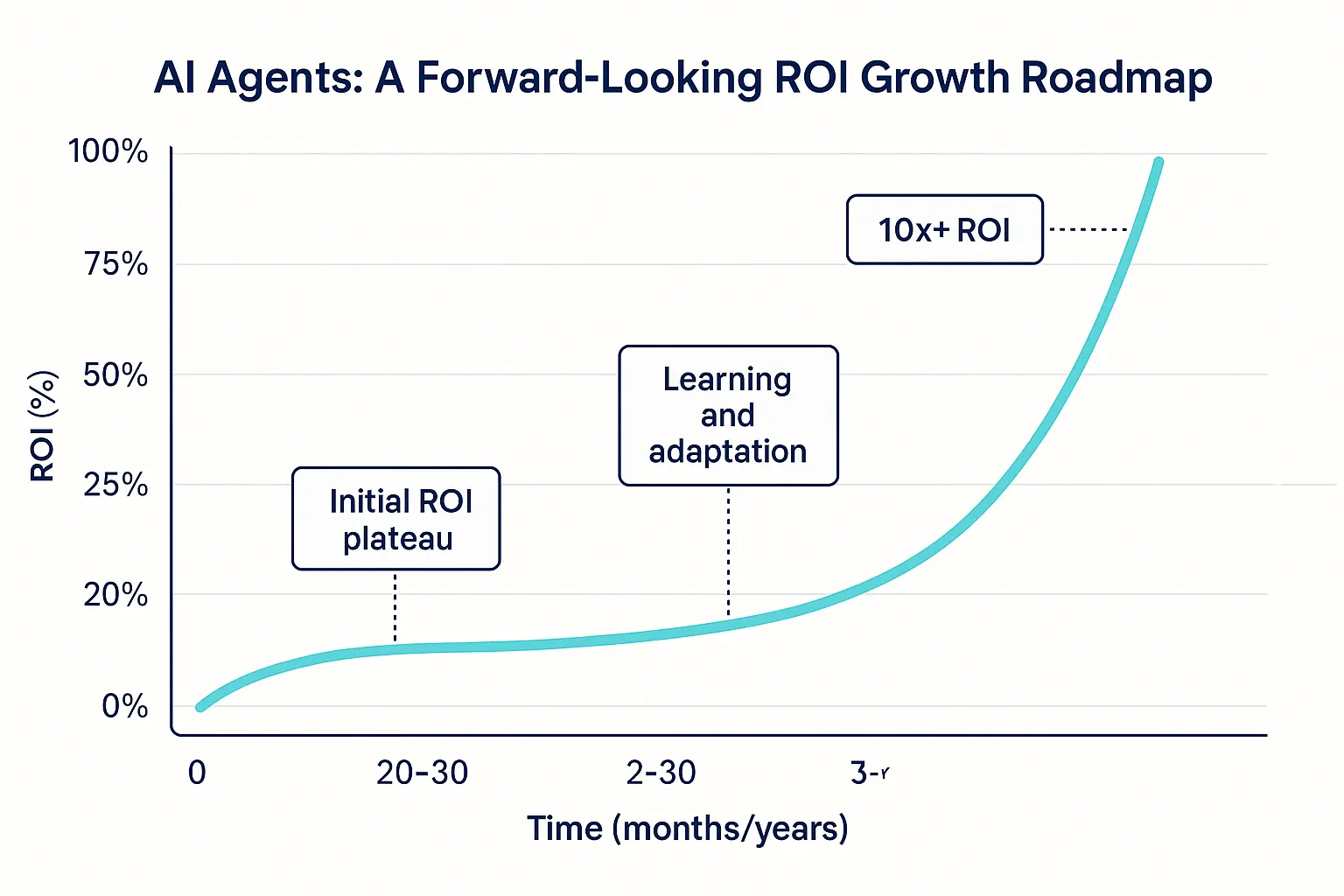
Your ROI model should project this improvement curve. Don’t just measure a single snapshot in time; track performance quarterly to capture and forecast this escalating value. This long-tail benefit is what separates a tactical cost-saving tool from a strategic business asset.
Overcoming the Hurdles: Best Practices for Maximizing Your AI Agent ROI
Knowing how to measure ROI is half the battle. The other half is ensuring there’s a positive return to measure. According to Harvard Business Review, realizing AI value is fundamentally a management challenge, not a technical one.
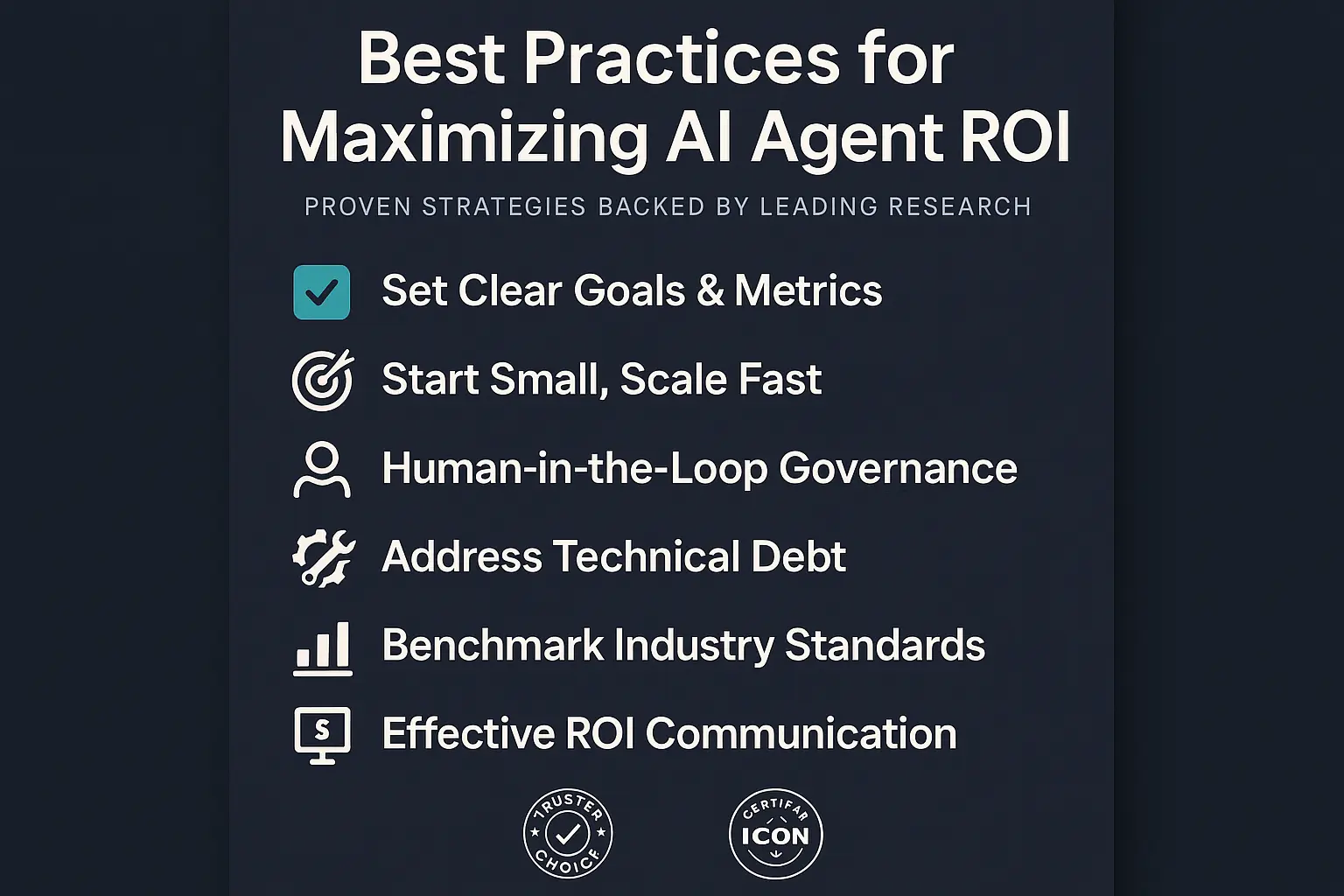
Follow these best practices to navigate the common pitfalls:
- Involve the CFO Early: HBR found that when CFOs are responsible for AI value, 76% of organizations achieve a “great deal” of value, compared to just 32% when led by functional executives. Their financial discipline ensures projects are tied to real business outcomes.
- Start Small, Scale Smart: Don’t try to boil the ocean. Identify a high-impact, well-defined use case like automating financial processes or streamlining supply chain operations to prove value quickly. Use this initial success to build momentum and secure buy-in for broader deployment.
- Maintain Human-in-the-Loop Governance: AI agents are powerful, but they work best as collaborators, not replacements. Establish clear oversight and review processes to guide the agent, manage exceptions, and build trust within your team.
- Communicate Value Constantly: Create a dashboard to track your key ROI metrics. Regularly share progress with stakeholders to demonstrate value and maintain organizational alignment.
Frequently Asked Questions (FAQ)
How long does it typically take to see a positive ROI from AI agents?
While simpler generative AI can show ROI within a year, the more complex and powerful nature of agentic AI means significant returns are typically seen over a 1-to-5-year horizon, according to Deloitte. The key is to look for leading indicators of success early on—like improvements in cycle time and employee time savings—while modeling the long-term compounding value.
What if our data isn’t perfectly clean?
This is a common concern and a primary reason for the high pilot failure rate. The best approach is to start with a use case where the data is relatively structured. The process of deploying your first AI agent will also force valuable data hygiene practices, creating a positive feedback loop that benefits future AI initiatives.
How do we justify the investment to the board?
Focus on building a business case grounded in the holistic framework. Start with conservative estimates of tangible savings (cost reduction, productivity gains). Then, layer on the strategic value by modeling the impact of improved customer retention and employee satisfaction. Frame it not as a technology cost, but as a strategic investment in operational excellence and competitive advantage.
Is this just another automation tool?
No. Traditional automation (like RPA) follows static, pre-defined rules. AI agents are dynamic. They learn from new information, adapt their processes, and can handle complex, multi-step tasks with autonomy. The ROI from traditional automation is linear; the ROI from AI agents is exponential.
Your Next Step: From Calculation to Confidence
Measuring the ROI of AI agents requires a shift in perspective—from a one-time cost calculation to a continuous assessment of a compounding asset. By adopting a holistic framework that balances tangible savings with strategic long-term value, you can build a powerful, data-driven business case that stands up to scrutiny.
You can confidently answer the question, “What’s the return on this investment?” with a clear, compelling model that showcases not just how AI agents save money, but how they build a more efficient, intelligent, and resilient business.
