
Navigating the U.S. Energy Storage Policy Maze: A Leader’s Guide for C&I Projects
You see the massive potential of energy storage for your commercial or industrial operations—the cost savings, the resilience, the new revenue streams. But standing between you and a successful project is a complex, shifting landscape of federal mandates, state incentives, and local permitting rules. It’s difficult to know where to start, which programs offer the most value, and how to avoid the regulatory bottlenecks that can delay or derail an investment.
This isn’t just another high-level overview. This is your practical guide to understanding and leveraging the policies that determine the success and profitability of your energy storage system (ESS). We’ll break down the critical frameworks, compare key state programs, and provide actionable steps to turn regulatory complexity into your competitive advantage.
Why Policy is the Linchpin of Your C&I Storage Strategy
The energy storage market is expanding at an unprecedented rate. The U.S. saw a remarkable 18x increase in storage capacity between 2017 and 2022. In the third quarter of 2025 alone, 5.3 GW of new storage was deployed—a 31% increase year-over-year. This explosive growth isn’t just about technology; it’s fueled by a sophisticated web of policies designed to modernize the grid and accelerate the clean energy transition.
For C&I decision-makers, understanding this web isn’t optional—it’s the core of a successful deployment. The right incentive can dramatically shorten payback periods, while navigating interconnection rules efficiently can mean the difference between a project launching in months versus years.
The Federal Framework: Setting the National Stage
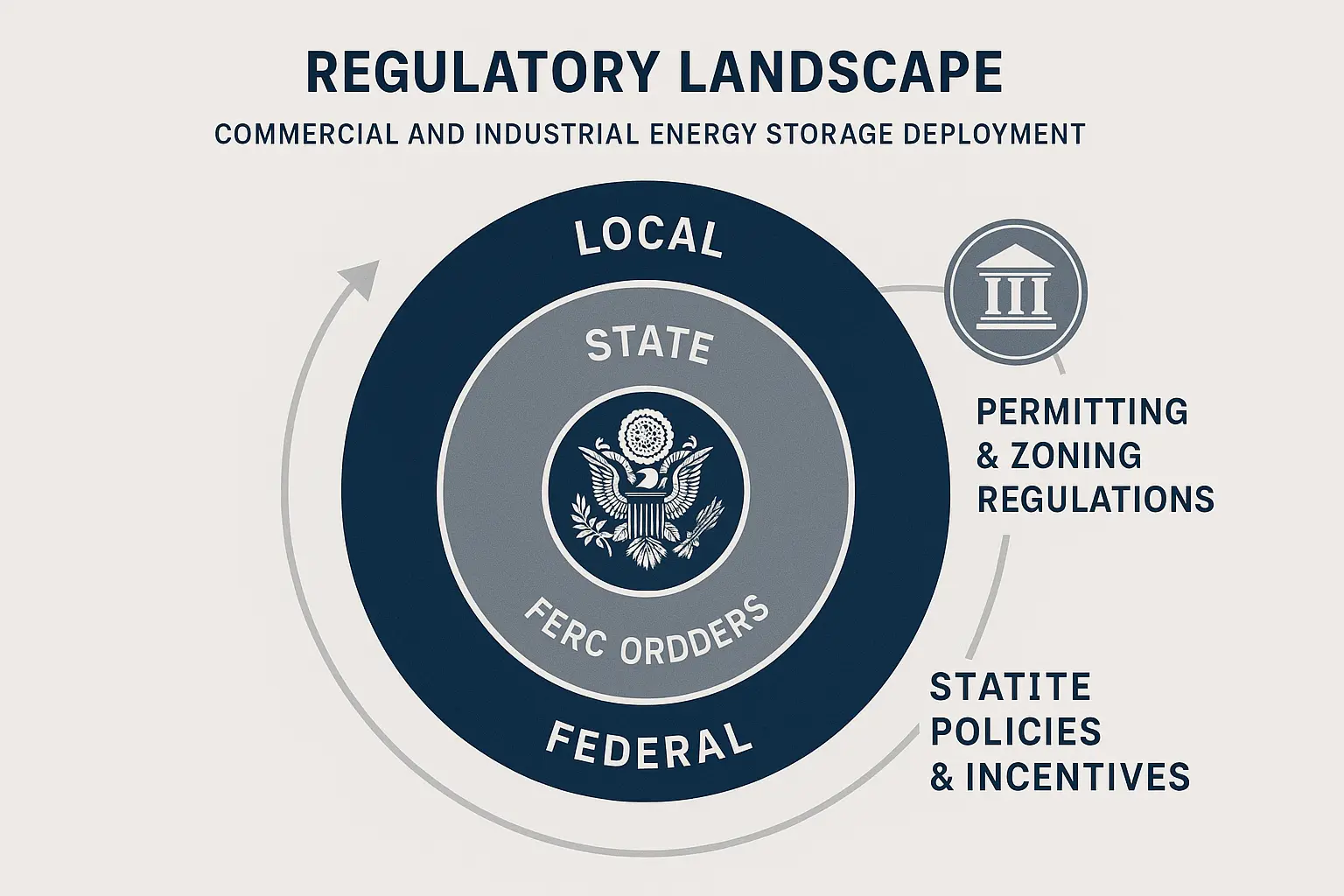
While much of the action happens at the state level, federal policy creates the foundational tailwinds for the entire industry. Two key areas are transforming the economics of C&I energy storage.
The Inflation Reduction Act (IRA): A Game-Changer for Storage Economics
The IRA fundamentally changed the financial equation for energy storage. For the first time, it made standalone battery storage eligible for the Investment Tax Credit (ITC).
- 30% Base Credit: Businesses can receive a tax credit equal to 30% of the project’s cost, significantly reducing the initial capital investment.
- Bonus Credits: Additional “adders” can increase the credit further for projects that meet domestic content requirements or are located in energy communities or low-income areas. A detailed breakdown is available in our guide to understanding the ITC bonus credits.
- Direct Pay: This is a crucial provision for tax-exempt entities like schools, municipalities, and non-profits. Instead of a tax credit they can’t use, they can receive the full value of the credit as a direct cash payment from the IRS.
FERC Orders: Opening Markets for Your Asset
The Federal Energy Regulatory Commission (FERC) has issued landmark orders that enable energy storage systems to participate more fully in wholesale energy markets.
- FERC Order 841: Required grid operators to remove barriers and establish rules allowing energy storage resources to compete alongside traditional power plants in providing grid services.
- FERC Order 2222: Allows Distributed Energy Resources (DERs)—like your C&I battery system—to be aggregated together to participate in regional wholesale markets. This opens up new revenue opportunities through programs like frequency regulation and demand response.
State-by-State Policy: Where Strategy Meets Opportunity
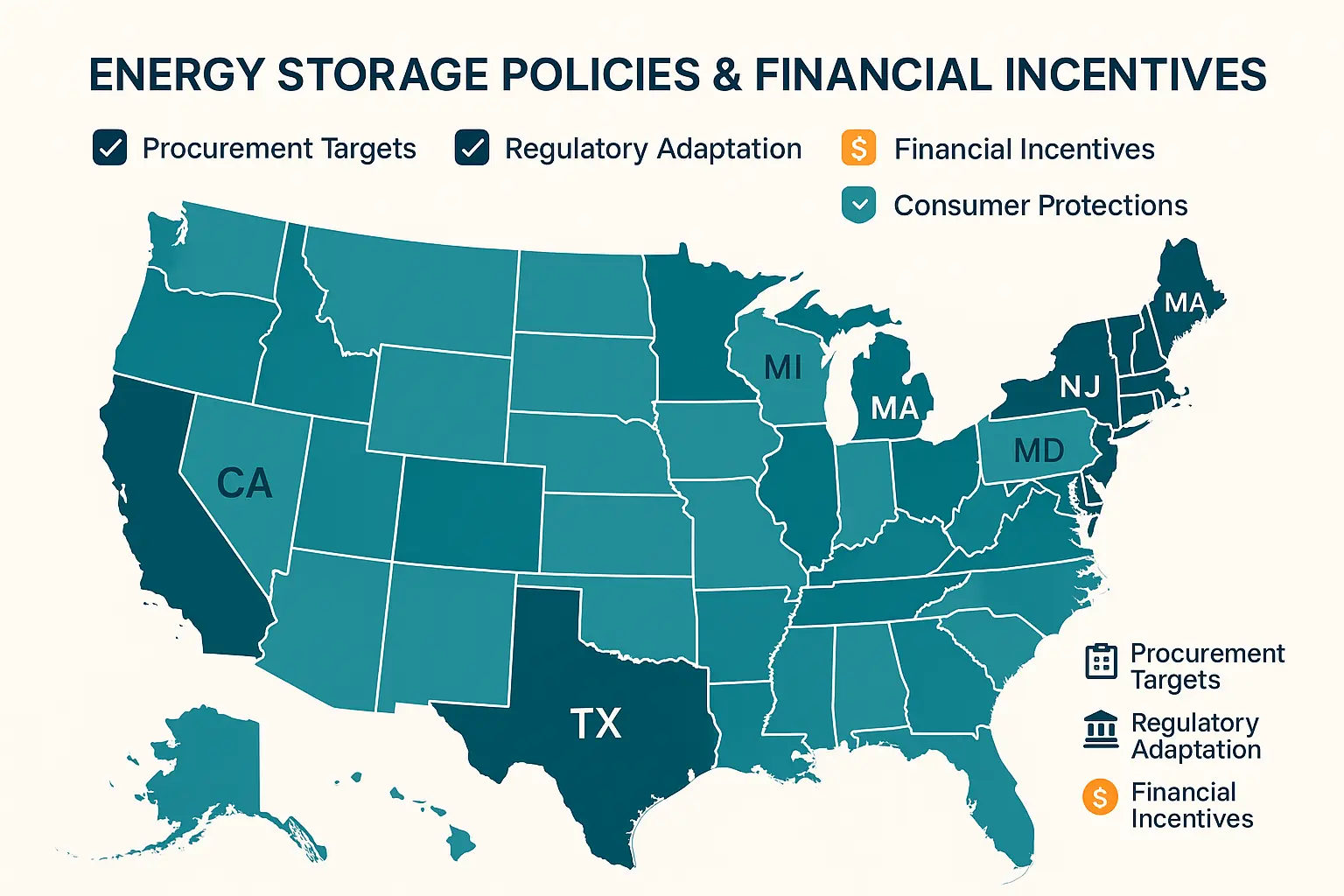
With over 17 states now having specific energy storage policies, the real strategic work happens at the state level. These policies vary widely, but they generally fall into a few key categories that you need to evaluate.
Key Policy Categories for C&I Evaluation
- Procurement Targets & Mandates: States like California (AB 2514), New York, and Massachusetts have set ambitious targets for energy storage deployment, creating a stable, long-term market.
- Financial Incentives: These are the most direct drivers of project ROI. They can be upfront rebates that lower initial costs or performance-based incentives that pay out over time based on the system’s contribution to the grid.
- Regulatory Adaptation: Forward-thinking states are updating their Integrated Resource Plans (IRPs) and grid modernization strategies to formally include energy storage, ensuring its role in future planning.
Spotlight on Leading States for C&I Storage
While dozens of states have active programs, a few stand out for their robust C&I incentives.
- California: The Self-Generation Incentive Program (SGIP) is one of the nation’s longest-running and most successful rebate programs. It provides significant upfront incentives for installing battery storage, with higher rates for projects that enhance resilience for low-income or medically vulnerable communities.
- New York: Through NYSERDA, the state offers the Market Acceleration Bridge (or “Bridge Incentive”) program, which provides upfront incentives to reduce project costs and drive installations in key regions.
- Massachusetts & Connecticut: Both states offer performance-based incentives through programs like the Clean Peak Energy Standard (MA) and incentives for storage paired with solar, rewarding systems for discharging energy during critical peak demand periods.
- New Jersey: The New Jersey Board of Public Utilities is developing a permanent successor to its pilot programs, aiming to achieve a 2,000 MW storage goal by 2030 with dedicated C&I incentives.
Comparing these programs requires more than just looking at the dollar amount. You must consider eligibility, performance requirements, and how the incentive structure aligns with your specific use case, whether it’s peak shaving, demand charge management, or participation in building a successful VPP strategy.
Navigating the #1 Challenge: Interconnection & Permitting
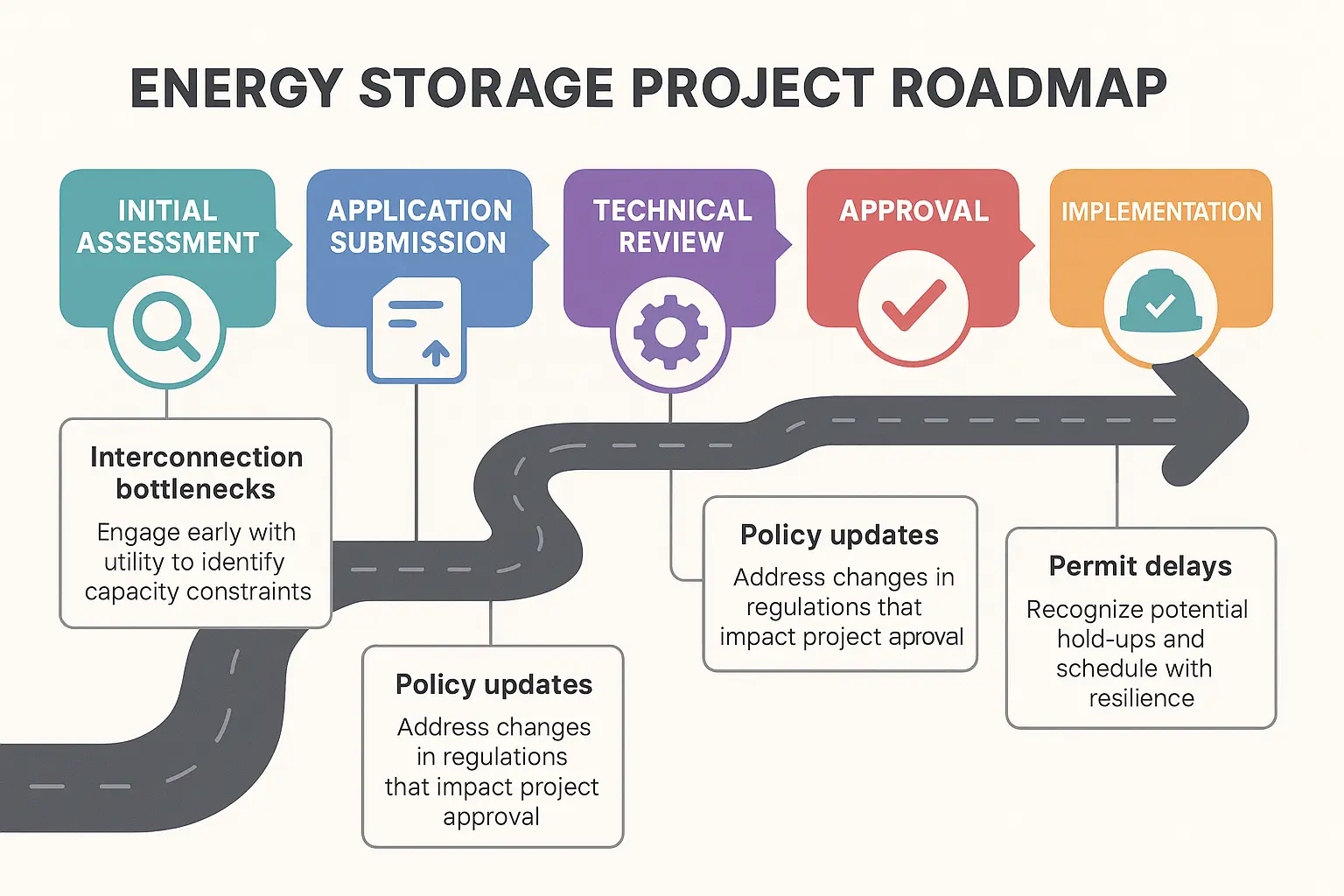
Even with strong financial incentives, a project can get stuck in the interconnection queue. This is consistently cited by developers as a primary bottleneck, leading to costly delays and even project cancellations.
The problem often stems from outdated utility rules that weren’t designed for modern, bidirectional resources like batteries. They can trigger requirements for long, expensive grid impact studies for relatively small C&I systems.
Policy Solutions and Best Practices
Leading states and organizations are tackling this head-on. Policy-driven solutions include:
- Adopting Updated Standards: Implementing modern technical standards like IEEE 1547-2018 provides a clear framework for how DERs should interact with the grid safely and reliably.
- Simplified Screening: Creating expedited processes for projects that meet certain criteria (e.g., size, export capacity) can bypass the need for full-blown studies.
- Model Language: Initiatives like the BATRIES (Building a Technically Reliable Interconnection Evolution for Storage) project provide utilities and regulators with model language to update their rules specifically for energy storage.
Successfully navigating this phase requires deep technical expertise and familiarity with the specific rules of your local utility. Working with a partner who specializes in our interconnection services can dramatically streamline this critical step.
Future Outlook: Emerging Trends to Watch
The policy landscape is constantly evolving. Staying ahead of these trends is key to future-proofing your energy storage investment.
- Virtual Power Plants (VPPs): Policymakers are increasingly recognizing the value of aggregating C&I battery systems into VPPs to provide grid services at scale. Expect more programs and market structures that incentivize VPP participation.
- Long-Duration Energy Storage (LDES): As renewable penetration grows, the need for storage that can discharge for 8, 12, or even 100 hours is becoming a policy priority. Federal and state incentives are beginning to specifically target LDES technologies.
- Resilience and Equity: Expect a continued focus on using energy storage to provide backup power for critical facilities and underserved communities, often with dedicated funding carve-outs in incentive programs.
How to Maximize Your C&I ESS Investment: An Actionable Checklist
Feeling empowered? Good. Here is a simple framework to translate policy knowledge into a concrete action plan for your organization.
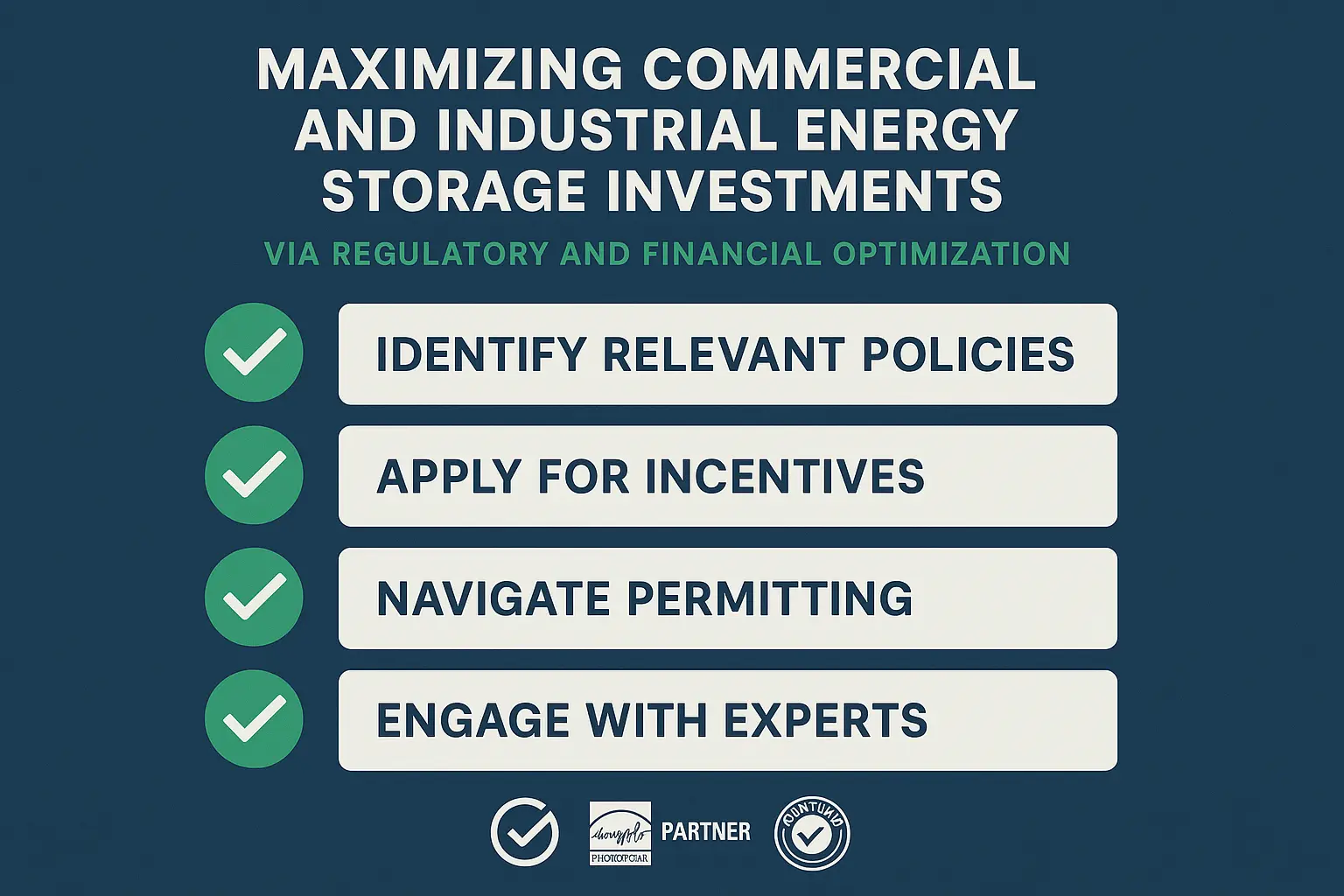
- Identify Federal Eligibility: Start by confirming your project’s eligibility for the federal ITC. Determine if you can leverage bonus adders and whether Direct Pay is the right path for your organization.
- Conduct a State-Level Deep Dive: Use a resource like the DSIRE database to identify all incentives in your state. Move beyond the headline programs and look for utility-specific rebates or performance-based opportunities.
- Model Multiple Scenarios: Analyze how different incentive structures (upfront vs. performance-based) impact your project’s ROI and payback period. Our guide to C&I energy storage ROI can provide a framework for this analysis.
- Engage Your Utility Early: Proactively contact your utility’s interconnection department to understand their process, queue, and technical requirements. This can save you months of delays down the road.
- Assess Local Permitting: Investigate local zoning laws, fire codes (like NFPA 855), and building permit requirements. These can have a significant impact on project design, timeline, and cost.
- Partner with an Expert: The policy and regulatory landscape is a full-time job. Working with a partner who lives and breathes these details ensures you maximize value and minimize risk.
Frequently Asked Questions
Q: What happens if an incentive program runs out of funding mid-project?A: This is a valid concern and highlights the importance of working with an experienced partner. Most well-structured programs, like California’s SGIP, have step-down incentive levels and clear application timelines. A good developer will help you submit your application at the optimal time to secure funding at the current, higher levels before they decrease.
Q: How do I choose between an upfront rebate and a performance-based incentive?A: This depends on your organization’s financial priorities. An upfront rebate is excellent for reducing initial capital hurdles and improving day-one project economics. A performance-based incentive can provide a long-term, predictable revenue stream, which is attractive if you are more focused on ongoing operational returns and are confident in your ability to dispatch the battery effectively. Often, the best projects stack both if possible.
Q: Are there risks associated with new federal policies like the IRA?A: The primary risk is uncertainty in interpretation. The Treasury Department is still releasing guidance on specific provisions like domestic content and Direct Pay. This is why it’s critical to work with legal and financial advisors who are staying on top of the latest official rulings to ensure compliance and accurately forecast your project’s final financial benefits.
Q: How much do local permitting and fire codes add to the project cost?A: Costs can vary significantly based on your jurisdiction. Complying with modern fire codes like NFPA 855 may require specific equipment, fire suppression systems, or siting adjustments that add to the cost. Factoring these requirements into the initial design—rather than discovering them during the permitting review—is the most cost-effective approach.
The regulatory environment for energy storage is undeniably complex, but it is also rich with opportunity. By understanding the key federal drivers, strategically navigating state-level incentives, and proactively addressing interconnection challenges, you can unlock the full financial and operational potential of your C&I energy storage project.
Ready to build a detailed policy and incentive strategy for your project? Schedule a consultation with our policy experts to get a tailored analysis for your specific location and goals.
