
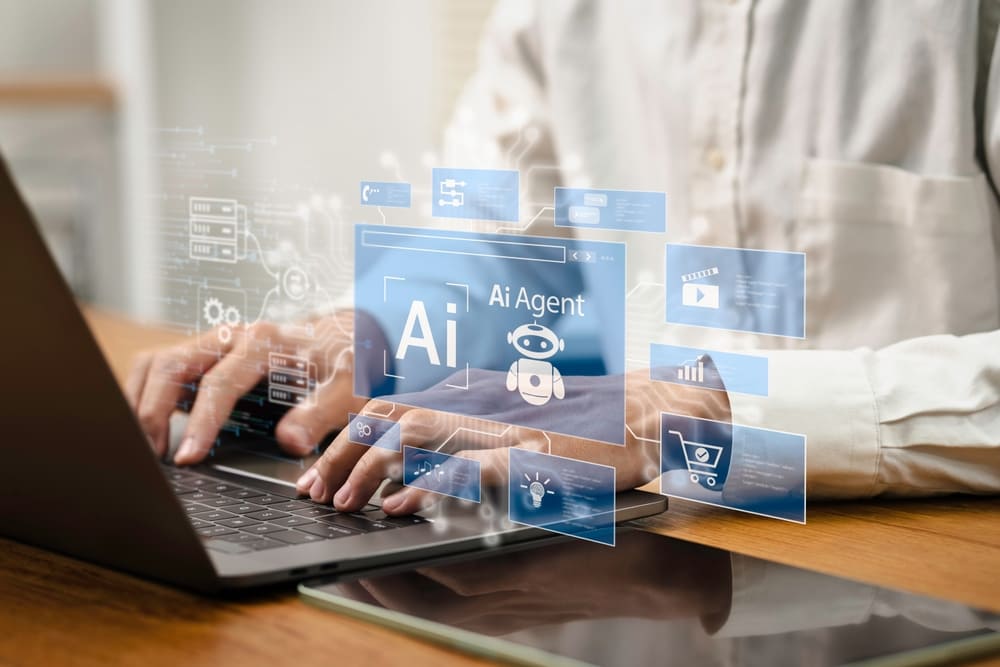
Personalized AI Agents with RAG: Smarter Conversations, Grounded in Your Data
Introduction
Imagine an AI assistant that not only understands your unique context but also provides accurate responses based on your internal knowledge base, learning and adapting with every interaction. This is the promise of Retrieval-Augmented Generation (RAG) in personal AI agents.
What is Retrieval-Augmented Generation (RAG)?
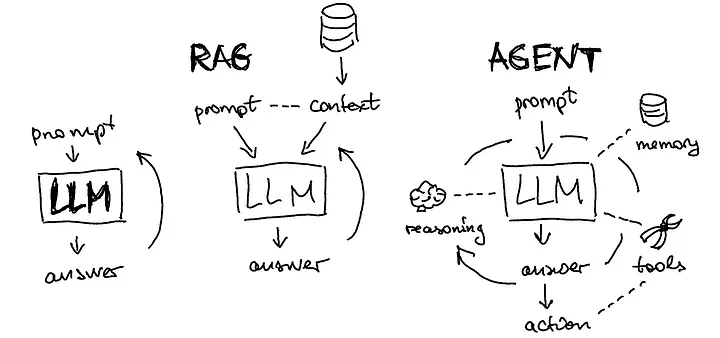
RAG is a technique that enhances large language models (LLMs) by integrating them with external data sources. Instead of relying solely on pre-trained knowledge, RAG retrieves relevant information from specified documents or databases to generate more accurate and contextually relevant responses.
How Does RAG Work?
The RAG architecture comprises two main components:
- Retriever: This component searches a knowledge base or document store to find the most relevant information based on the user’s query.
- Generator: Using the retrieved information, the generator (typically a transformer-based model like GPT) formulates a coherent and contextually appropriate response.
This combination ensures that the AI’s outputs are grounded in factual content, reducing the chances of hallucinations or inaccuracies.
Why Personal AI Agents Benefit from RAG
- Reduced Hallucinations: By grounding responses in actual documents, RAG minimizes the risk of the AI generating incorrect or fabricated information.
- Up-to-Date Information: As your internal documentation evolves, the AI can access the latest data without needing retraining.
- Domain-Specific Responses: RAG allows AI agents to use company-specific language and content, ensuring more relevant and accurate interactions.
Real-World Applications
- Employee Help Desks: Answer HR, IT, and policy-related queries efficiently.
- Client Onboarding: Assist new clients by providing answers to service-specific questions.
- Executive Assistants: Manage calendars, project statuses, and document lookups for company leaders.
- Legal and Healthcare Agents: Provide contextual responses using regulatory documents and medical guidelines.
Implementing a RAG-Powered Personal Agent
- Document Preparation: Upload your internal documentation to a vector database.
- Embedding: Use models like OpenAI, Cohere, or SentenceTransformers to convert documents into vector embeddings.
- Interface Development: Build a frontend chatbot or voice assistant UI for user interactions.
- Pipeline Integration: Connect the retriever and generator components to form a cohesive system.
- Testing and Monitoring: Regularly assess the relevance and accuracy of the AI’s responses, making adjustments as needed.
Ethical Considerations
- Data Security: Implement robust access controls to protect sensitive information
- Human Oversight: Allow for human intervention in mission-critical decisions to ensure accuracy and accountability.
- Audit Trails: Maintain logs of the AI’s responses for transparency and review purposes.
Final Thoughts
FAQs
Q1: How does RAG differ from traditional AI models?
Traditional AI models rely solely on pre-trained data, which can become outdated. RAG enhances these models by retrieving current and relevant information from external sources, ensuring more accurate and context-aware responses.
Q2: Can RAG be integrated with existing systems?
Yes, RAG can be integrated with various platforms and databases, allowing organizations to enhance their existing systems with more intelligent and responsive AI capabilities.
Q3: Is RAG suitable for small businesses?
Absolutely. RAG can be scaled to fit the needs of businesses of all sizes, providing personalized AI solutions that improve efficiency and customer engagement.
Q4: How does RAG handle sensitive information?
With proper implementation, RAG systems can be designed to adhere to strict data privacy and security protocols, ensuring that sensitive information is handled appropriately.
Q5: What are the maintenance requirements for a RAG system?
Regular updates to the knowledge base and monitoring of the AI’s performance are essential. However, since RAG systems retrieve real-time data, they often require less frequent retraining compared to traditional models.
-
 Beyond the Buzzword: A Decision-Maker's Guide to Advanced Energy Data Modeling11 Jun 2026
 -
 The Definitive Architect's Guide to Building a Scalable Energy Data Platform10 Jun 2026
 -
 The Utility Data Integration Blueprint: From Smart Meters to Actionable Grid Intelligence08 Jun 2026
 -
The Unified Defense Framework: Integrating Incident Response, Disaster Recovery, and Cyber Resilience for Energy OT/ICS06 Jun 2026
-
 Beyond Automation: A Decision-Maker's Guide to Intelligent HVAC Optimization05 Jun 2026
